
Table of Contents
- “El jaguañeñén-hablando jaguareté merodeando por la jaguaretama”: la cosmopolítica de la selva y el entrelazamiento de lengua, soledad y devenir en “Mi tío el jaguareté” de João Guimarães Rosa
- “¡Como tú, río Pachachaca!”: Fluir, enlazarse y devenir en el abrazo de pacha en Los ríos profundos de José María Arguedas
- “Esos caminos hay que andarlos”: La sabiduría indígena y el conocimiento borgeano en “El etnográfo” de Jorge Luis Borges
- The Kaleidoscope of Reality: The Elusive Metaphysical Dimensions of Latin American Magical Realism
- Female Sexuality as a Mystical Power: Female Identity and Magical Realism in Isabel Allende’s Los Cuentos de Eva Luna
- ‘Let Women Find a Voice in the Church’: The Inseparability of Religion and Knowledge for Women in the Early Modern Transatlantic Hispanic World
“El jaguañeñén-hablando jaguareté merodeando por la jaguaretama”: la cosmopolítica de la selva y el entrelazamiento de lengua, soledad y devenir en “Mi tío el jaguareté” de João Guimarães Rosa
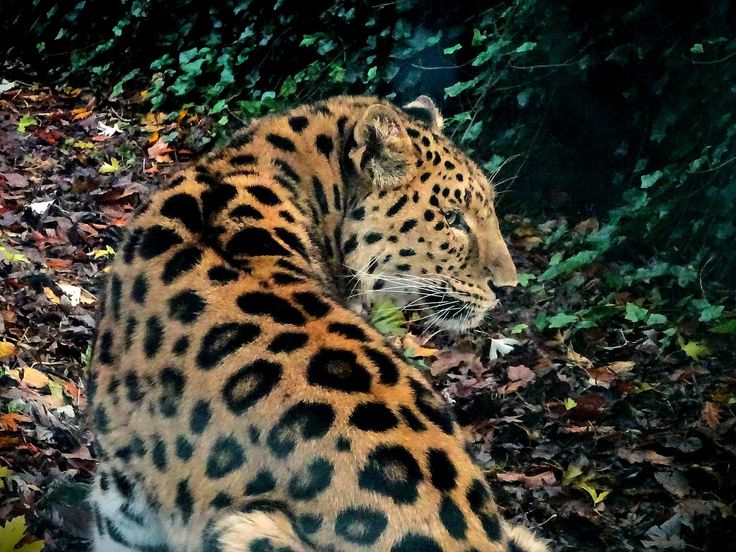
En lo profundo del vientre verdeante e indomable de la selva, al lado del fuego parpadeante de una choza remota, un solitario y retirado cazador de jaguares mestizo recibe a un visitante imprevisto. Una inquietud ansiosa empapa el grueso del entorno desparramando, mientras el ominoso interlocutor blanco—cuya voz nunca se manifiesta y cuyas intenciones permanecen ocultas—le ofrece aguardiente al jaguar-cazador, jaguar-amante, jaguar-obsesionado hablante, un hombre lleno de paradojas y oscuridades. Le dice al visitante: “No soy hacendado, soy vecino”, negando una identidad humana, solo para contradecirse instantes después: “Eh, tampoco soy vecino”, y finalmente afirmar una especie de sin-lugar: “Yo — por todas partes. Toy aquí, cuando quiero me mudo” (Guimarães Rosa 411). Con cada trago, se hunde más en un frenesí, traicionando su propio relato como si alguna fuerza incontenible—quizás el alcohol, quizás el dolor, quizás la locura, quizás algo aún más extraño—lo obliga a hablar. Pronto, el narrador divulga un horror más profundo que se impregna por el bochorno sofocante de esta escena de selva inquietante: entre el velo de hojas y sombras que rodea la choza, merodea una multitud de jaguares salvajes. Y el más amenazante de todo, comienza a insinuar lentamente, es él mismo. Afirma con convicción embravecida que por sus venas corre la sangre carnicero y salvaje de un jaguar. Sus exclamaciones laten con una urgencia feroz y latente que se intensifica con cada aliento, hasta que su corazón ya no latir con un ritmo humano pero con el tambor cerrero de un depredador felino.
Al principio, esto podría parecer como los desvaríos de un borracho loco, pero con cada locución, su discurso se vuelve menos y menos humano—y más y más jaguar. Con cada capa que confiesa de su íntima afinidad felina, su monólogo se revela como una confesión de metamorfosis ontológica—una catalizada por la soledad, el duelo y una mutación progresiva del lenguaje. A través del triple eje relacional del narrador—su herencia materna indígena, su vínculo erótico con la jaguar María-María, y su interacción enredada y volátil con el interlocutor silencioso—João Guimarães Rosa desarrolla un colapso radical del ser antropocéntrico, mostrando cómo la ausencia ontológica, lingüística, afectiva e identitaria da a luz a a un modo de existencia “jaguaretéica”. Desde el grito insistente de “¡Yo — jaguar!” hasta la irrupción de jaguañeñén—un neologismo forjado a partir de jaguareté (jaguar verdadero) y ñeenga (hablar)—el lenguaje se derrumbe en gruñidos y rugidos, el español (o el portugués) se disuelve en tupí, y el discurso cede a una ecología semiótica más intrincada.1 El anhelo del narrador de devenir jaguar—enraizado en la pérdida materna, la soledad y una herencia indígena casi desdibujada—se intensifica y se materializa hasta convertirse en una metamorfosis vivida. Sin embargo, bajo la superficie de su voluntad de ser, sentir y devenir jaguar, palpita un impulso aún más profundo y primario: el anhelo de habitar un mundo donde tal metamorfosis es incluso posible. Un mundo cuyo terreno ontológico no ramifica especies ni desvincula parentescos, sino que fluye en relación continua y afectiva—un terreno donde él, su madre, su tribu, su amante María-María, la selva y los jaguares están todos mutuamente involucrados y co-constituidos; un mundo donde el lenguaje se vuelve poroso, la identidad mutable y el ser no singular, sino plural.
La metamorfosis en “Mi tío el jaguareté” va mucho más allá de lo metafórico. Implica no solo el desprendimiento de la lengua y la carne, sino también la renuncia a los vínculos afectivos y lingüísticos restantes con otros humanos. No solo debe desaprender la lengua española (o portuguesa) para hablar de nuevo, sino también su alma debe exhalar el aliento antropocéntrico, capitalista y colonial que contamina el aire que alguna vez respira. De este desangramiento—lingüístico, ontológico, emocional—el jaguar empieza a entrar por cada poro vaciado. Lo que surge no es un mero cambio, sino una transferencia del ser: hacia “jaguaretama, tierra de jaguares”, que no es una ubicación geográfica, sino un ámbito cosmopolítico de enmarañamiento afectivo, semiótico e interespecífico en el que el lenguaje ruge, la memoria acecha, y la soledad se convierte en umbral de la renacimiento (Guimarães Rosa 430). El dolor en “Mi tío el jaguareté”—el duelo, la vergüenza, la pérdida, la soledad—se convierte así en un puente que el narrador debe atravesar para entrar en otro reino del amor, del saber, y del devenir. Y sólo entonces puede pulsar junto con el corazón selvático: el latido que una vez aulló “¡Yo — jaguar!” se metamorfosea en jaguañeñén-hablante jaguareté merodeando por la jaguaretama.
La condición mestiza del narrador en ese cuento marca una escisión entre dos linajes ontológicos: su madre indígena que habla tupí, cuyo amor y cosmovisión reverencian, y su padre blanco ausente que lo abandonó a una vida de labor solitaria bajo un hacendado resuelto a “desjaguarizar todo este mundo” (Guimarães Rosa 415). Su sufrimiento no es reducible a un malestar psicológico—es ontológico e identitario. La soledad, por lo tanto, no es simplemente un producto del abandono o el aislamiento, sino la consecuencia de una ruptura más profunda con el ámbito ontológico, afectivo y relacional al que anhela retornar. Ese dolor se profundiza sobre todo en el remordimiento por haber cazado y matado a los mismos seres que alguna vez lo enlazan a su linaje materno y a su parentesco interespecífico: “Aquí solito, todo el tiempo… el jaguar es mi pariente, taba triste de haber matado” (Guimarães Rosa 442). A lo largo del relato, reitera su soledad: “Estoy muñamuñando solito, para mí, añún” (Guimarães Rosa 413). Sin embargo, esta soledad no es una condición de aislamiento de forma general—surge en particular de su alejamiento del mundo humano: “aquí, ronda que ronda nada más estamos yo y el jaguar” (Guimarães Rosa 420). Reflexiona: “Antes, de primera me gustaba la gente”, pero ahora, “sólo los jaguares me gustan” (Guimarães Rosa 422). Este giro sugiere que cuanto más corta sus lazos con lo humano, más se afina al jaguareté y así asume su modo de ser completamente distinto.
Al evocar el inicio de su vida en soledad, el narrador lo ancla a la muerte de su madre: “Nostalgia de mi madre, que murió, sacyara…Yo ñun — solito… no tenía amparo” (Guimarães Rosa 420). Además, como señala Valquíria Wey, “ñún” o “añún” es una formación híbrida que entrelaza el “a” portugués (yo), “nhó” (solo) y “nehum” (ninguno), y significa “solo, solito, sin ninguno”—una palabra que no solo expresa soledad, “solito, para mí, añún”, sino que como “cruce lingüístico entre el portugués”, también embebe la hibridez y la fragmentación mestiza (Wey 455). Además, la traducción al español como “nostalgia” no logra captar la profundidad de la palabra portuguesa saudade—término que Guimarães Rosa escoge con precisión, en lugar de anseio o sentir falta. A diferencia de nostalgia, que evoca una añoranza cognitiva-mnemónica y melancólica dirigida hacia el pasado, saudade expresa un dolor ontológico-afectiva sin límite temporal—un anhelo estrechamente ligado a la ausencia, a la identidad, y así al ser. Un peso semántico y emocional comparable reside en sacyara, palabra tupí cuyo significado simple es “tristeza”, pero cuya morfología del término original—cacyara—merece más consideración: de cacy (“triste; doler; tener pena”) y ara, raíz compleja y polivalente que significa “nacer” y puede “indicar naturalidad”.2 Así, saudade y sacyara no evoca una tristeza transitoria, sino una pena enraizada en el origen mismo del narrador—un dolor ligado a la pérdida de su vínculo con el mundo materno, indígena y cosmopolítico, y como tal a la ausencia de su madre y de su ser-jaguar.
En How Forests Think, Eduardo Kohn ilumina el potencial generativo de la ausencia: “the future is closely related to absence…one’s future emerges from and in relation to…absent histories” (Kohn 24). La metamorfosis ontológica del narrador en jaguar es así inseparable de la ausencia de su madre y, a través de ella, de su vínculo con una ontología cosmopolítica basada en el pensamiento indígena. La pérdida se convierte en un suelo fértil desde de donde florece un nuevo modo de existir en el que, como el runa puma de Kohn, el narrador aprende a habitar una “ecology of selves” ya no atado por los límites antropocéntricos de la identidad (Kohn 2). La ausencia así pues no es una pena estéril ni un callejón sin salida, sino un sitio de renacimiento: una fisura afectiva, lingüística y ontológica mediante la cual un nuevo ser-jaguar comienza a tomar forma.
Ese entrelazamiento entre la memoria materna y el ser-jaguar no es una asociación incidental, sino es radicalmente fundacional. El narrador alinea explícitamente a su madre con el parentesco del jaguar en varias ocasiones, ubicando a su madre y al jaguar dentro del mismo entramado relacional de cuidado, parentesco y continuidad cosmo-ontológica: “mi madre india era buena conmigo,” recuerda, “como el jaguar con sus cachorros, jaguaraín” (Guimarães Rosa 441). Asimismo, invoca al jaguar en el tupí de su madre—“jaguareté”, “pixuna”, “pimina”—reafirmando así no solo un léxico indígena, sino una cosmovisión indígena que rechaza las jerarquías entre especies; para el narrador, los jaguares no son “otros”, sino parientes. Este lazo es ancestral: su “madre decía, [su] madre sabía, ue-ue”—donde ue-ue actúa como un invocación ancestral rítmica que convoca el ámbito-jaguar. Como el título sugiere, “el jaguareté [su] tío” es “hermano de [su] madre, tutira” (Guimarães Rosa 436). Al declarar que su madre sabía que “el jaguar es mi pariente, jaguareté, mi pueblo” y que “el jaguareté es mi tío, tío mío”, el narrador insinúa que esta pérdida materna, esta soledad que resuelta y este deseo metamórfico no son simplemente metáfora biológica, sino reclamación ancestral y cosmopolítica (Guimarães Rosa 441). Su anhelo ontológico no es simplemente metamorfosearse en jaguar, sino reingresar al mundo relacional en el que esa transformación es aún posible.
El primer paso hacia ese mundo comienza con su encuentro con María-María, una jaguar que primero excita su deseo erótico y más adelante se convierte en objeto de un profundo vínculo afectivo y erótico. No es coincidencia que su nombre hace eco con el de su madre—después revelado como “Mar’ Iara María”—así se doblan en una sola figura la memoria materna, el deseo erótico y el parentesco jaguarino (Guimarães Rosa 434). María-María no es simplemente un animal; es un portal sensorial y semiótico hacia el terreno cosmopolítico que el narrador anhela habitar. Pero acceder a ese ámbito exige una ruptura: una desenganche de las lógicas binarias y jerárquicas que encarnan Ño Ñuan Guede—su jefe—su visitante blanco, y todos aquellos que niegan la posibilidad de su ser-jaguar. El lenguaje se convierte en una zona sobre la cual se desata esa ruptura y se encarna su transformación. El narrador, más y más alejado de lo humano, confiesa que “no quier[e] ver gente, no, de nadie [le] gusta”, y describe la frustración intensa que acompaña el acto humano de hablar: “Como si tuviera que hablar con el recuerdo de ellos. No quiero” (Guimarães Rosa 422). El lenguaje deja de ser una mera herramienta comunicativa; se vuelve un medio de re-evocación y reinscripción del mundo mismo que busca abandonar. Su metamorfosis no es así simplemente corporal ni simbólica, sino lingüística, perceptiva y epistemológica.
No es coincidencia que esta transformación—su inmersión en un orden cosmopolítico alternativo—esté tanto precedida como acompañada por la soledad, el extrañamiento y la disonancia interior. Como escribe Eduardo Kohn, “that jaguars represent the world does not mean that they necessarily do so as we do…this changes our understanding of the human” (Kohn 2). La soledad aquí no es una condición psicológica, sino una apertura ontológica: un estado dentro del que se vuelve vulnerable y permeable a formas más-que-humanas de percibir, representar y ser. “In that realm beyond the human”, continúa Kohn, “processes, such as representation…suddenly begin to appear strange” (Kohn 2). La soledad del narrador inicia precisamente este alejamiento, abriendo así el espacio perceptual, epistemológico y lingüístico a través del cual puede brotar el ser-jaguar. A lo largo del cuento, insiste en que su saber-jaguar nació en la soledad: “Me dejó aquí solito, yo ñun, solito que no podía hablar sin escucharme… Solito, todo el tiempo, los periquitos pasan gritando, el grillo silba, silba, toda la noche” (Guimarães Rosa 441). En esta imagen que construye—solo, de pie en medio de la selva, sumergido en el canto de los pájaros y el silbido de los insectos—empieza a oír de otro modo. La soledad habilita una nueva forma de sintonía: sin ningún interlocutor menos la selva, el significado no surge de la gramática, sino del gruñido y del susurro; el conocimiento se transmite no por el lenguaje humano, sino por el ritmo, la vibración y el sonido, volviéndose una ecología sonora y encarnada—una semiótica vivida, no humana y indisociable del ambos cuerpo y selva. Por eso, cuando finalmente declara “ahora ya no tengo nombre”, no es simplemente un rechazo de un nombre, sino una renuncia de todo un aparato antropocéntrico de nominación, clasificación e identidad rígida e individualizada (Guimarães Rosa 435). Al desechar el referente humano, despeja el espacio para el reconocimiento de un nuevo yo—jaguar, relacional, permeable y enraizado en el entramado semiótico de la selva.
Desde esa soledad, el narrador aprende a ver no dentro de la selva, sino con la selva: “en medio de la selva… no es un ojo, es tiquira, gota de agua, resina de árbol, gusano de la madera, araña grande” (Guimarães Rosa 414). Esta visión, ya no restringida por una mirada singular y antropocéntrica, se dispersa a lo largo de un campo eco-relacional afinado a la especificidad de cada ser. La soledad que una vez lo separaba de lo humano se convierte ahora en la condición para su intimidad con los jaguares. Aprende a “maullar como cachorro”, de modo que “la jaguar viene desesperada”, y recuerda cómo María-María “hablaba con[sigo], jaguañeñén, jaguañén”, a lo que responde: “maullé, maullé, jaguariñén, jaguarañiñeñén…” (Guimarães Rosa 427, 433). De esta manera, su lenguaje de jaguañeñén se parece a la ecología semiótica del bosque que teoriza Eduardo Kohn: un mundo constituido no de signos humanos abstractos, sino de formas de representación, por ejemplo las “correlated with those things they represent” y donde el significativo resulta de gestos—maullidos, roces, toques—afectivos, corporales y encarnadas (Kohn 2). Esta reconfiguración perceptiva, arraigada en la sintonía, la corporeidad y el afecto, es indisociable de su metamorfosis epistemológica y ontológica. Reitera su incomodidad frente a formas de saber que exceden su cognición jaguar: “No me gusta saber mucho, me da dolor de cabeza. Sólo sé lo que el jaguar sabe” (Guimarães Rosa 420). Pero afirma que ese saber no está disminuido ni es inferior, sino completo dentro de su propio marco: “pero de eso, lo sé todo. Aprendí… los jaguares, ellos también saben mucho” (Guimarães Rosa 420). Además, insinúa que esta perspectiva de jaguar no es inaccesible, al interrogar al interlocutor—“Usté no puede entender al jaguar. ¿Puede? ¡Diga!”—e incluso ofrecerle instrucción: “le enseño, usté aprende” (Guimarães Rosa 414, 424). Pero al percibir que el visitante “tiene miedo”, concluye: “entonces usté no puede ser jaguar” (Guimarães Rosa 414). Así es el miedo—la falta de disposición del interlocutor a soltar su esquema antropocéntrico—y no alguna incapacidad cognitiva o imposibilidad ontológica que emerge como la verdadera barrera. Que el narrador considera la posibilidad de que el interlocutor puede manifestarse en ser-jaguar sugiere que Guimarães Rosa se teje un relato de locura o magia, sino se plantea una proposición cosmopolítica: que el turno de perspectiva hacia el ser-jaguar es indudablemente posible, sin embargo, supeditado a la renuncia al miedo, del desmantelamiento del antropocentrismo humano, y de una sintonía profunda con la semiótica viviente del bosque.
Además de la ontología jaguaretéica emergente del narrador y su perspectiva cosmopolítica, se vuelve intensamente sensible a la diferencia entre especies. En lugar de colapsar toda vida no humana bajo la categoría homogeneizada de “animal”, abraza la relacionalidad sin ignorar la singularidad de cada ser. Aunque el narrador a sí mismo carece de nombre, confiere nombres únicos a cada jaguar. Asimismo, cuando el interlocutor confunde el sonido de una nutria por un jaguar, el narrador lo corrige, demostrando su aguda conciencia de las distinciones sónicas entre animales: “curiango, madre-de-la-luna, la lechuza del monte que pía… gritó… la nutria con hambre. Gritó: ¡Irra!” (Guimarães Rosa 435). De este modo realiza precisamente lo que Marisol de la Cadena propone en “Indigenous Cosmopolitics”: “paying attention to…the terms and the respective differences” (Viveiros de Castro 5, citado en de la Cadena 351). En lugar de confundirse las ontologías humana y de jaguar o subordinar una a la otra, el cuento configura lo que Marisol de la Cadena denomina “a pluriversal politics (or a cosmopolitics)”, donde “multiple and heterogeneous ontologies” coexisten y “weigh in” sin ser subsumidas (de la Cadena 362). La colisión no resuelta entre humano y jaguar, entre portugués y tupí, entre lengua escrita y sonido indicial, sostiene un espacio dinámico de multiplicidad ontológica—un orden cosmopolítico en el que lo jaguar y lo humano coexisten en un enredo irreductible, relacional y plural.
La metamorfosis del narrador en jaguar excede las categorías políticas convencionales e inaugura una cosmopolítica más allá de los confines de identidades fijas y de la representación antropocéntrica. Es una cosmopolítica que enfatiza la multiplicidad, la liminalidad, y una concepción del ser como devenir, más que como entidad fija. Cuando se entiende no sólo como un deseo de convertirse en jaguar, sino aún más como un anhelo de habitar otra cosmopolítica—de fluidez, mutabilidad y relacionalidad interespecíficas—el final no aparece como simplemente vago sin razón, sino como deliberadamente ambiguo, evocando así la porosidad de un reino cuya forma se asemeja a una nebulosa—donde la inestabilidad es generativa y las fronteras se disuelven. Esta nebulosidad no es confusión, sino posibilidad. Se despliega hacia una visión de relacionalidad profunda interespecífica, un sentido reanimado de enraizamiento dentro del mundo más-que-humano y la posibilidad de metamorfosearse en algo otro—quizás jaguarino. En este contexto, el desenlace de “Mi tío el jaguareté” no aborda simplemente de una desintegración antropocéntrica ni se reduce a una mera metamorfosis corporal o una ruptura sobrenatural o mágica. Es una transfiguración ontológica y cosmopolítica—una disolución de la narrativa en otro registro y otro mundo por completo. Es un abrazo al pulso salvaje, incontenible e inexorable de la selva, y una invitación a palpitar con su pluralidad, su maleabilidad, y su infinitud.
Bibliografía
Cadena, Marisol de la. “Indigenous Cosmopolitics in the Andes: Conceptual Reflections beyond ‘Politics.’” Cultural Anthropology, vol. 25, no. 2, 2010, pp. 334–70, https://doi.org/10.1111/j.1548-1360.2010.01061.x.
Eduardo Kohn. How Forests Think. University of California Press, 2013.
Guimarães Rosa, João. “Mi tío el Jaguareté.” Campo general y otros relatos, traducción de Valquiria Wey, Antelma Cisneros y María Auxilio Salado, Fondo de Cultura Económica, 2001, pp. 411–466.
Rodrigues, J. Barbosa-. Vocabulario Indigena Com a Orthographia Correcta (Complemento Da Poranduba Amazonense) Por J. Barbosa Rodrigues. Publicação Da Bibliotheca Nacional. Typ. de G. Leuzinger & filhos, 1893, 1893.
Notas
- Esta definición aparece en el glosario incluido por Valquiria Wey en su traducción al español de “Mi tío el jaguareté” (p. 460). ↩︎
- Como hablante nativa del portugués azoriano—que no es mutuamente inteligible oralmente, aunque coincide ortográficamente con el portugués brasileño— hice yo misma estas traducciones del portugués al español. Los fragmentos originales en portugués provienen de Vocabulário indígena com a orthographia correcta, de Barbosa Rodrigues:
“Ar, Ara, subs., superficie; parte superior; dia, tempo, epocha, idade, hora ; nascer, cahir; dicção verbal que significa o agente ou sugeito de uma acção; junta a um verbo fórma o seu particípio passado; junta a um nome de lugar indica naturalidade” (Barbosa Rodrigues 4).
“Çacy, (vide Acê) adj., triste; (v.) doer; ter pena” (Barbosa Rodrigues 7). ↩︎
Versión en PDF
“¡Como tú, río Pachachaca!”: Fluir, enlazarse y devenir en el abrazo de pacha en Los ríos profundos de José María Arguedas

“¡Pachachaca! Puente sobre el mundo, significa este nombre.”
— José María Arguedas, Los ríos profundos, p. 207
Como novela de formación (Bildungsroman), Los ríos profundos de José María Arguedas traza la corriente formativa de Ernesto, un joven errante, solitario y perdido, que atraviesa los territorios andinos oscilando entre lo ancestral y lo moderno, entre el conocimiento andino y la violencia epistémica, entre la persistencia del alma quechua y los insistentes aparatos coloniales de dominación, entre un pasado que no cesa de hablar y un porvenir nebuloso que difumina en el horizonte. Estas dimensiones no solo se entretejen metafóricamente a través de su creciente identificación con formas de pensamiento andinas, sino también materialmente, en las capas imbricadas del paisaje que recorre: en las piedras incaicas empotradas en muros coloniales, en las chicherías urbanas donde se entonan huaynos en quechua, y en el puente español construido sobre el río Pachachaca. Tras una infancia nómada junto a su padre por distintas regiones del Perú—marcada por vínculos afectivos y espirituales con comunidades quechuas—Ernesto es repentinamente confinado a los muros rígidos de un colegio católico en Abancay, y se encuentra habitando un espacio transculturado donde debe enfrentarse a su existencia mestiza.
Desde este punto, Ernesto emprende un proceso de aprendizaje que lo lleva a devenir, simultáneamente, puente y río: puente entre las complementariedades que configuran su mundo, y río en su capacidad no solo de fluir entre ellas y armonizarlas, sino de absorber su potencia para forjar una conciencia situada, encarnada y resistente. Su transmutación es espacial, enraizada en los ríos Pachachaca y Apurímac, y también temporal, pues lo obliga a reconciliar la memoria de la violencia colonial con la vitalidad persistente del alma andina. Navega no solo un mapa geográfico, sino una cartografía espiritual, cruzando los corredores cavernosos del colegio para alcanzar las aguas restauradoras del Pachachaca y así escuchar el canto profundo que fluye desde su corriente hasta el pulso de su sangre—desde las voces quechuas de los huaynos hasta el rugido más-que-humano de los torrentes del río. En otras palabras, si Los ríos profundos es una travesía de anhelo y aprendizaje, su curso no sigue una dirección ni un tiempo, sino ambos; y si Ernesto es el estudiante humano, los ríos mismos son sus maestros. Su aprendizaje se despliega dentro de una cosmovisión andina, donde el tiempo y el espacio se unifican en el continuo del pacha, donde el Pachachaca y el Apurímac laten con una vitalidad ancestral, y donde los estratos ontológicos de la tierra son tan fluidos y permeables que permiten la fusión del ser humano con el fluir de los ríos. Así, cuando Ernesto declara que “debía ser como el gran río”, no expresa solo un deseo simbólico ni una aspiración epistemológica, sino una voluntad ontológica de formar parte de la red cósmica del pacha (Arguedas 232). Pero no basta con ser solo un río; en cambio, como él especifica, debe aprender a ser “¡Como tú, río Pachachaca!”, y encarnar tanto pacha—entendido como “tiempo-espacio como realidad inseparable e indiferenciable ‘esencialmente’”—como chaca, evocación de la chakana, “puente”, “punto de transición entre dos extremos” que permite su reconciliación armónica (Orrego 106–109). Al combinar pacha y chaca, o chakana, Pachachaca conjura en su nombre “el sentido de totalidad que subyace en el pensamiento andino… que relaciona, funde el espacio y el tiempo,” porque “pacha es ‘lo que es’, el todo existente del universo, la ‘realidad’” (Orrego 98; Estermann 157 en Orrego 103). En otras palabras, el aprendizaje de Ernesto no radica en la adquisición de conocimientos conceptuales, sino en el acto del devenir mismo: un devenir en Pachachaca, el “puente sobre el mundo” (Arguedas 207). Solo desde este lugar emplazado, encarnado y enlazado puede dejar de escuchar los huaynos como un forastero perdido y comenzar a cantar junto a ellos, su canto colectivo llevándolo a sentirse “mejor dispuesto a luchar contra el demonio mientras escuchaba” (Arguedas 379).
Abandonado por su padre en un microcosmos de dominación colonial, corrupción y violencia, Ernesto habita un colegio poblado por chicos como Añuco y Lleras, “como los duendes, semejantes a los monstruos que aparecen en las pesadillas”, en donde “los odios no cesaban, se complicaban y se extendían” (Arguedas 228). Tras describir en detalle lacerante la crueldad y el sometimiento entre sus pares —incluido un episodio en que “Lleras había desnudado a [una mujer]… y exigía que el humilde Palacios se echara sobre ella”— Ernesto lamenta que “todo parecía contaminado, perdido o iracundo” (Arguedas 228). Sin padre ni madre en este “mundo cargado de monstruos y de fuego”, se refugia en una “maternal imagen del mundo” que “recordaba y revivía en los instantes de gran soledad”; pero “al anochecer, se desprendía de [sus] ojos” y “la soledad, [su] aislamiento, seguían creciendo” (Arguedas 196, 229-230). Desilusionado de la posibilidad de formar vínculos humanos, empieza a salir a las chicherías no por compañía, sino “por oír…[los] huaynos del Apurímac y del Pachachaca” y “a recordar…los campos y las piedras…los pequeños ríos a donde fui feliz”, hallando en la música un santuario momentáneo que traen los ríos y valles a sus sentidos (Arguedas 210-211). Los huaynos poseen un poder casi mágico, embebiendo y evocando paisajes ancestrales: “si el huayno era triste, parecía que el viento de las alturas…llegaba a la chichería” (Arguedas 209). Sin embargo, a medida que la violencia del colegio se vuelve cada vez más opresiva y el temor más ineludible, Ernesto se encuentra anhelando no sólo una evocación del mundo, sino su presencia palpitante: “esperaba los domingos para lanzarme a caminar en el campo”, buscando el río Pachachaca, cuyo amparo va más allá de la memoria; habita en una relación vivida, afectiva y espiritual que no sólo remedia, sino que reconfigura su percepción y, a su vez, transfigura su ser (Arguedas 228).
Ante este “aislamiento mortal en que… [se] separaba del mundo”, que “ningún pensamiento, ningún recuerdo” logra aliviar, Ernesto se avecina al Pachachaca como un santuario sagrado (Arguedas 228). Se apoya sobre las cruces de piedra del puente, no sólo para contemplarlo, sino para rogarle consuelo y fortaleza, para dejarse permear por su ritmo. Lo escucha y lo siente como se escucha a un Apu —“la ‘pareja’ de la pachamama”, entidad más-que-humana que alberga y encarna una fuerza sagrada (Orrego 126). Al contemplar el río Pachachaca que serpentea bajo del precipicio cubierto de enredaderas de flor azul, Ernesto percibe una continuidad de mundos en la manera en que los grandes loros viajeros “se prenden de las enredaderas y llaman a gritos desde la altura”, comprendiendo en la escena ante sus ojos una ecología relacional en la que aves, río, roca y memoria están entrelazados y interdependientes (Arguedas 230). Describe “el gran puente” sobre “el Pachachaca temido” con adjetivos como “poderoso” e “imperturbable” que invocan vitalidad y vigor, fuerza y omnipotencia (Arguedas 231). El río es “bravo” y “traicionero”, con “fuerza por dentro”; sus “ojos altos”, sus pilares “de cal y canto”, son “tan poderosos como el río”, cuyas aguas “vencedoras” poseen “solemnidad” y “hondura”, y cuya marcha “indetenible y permanente, marcha por el más profundo camino terrestre” (Arguedas 232-233). La potencia del río se manifiesta también en los verbos que Ernesto emplea: el agua “se eleva… lamiendo el muro, pretendiendo escalarlo, y se lanza”, mientras sus corrientes son “forzadas” por los contrafuertes que “obligan al río a marchar bullendo”, y las ramas de chachacomo “se arrastran y vuelven violentamente” (Arguedas 232). A pesar de esta fuerza torrencial, su cuerpo fluido es aun así “sonriente”, señalando una dulzura y una benevolencia: una fuerza poderosa, formidable y sagrada, que lo guía como padre, como maestro, como compañero.
Además, las palabras “imperturbable”, “indetenible” y “permanente” evocan una dimensión no sólo física y animada, sino temporal. Su marcha permanente “por el más profundo camino terrestre” confiere un aspecto temporal a la tierra y de ahí aparece una cosmovisión andina en la que “la naturaleza es toda la realidad”; el tiempo, el espacio y la naturaleza convergen en el pacha, y “allí se da todo lo que existe, lo material y lo espiritual” (Mejía 65 en Orrego 99). En esta filosofía, la realidad no se reduce a abstracciones conceptuales, sino que “se revela en la celebración de la misma… por medio del sacrificio, del símbolo, del ritual” (Estermann 105 en Orrego 94-95). Así, al desempedrar cada domingo ese camino ritualista—“tras varias horas de andar… cuando más abrumado y doliente me sentía”—Ernesto entra en una relación recíproca con el río, basada en el ritual, el afecto y la reverencia (Arguedas 231). Su capacidad de escuchar atentamente “la voz del río y la hondura del abismo”, le concede el poder de, en respuesta, “despertar en su memoria los primitivos recuerdos, los más antiguos sueños” (Arguedas 171). Cuando describe cómo el agua “forma arcoíris fugaces que giran con el viento”, pinta una imagen de luz y agua enlazadas en una danza cósmica que impregna al río de un misticismo que evoca su papel como maestro sagrado (Arguedas 232) La tristeza de Ernesto, la ferocidad del río y el gozo de columbrar el arcoíris se derraman en el paisaje y se entrelazan en una totalidad afectiva compartida. Así, el Pachachaca no sólo cicatriza sus heridas al restaurar su cuerpo con la tierra, sino que, al hacerlo, lo intercala en un continuo ontológico más amplio y permite que el pacha “se revele”. En su arroyo, Ernesto vislumbra una historia de los Andes: aunque el puente fue “construido por los españoles”, el río fluye desde una temporalidad que lo conduce a una cosmovisión andina primordial y ancestral. El presente en que vive con Pachachaca “funciona como la chakana espacio-temporal”, un punto de convergencia donde “los acontecimientos del pasado-futuro… colapsan los tiempos posibles” en una coexistencia—un ahora de pacha (Orrego 133). De esta manera, como el Pachachaca es más que un puente o un río, el conocimiento que le revela a Ernesto es más que una sabiduría cosmológica: es una vocación ontológica—no sólo la naturaleza del mundo, sino también una manera de ser en él.
La relación de Ernesto con el Pachachaca primero lo cura, luego lo instruye, y finalmente, a través de esa enseñanza, le muestra qué hacer con ese conocimiento. Su proceso formativo se transfigura así en una alquimia ontológica: “debía ser como el gran río: cruzar la tierra, cortar las rocas; pasar, indetenible y tranquilo, entre los bosques y montañas; y entrar al mar, acompañado por un gran pueblo de aves que cantarían desde la altura” (Arguedas 232). Es decir, como el río, Ernesto debe cruzar la tierra andina con entereza y empatía, danzando entre la solidez y la fluidez, entre el cambio y la permanencia. Como el río, debe fluir entre el pasado, el presente y el futuro, entre el entorno católico en que vive y la espiritualidad andina que encarna; y como el puente, debe aprender a mediar entre ambos. Aunque el río—fuerza natural sagrada—y el puente—construcción colonial—implican opuestos culturales, ambos participan en su regeneración espiritual y transfiguración ontológica. Por eso, confiesa que “no sabía si amaba más al puente o al río”, ya que como el Pachachaca fusiona la majestuosidad del río andino con la grandeza de la arquitectura española para forjar en él una intensidad cósmica, Ernesto aprende a amalgamar los complementarios de su existencia mestiza en una potencia en la que “ambos despejaban [su] alma, la inundaban de fortaleza y de heroicos sueños” (Arguedas 232).
Esta fusión refleja la “relación de complementariedad y correspondencia” inscrita en la espaciotemporalidad andina, donde “vida y muerte son realidades complementarias” y el tiempo-espacio es “circular y cíclico: inicio y fin coinciden” (Orrego 98). Los complementarios innumerables que engloba el Pachachaca—benevolencia y fortaleza, esperanza y dolor, lo andino y lo hispano, lo espiritual y lo material, el puente arriba y el río abajo, la luz del sol desde arriba y su reflejo cristalino desde abajo, “el suelo de arriba (hanan pacha)” y “el plano de abajo (hurin pacha)”—se entretejen en el flujo del río y “se interceptan, se encuentran en la chakana –puente–”, en un ritmo continuo que invita a Ernesto a pulsar al compás de su latido (Orrego 106). Al unirse a este ritmo del pacha, al corresponder su relación con el río, y al permitir que sus enseñanzas lo penetren, su deseo de convertirse en Pachachaca se encarna. Su anhelo de ser “acompañado por un gran pueblo de aves que cantarían”—imagen que evoca su deseo de conectarse colectivamente con los cantores de los huaynos—solo puede alcanzar si antes logra transmutarse en el río y transformarse en el puente (Arguedas 232). Si, como Pachachaca, logra convertir su terreno transculturado y su identidad mestiza en fuerza, en potencia y en poder, pues logra forjar en actos significativos la “fortaleza” y los “heroicos sueños” que el río ha sembrado en él: una resistencia colectiva. Cuando retorna al colegio después de este encuentro, regresa “renovado, vuelvo a [su] ser”, ascendiendo con “pasos firmes”, cargando el vigor de Pachachaca y “conversando mentalmente con [sus] viejos amigos lejanos”, utilizando el flujo de Pachachaca, que va más allá de los límites del tiempo y del espacio, para conectarse con ellos a pesar de la distancia (Arguedas 232). Esta transformación lo alinea con los colonos, quienes más adelante también deben superar sus miedos y cruzar el Pachachaca. Su fusión con el Pachachaca—literal y figurada—es lo que le permite integrarse a la colectividad que siempre ha anhelado: es lo que lo vincula con las chicheras, y es lo que vincula la transmutación con la rebelión. Esta continuidad se materializa en el penúltimo capítulo, “Yawar mayu”, cuyo propio título—“río de sangre”— confluye el agua del río con la sangre de Ernesto y de los colonos en un cruce colectivo de la opresión hacia la resistencia.
El título del capítulo final, “Los colonos” ya no es solo un nombre, sino una esperanza encarnada, una unidad colectiva en la que Ernesto forma parte como río y como puente. El Pachachaca ha hecho más que curarlo, guiarlo y enseñarle: se ha inscrito en su alma, fluyendo en sintonía con su sangre y con la sangre de los colonos. Su corriente lo ha llevado hacia el sentido de pertenencia y arraigo que buscaba, y hacia la fuerza necesaria para resistir el encierro y la alienación. En el pensamiento andino, la historia no es “un progreso inherente al devenir” sino una “repetición cíclica que se corresponde con el orden del cosmos” (Orrego 137). No es un movimiento hacia “un futuro nuevo y desconocido”, sino hacia “un pasado almacenado en… un orden cósmico y colectivo” (Estermann 204 en Orrego 138-9). La “esperanza de liberación” está “puesta en una realidad ‘pasada’ (ñawpa/nayra)”, porque el pacha es “la posibilidad última de la existencia” (Estermann 206 en Orrego 139, Orrego 104). Mientras “el Pachachaca gemía en la oscuridad”, la novela concluye con verbos en condicional, con la posibilidad: “la peste estaría…aterida por la oración de los indios” (Arguedas 461). Termina con “los cantos… habrían penetrado a las rocas… hasta la raíz más pequeña de los árboles”, con una imagen de voces andinas comunicándose y penetrando la tierra, con una continuidad relacional que fluye entre todos los seres (Arguedas 461). Y finalmente, se cierra con Ernesto cruzando el río y situándose sobre un puente, contemplando su corriente y imaginando a la peste llevada por el agua “a la Gran Selva, país de los muertos”, llevada no sólo a la posibilidad cíclica, sino a la continuidad que perdura (Arguedas 461). Tal vez la imagen final de Los ríos profundos no sea una imagen esperanzadora en términos convencionales, pero es una esperanza andina—de transmutación, de continuidad, de pacha. Ernesto ya no vaga por lo desconocido: se sumerge en las aguas profundas de la incertidumbre, fluye con las corrientes de río y sangre, cruzándolas y enlazándolas en un canto cósmico de totalidad, “indetenible y permanente… ¡Como tú, río Pachachaca!” (Arguedas 232).
Bibliografía
Arguedas, José María. Los ríos profundos. Edición de Ricardo González Vigil, Cátedra, 1995.
Orrego Echeverría, Israel. “Capítulo 2: Tiempo-espacio en el pensamiento andino.” Ontología relacional del tiempo-espacio andino: Diálogos con Martin Heidegger. Bogotá, Ediciones USTA, 2018, pp. 77-139.
Versión en PDF
“Esos caminos hay que andarlos”: La sabiduría indígena y el conocimiento borgeano en “El etnográfo” de Jorge Luis Borges
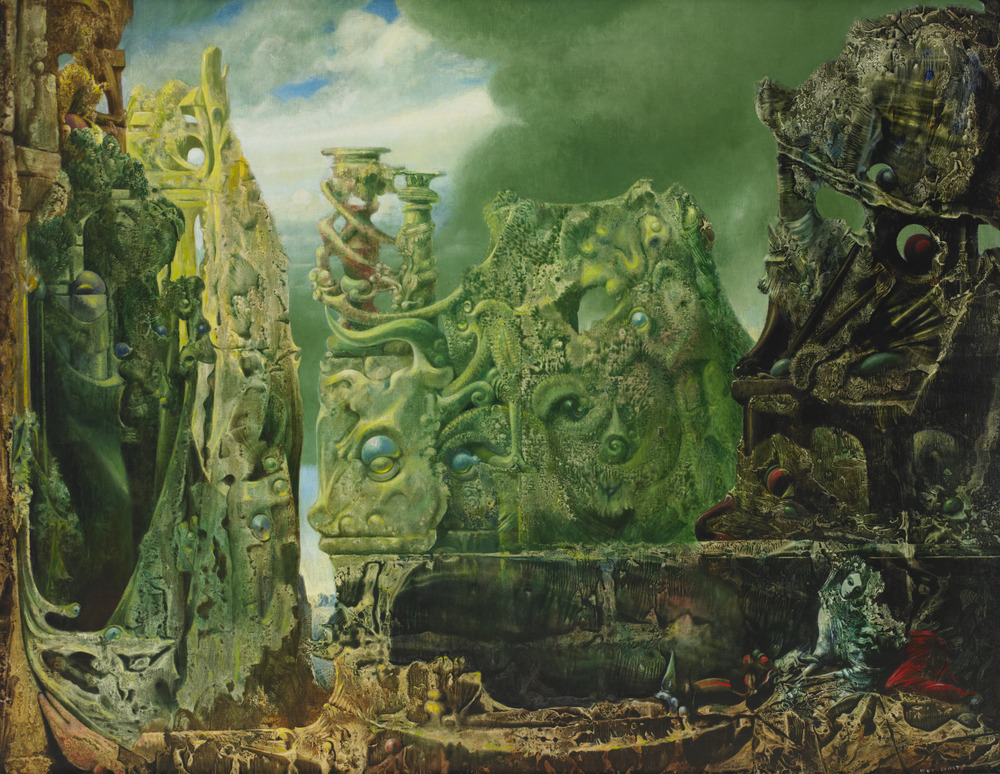
En apenas dos páginas, el cuento “El etnográfo” de Jorge Luis Borges reinterpreta la misión colonial de “educar” a los indígenas, desmonta la concepción occidental convencional del conocimiento como una meta objetiva y lo reimagina como un viaje subjetivo a ser recorrido, accesible solo a aquellos dispuestos a desvelar sus secretos cósmicos. Desde la perspectiva borgeana, el conocimiento no se puede ser expresado, comunicado ni compartido de manera convencional. La clave para desentrañar sus secretos no reside en la ciencia ni en la simple observación, sino en la experiencia misma. Aunque esta sabiduría ha sido parte integral de las cosmovisiones indígenas durante siglos, las estructuras jerárquicas que marginalizan y desprecian el conocimiento indígena han logrado ocultarlo a las sociedades occidentales. En este contexto, cuando el joven estudiante Fred Murdock se integra en una tribu indígena, su propósito inicial de estudiar al Otro se transforma en un viaje espiritual hacia el descubrimiento de una sabiduría cósmica. Borges subvierte la trayectoria colonial de lo indígena a lo civilizado para deconstruir el enfoque occidental tradicional del conocimiento, revelando que existen verdades entrelazadas en las cosmovisiones indígenas que no pueden ser verbalizadas ni transmitidas, ya que, según Borges, el conocimiento debe vivirse.
“El etnográfo” relata la historia de Fred Murdock, un joven estudiante cuya misión, encomendada por su profesor, consiste en viajar al oeste y vivir entre una tribu indígena para observar “los ritos esotéricos” y descubrir “el secreto que los brujos revelan al inciado”, con el objetivo de regresar y escribir una tesis académica (Borges 21). En este proceso, Murdock invierte el paradigma colonial: en lugar de que las tribus indígenas aprendan de la civilización occidental, es Murdock quien debe asimilarse a la tribu para acceder a un conocimiento valioso. A diferencia del proceso colonial, donde los pueblos indígenas son forzados a adoptar la cultura occidental, convertirse al cristianismo y aprender la lengua del colonizador, Murdock debe “acostumbr[ar] su paladar a sabores ásperos, se cubri[r] con ropas extrañas, olvid[ar] los ambiguos y la ciudad, [y] lleg[ar] a pensar de una manera que su lógica rechazaba” para que “los hombres rojos lo aceptaran como a uno de los suyos” (Borges 22). Sin embargo, a diferencia de la dolorosa pérdida cultural que conllevan la “inmersión” y el “proceso educativo” coloniales, la experiencia de Murdock en este nuevo contexto es un viaje fructífero que lo conduce hacia un conocimiento profundo y espiritual.
Al pasar tiempo en este espacio liminal, situado entre los dos mundos culturales, lingüísticos e ideológicos del indígena y el occidental, Murdock “llegó a soñar en un idioma que no era el de sus padres” (Borges 22). En esta cosmovisión indígena, que se opone a la jerarquía occidental que privilegia la realidad objetiva, el conocimiento se encuentra en el mundo de los sueños. El secreto que tanto ansiaba finalmente le es revelado “al término de un plazo prefijado recordando sus sueños y que se los confiara al clarear el día” (Borges 22). El “secreto” de la sabiduría espiritual y cósmica no proviene de la observación científica, sino de soñar en otro idioma y de percibir el mundo desde una perspectiva indígena, en la cual el conocimiento no solo reside en la realidad tangible, sino también en el mundo onírico y en todas las dimensiones cósmicas.
Las expectativas tanto del lector como del protagonista se subvierten una vez más cuando Murdock “le dijo [a su profesor] que sabía el secreto y que había resuelto no publicarlo”, rechazando así la concepción occidental del conocimiento como una progresión lineal que debe difundirse para expandirse (Borges 22). El secreto permanece oculto no por la voluntad de Murdock, sino porque “en esas lejanías aprend[ió] algo que no puedo decir,” lo que sugiere que la verdadera sabiduría no es algo que puede ser capturado o escrito, sino una experiencia elusiva e inexpresable que trasciende el discurso académico convencional (Borges 22). Al intentar comprender al Otro, Murdock descubre que su propia comprensión se trastorna fundamentalmente, y por ello, “la ciencia, nuestra ciencia, [se] parece una mera frivolidad” porque reconoce las insuficiencias del pensamiento occidental tradicional para abarcar todas las dimensiones del cosmos (Borges 22). En última instancia, no es sólo que “el secreto” es incomunicable, sino que el conocimiento mismo es un camino, y como tal, “esos caminos hay que andarlos” (Borges 22). La narrativa borgeana, al incorporar la sabiduría indígena, subvierte, deconstruye y reconfigura tanto la misión colonial como el enfoque occidental del conocimiento, transformándolo en una experiencia subjetiva, un trayecto en el que se atraviesan y se viven todas las dimensiones del cosmos, desde lo observado hacia lo soñado.
Bibliografía
Borges, Jorge Luis. “El etnográfo”. Ficciones. A.A. Knopf, 1993.
The Kaleidoscope of Reality: The Elusive Metaphysical Dimensions of Latin American Magical Realism
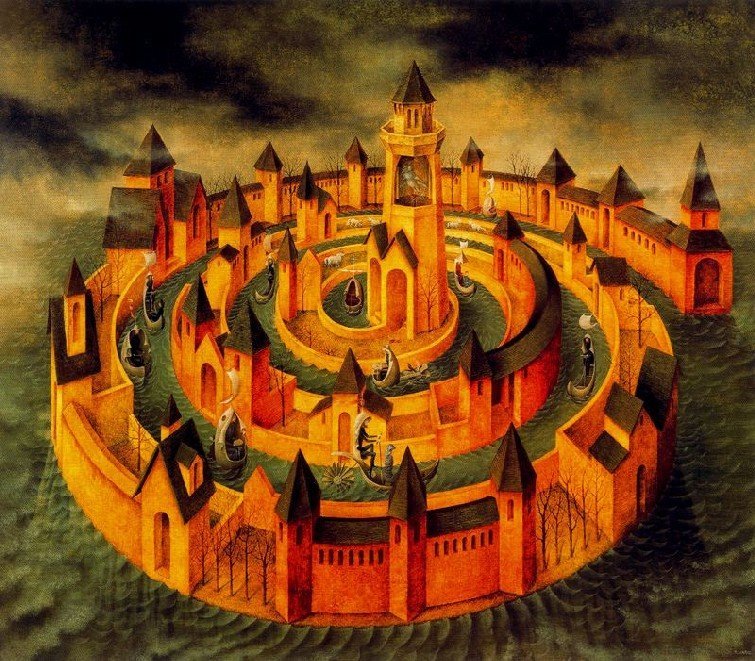
“Fiction reveals truth that reality obscures.”
Ralph Waldo Emerson
Around 1925, German art critic Franz Roh coined the term “magical realism,” intending to describe a group of post-expressionist painters after World War I. However, as time went on, magical realism adopted a different meaning, eventually being defined as a distinctive genre of literature. Magical realism is a term that has engendered controversy over the years. The precise definition of magical realism has become an elusive construct, and many different critics interpret the genre in multifarious ways. However, most interpretations acknowledge that magical realism is not merely just a genre but a message about how we decode and perceive the complex world around us; it is an endeavor to transfigure our understanding of the human condition.
The dictionary simply defines it as a “work of fiction where magical events obfuscate reality,” but upon deeper reflection, we can find that magical realism attempts to do the opposite. Instead, the genre aims to uncover a more complete signification of reality by revealing the hidden dimensions that reality obscures. The genre is characterized by a continuous infusion of magic into realistic settings and events and the refusal to elaborate on the absence of a demarcation. Magical realism holds the notion that conventional views on reality do not acknowledge more nuanced ontological perspectives. The traditional, empirical perspective on reality is static and exclusive — observation is merely accepted as truth. This canonical interpretation overlooks the inexplicable and exclusively focuses on the tangible; by ignoring certain dualities and elusive subtleties, traditional perspectives often neglect the marvelous complexity of existence. At the heart of magical realism is the belief in infinite space, infinite meaning, and infinite dimension. It is an embrace of the invisible, an exploration of abstruse concepts, and a reconsideration of the impossible. By amalgamating fantasy and reality, focusing on duality and hybridity, and considering everything interrelated, the genre reveals typically hidden facets, thus attempting to transfigure the reader’s perspective. Cosmic opposites such as dreams and consciousness, history and myth, and fact and fiction magnetically attract. By unifying these dualities, traditional, exclusive metaphysical perspectives are transcended to expose dimensionality – revealing the innate magic in existence.
In magical realist literature, space is hybrid, time is fluid, and paradox is inescapable. Magical realism seeks to unveil reality by evoking the sense of mystery lurking in the shadows of life. The genre maintains that the fantastic inheres throughout our universe and should not be treated as a separate force. Magical realism perceives reality without conventional limitations and shifts closer to an all-encompassing understanding of existence through enhanced awareness of mystical presence in nature. The genre is an orb of boundless theories and curiosities, attempting to understand the elusive enigmas that palpitate behind the trees, flowers, cosmos, and human consciousness. Magical realist literature embraces the extraordinary aspects of life by using language to paint surreal, enchanting images, powerfully complex emotions, and peculiar metaphysical realms.
In “On the Marvelous Real in America,” Alejo Carpentier gave a new meaning to the term after Roh initially coined it. In his perspective, Carpentier considered magical realism to be a uniquely Latin American genre. He suggests that “lo real maravilloso americano,” or “the marvelous real,” is an exaggeration of perceived reality that is deep-rooted in Latin American culture and spirit. Unlike European Surrealism, magical realism does not try and escape to a separate universe but embrace the innate magic of the earth:
The fantastic is not to be discovered by subverting or transcending reality with abstract forms and manufactured combinations of images. Rather, the fantastic inheres in the natural and human realities of time and place, where improbable juxtapositions and marvelous mixtures exist by virtue of Latin America’s varied history, geography, demography, and politics—not by manifesto.
(Carpentier, 145)
In Latin American magical realism, the fantastic is therefore already omnipresent in the universe, an idea that dates back to Indigenous Latin America. Carpentier claims that specific characteristics of magical realism are particularly singularly Latin American, and these characteristics compose the fundamental framework of the genre. The genre expresses a dualistic perspective on reality and emphasizes hybridity, central themes in Latin American mythology. Latin American art and literature are often significantly shaped by the land’s ancient civilizations and mythological background. Literary fiction continuously uses storytelling as a means to understand or express the human experience – the same way ancient Latin American civilizations, such as the Aztecs and the Maya, used legends and myths to explain and explore a seemingly inexplicable universe; legends and myths were used to try to understand reality and convey certain truths.
The Aztecs worshiped the dualistic twin Gods Quetzalcoatl and Tezcatlipoca, the Gods of light and darkness. In Aztec mythology, the Creator of everything is Ometeotl, an androgynous deity with both male and female qualities. In the Aztec language, Nahuatl, “Ome Teotle” translates to “dual god,” or “Lord of Duality,” epitomizing the complex, pantheistic nature of Aztec religious belief. Unlike monotheistic religions, the Aztecs believed in multiple gods and an intricate, dualistic, fluid perception of the universe. The Aztecs refused all notions of singularities and believed that every entity and theoretical construct has an opposite. Primary themes in Aztec mythology were ideas about balance, duality, and infinite possibility. The infamous Aztec ritual of human sacrifice traces back to the principal Aztec tenet that everything must be balanced, predicated on the cyclical Aztec view of creation and destruction. The Aztecs believed that a sacrifice must be made for the sun to continue rising; life requires death, and opposing forces comprise the universe.
Along with the rampant dualistic themes of Aztec and Mayan mythology, both the Aztecs and Mayans possessed a deep infatuation with the cosmos and a desire to understand the world around them. The Ancient Mayans developed the science of astronomy along with an intricate calendar system and eventually built complex pyramids for astronomical events. Ancient Latin American civilizations used mythology to describe and attempt to understand the universe, which they saw as dualistic and cyclical. Myth, like magical realism, merges reality with legendary elements and imaginative events to convey a message about the nature of existence. Thus, inherent in Latin American myth and culture is the belief that reality is infused with magic and existence is a multidimensional construct. At the heart of ancient Latin American myth is believing that everything has two or more sides; a magical realist unveils this truth. Therefore, the essence of Latin American mythology lies at the core of magical realism.
Like mythology, magical realism describes an exotic, primeval reality. While the mixture of reality and dreamlike events are comparable to myth and folklore, magical realism is unique in its ability to make the story seem real to the reader continuously. Along with Aztec and Mayan mythology, the amplification of reality inherent in Latin American culture stems from the colonial encounter between the Native Latin Americans and the Spanish. When the Spanish first landed in the Americas, confusion surrounded both the Spaniards and the Indigenous tribes as they sought to bridge two wildly different cultures without possessing the language to do so. The two cultures perplexed each other, and neither had ever seen such different human beings and cultures before. Unable to communicate through language, a new method of communication was needed. How does one describe a ship without having any words to describe it? Europeans marveled at the Montezuma empire and its one hundred glorious kilometers. For comparison, Paris at the time was only thirteen. In front of their eyes, Europeans saw the “magic of tropical vegetation” and “the unbridled creativity of natural forms with all their metamorphoses and symbioses on monumental canvases,” and stared awestruck at the foreign world (Carpentier 165). How does one describe the strange, exotic nature of Latin America if they have never been in such a place before? In “On the Marvelous Real in America,” Carpentier writes, “marveling at the sight, the conquerors encountered a dilemma that we, the writers of America, would confront centuries later: the search for the vocabulary we need in order to translate it all” (Carpentier 203).
Unable to describe the experience, both the Indigenous people and Spaniards were forced to face the limits of language. In a world without language, expression must find a new form. Along with a different vocabulary, a different optic was needed to see and comprehend the strange experience. The Europeans and Natives confronted the unbridgeable gap between language and reality, forcing Latin Americans to adopt an entirely different approach that embraced the inadequacies of words. Without words and language, through a simplistic lens, reality is conveyed the same way it is experienced — not the way it is observed. Magical realism explores the ineluctable fault of communication through inadequately describing magical and impossible events. This vague language manifests in a recurring characteristic of magical realism – the lack of explanation for strange occurrences:
In magical realism key events have no logical or psychological explanation. The magical realist does not try to copy the surrounding reality (as the realists did) or to wound it (as the Surrealists did) but to seize the mystery that breathes behind things.
(Leal 238)
Consequently, in magical realist literature, “elements are in a state of ambiguity,” and the author “makes a vague image in order to integrate the real and the supernatural world”(Akbari, Azizi, Rajabi 5). Characters simply accept supernatural events as everyday occurrences. Writers of magical realism thus concern themselves with the shortcomings of language and observational reality to evoke the most authentic emotional reaction of an experience.
The violence, poverty, and injustice that stemmed from colonialism resulted in generations of trauma in Latin America. Humans often seek to transcend the pain of their present reality as a psychological response to trauma, a psychological process commonly known as escapism. After World War II, those who rejected the harsh cruelty of life sought to escape it, and surrealism in art and literature soared as a result. In Latin America, the traumatic ramifications of colonialism manifested not only through a desire to escape reality but a desire to convey how reality truly felt. As a result, magical realist literature substitutes a fictional portrayal of “felt reality” for real events. Magical realism, therefore, “keeps alive the illusion and the mystery inherent in phenomenal knowledge, particularly when the object of that knowledge is death or pain” (Arva 74). The complex psychological relationship between human imagination and pain is seen through this substitution. By using elements of imagination, the complex nature of one’s pain and trauma can be translated into a readable image. Thus, magical realism creates an indistinguishable union between fiction and emotion:
The violent time-space, which could not be conceptualized because of its traumatizing effect, is recreated, or re-presented, in the text and thus rendered directly accessible to the readers’ experience as felt reality—unreal but true.
(Arva 79)
An indisputable relationship between imagination and pain thus emerges in magical realist writing as a response to trauma and suffering; the genre serves as an artistic attempt to convey how an experience feels rather than seems.
When an experience is described through a purely factual and observational lens, its dynamic character is sacrificed, and the portrayal of an emotional experience loses some of its intensity. The emotional character of an experience often cannot be described factually and objectively; however, by portraying nonsense as factual, magical realism depicts both the emotional and literal facets, embracing nonsensical aspects that are often dismissed when recounting an experience through a purely observational lens. Common elements of magical realist literature, such as the “copresence of oddities, the interaction of the bizarre with the entirely ordinary, the doubleness of conceptual codes, the irreducibly hybrid nature of experience,” elicit multiple aspects of and perspectives on reality (Wilson 407).
The Latin American Indigenous vocabulary lacked the words to describe the technology and animals brought by the Europeans. By referring to a ship as simply just a ship, it loses its emotional significance as an incomprehensible concept to those who had never seen anything like it before. However, if a ship is referred to as a giant or a monstrous creature, the bewilderment and awe of the Native Latin American experience become real. Language and observational reality may not be able to truly describe bewilderment, so magic is used instead; a “familiar scene is described as if it were something new and unknown, without dealing explicitly with the supernatural” (Noriega Sánchez 23). The bewilderment becomes real when the giant/monstrous creature is distinguished no more than the realistic events of the story. Magical realist narratives make abnormal, empirically impossible events seem normal by bridging the gap between the extraordinary and the ordinary. Magical elements are continuously interwoven throughout the story, forcing the reader to eventually accept them as real and natural occurrences. Through this essential lack of communication, the magical events in the text — albeit seemingly unrealistic — become real.
The Spanish were enamored by the inexpressible beauty of Latin America, while Ingenious tribes were fascinated by all the Spanish luxuries. The encounter itself left a marvelous wonder that could only be described with insertions of magic. After the two cultures began to fuse together, hybridity inevitably became infused in Latin American culture. The Indengious and the Spanish became one collective identity, congruing with core dualistic themes of identity in Indigenous Latin American mythology. Latin America became a world of inescapable dualism where nothing existed as a singularity. For those open to the leap of faith, magic and the marvelous are found everywhere in the history and identity of Latin America.
The synthesis between an exotic, mystical environment and the pervasive themes of dualism in mythology sparked a unique way of seeing the universe, one that fluidly embraces the exotic beauty of Latin America by seeing the world through a marvelous lens. Magical realism in Latin America thus exists as a “mode of conflicted consciousness, the cognitive map that discloses the antagonism between two views of culture, two views of history, and two ideologies” (Noriega Sánchez 30). To witness the miracle of Latin America, one must acknowledge that the “phenomenon of the marvelous presupposes faith” (Carpentier 166). To search for the marvelous real, as magical realist literature does, one must embrace the dualism, peculiarity, and perplexity of Latin America:
Because of the virginity of the land, our upbringing, our ontology, the Faustian presence of the Indian and the black man, the revelation constituted by its recent discovery, its fecund racial mixing [mestizaje], America is far from using up its wealth of mythologies. After all, what is the entire history of America if not a chronicle of the marvelous real?
(Carpentier 169)
Diverse yet ubiquitously exquisite, “the marvelous real” exists not only in the verdant, rich lands and haunting, mystical tales but in the pain that pervades Latin America. The marvelous is “joined to the notion that everything marvelous must be beautiful,” however, as Carpentier asserts in “The Baroque and the Marvelous Real,” all that is strange in the universe is marvelous (Carpentier 196). Therefore, the marvelous in magical realist literature can be seen in the uncanny, strange, and impossible, rather than just the beautiful. Magical realism contains dualities like “antinomies between natural and supernatural, explicable and inexplicable,” or beauty and peculiarity, and thus discovers “binary oppositions, or antinomies” everywhere (Wilson 435).
The genre presupposes faith and superstition, and “Latin American culture is steeped in superstition and a folkloric acceptance of the supernatural” (Rave 159). The essential characteristics of magical realism embody the inherent faith, mysticism, and duality found in Latin America; lo real maravilloso americano is an unavoidable ubiquity, and reality cannot be perceived as solely observational. Lo real maravilloso americano seeks to transform objective observation into subjective truth:
The marvelous begins to be unmistakably marvelous when it arises from an unexpected alteration of reality (the miracle), from a privileged revelation of reality, an unaccustomed insight that is singularly favored by the unexpected richness of reality or an amplification of the scale and categories of reality, perceived with particular intensity by virtue of an exaltation of the spirit that leads it to a kind of extreme state [estado límite].
(Carpentier 165)
Through an acceptance of divine reality and a transference of consciousness, the marvelous is “encountered in its raw state, latent and omnipresent, in all that is Latin American” (Carpentier 201). We cannot subvert or transcend reality to discover its magic. Instead, we must see and embrace and accept the “fantastic inheres in the natural and human realities of time and place, where improbable juxtapositions and marvelous mixtures exist by virtue of Latin America” (Carpentier 144). After all, the Aztecs and the Mayans did not try to escape the elusive mysteries of the universe. Instead, they transformed what was incomprehensible to them into a myth – stories that captured the innate magic they saw.
In magical realist literature, the boundary between human imagination and perception of reality disintegrates. Real and fictional elements are combined to invoke other dimensions of reality instead of a completely different universe. If there is one dimension of human perception where reality is entirely observational, then another alternate dimension where reality is perceived as the manifestation of imagination must exist. Objectivity and observational truth are perceived through the first dimension, whereas dreams, hallucinations, and subjective truths are perceived through the second. In the space in between, there is the balance that magical realism explores — a third dimension where mind and matter harmonize as one. Magical realist narratives comprise a hybrid space where these opposite dualities become one, and subjective truth is treated the same as objective truth. For instance, in Gabriel García Márquez’s One Hundred Years of Solitude, this space is manifested through the novel’s constant coupling of extraordinary and ordinary events:
Men died, grew old, had children, were born, remembered or forgotten; yet flowers rained from the skies, human persons metamorphosed into animals or angels, ghosts and chimeras abounded, and human psychology lent the structures of its obsessions to the world so that it became, in its reinvention, a labyrinth of emblems.
(Wilson 412)
Magical realism transcends the limits of language and observation to find the inherent beauty of the universe. The magical realist writer “confronts reality and tries to untangle it to discover what is mysterious in things, in life, in human acts” (Leal 234). The genre is not a “mixture of reality and fantasy but a way to uncover the mystery hidden in ordinary objects and everyday reality” (Noriega Sánchez 18). In the article “Magical Realism in Spanish American Fiction,” Angel Flores writes that the “practitioners of magical realism cling to reality as if to prevent “literature” from getting in their way, as if to prevent their myth from flying off to supernatural realms” (Flores 191). Therefore, magical realism is not the creation of an imaginary world but an exploration of the enigmatic relationship between the human experience and the mystical universe. The genre, therefore, “expresses a desire for an absolute, an absolute signified, an absolute meaning” (Simpkins 304). In other words, magical realist literature endeavors to express an absolute portrayal of reality that includes the realms of imagination; by doing so, the genre attempts to convey how an experience may have felt.
The magical nature of the genre can take various shapes and forms. On the one hand, magic can be conceived as an expression of the impossible and the supernatural. On the other hand, magic can be considered a manipulation of human senses. Unlike Surrealists who transform reality entirely, magical realist writers drastically dramatize reality to show the magic already present in the universe – not the magic of another world. The genre modifies conventional human interpretations of the universe; for instance, in magical realist text, time often “exists in a kind of timeless fluidity and the unreal happens as part of reality” (Flores 225). Symbols and metaphors become real, thus “closing of the gap between words and world, or a demonstration of what we might call the linguistic nature of experience” (Faris 339). A magical realist writer can take common metaphors and actualize them as a real occurrence. For instance, the metaphor of “an endless night,” can become real by creating a fictional world where nighttime never ends, and daytime does not exist. To convey what heartbreak feels like, a character’s heart may actually break or shatter. In a magical realist narrative, a character’s smile alone can be powerful enough to illuminate an entire room. By inserting hypothetical metaphors into an empirical reality, “signification seems to circumvent the signified (the concept): the signifier (the word) creates a reality (a referent) experienceable as such within the text only” (Arva 79). Magical realism often uses techniques such as these to blur the line between mind and matter and portray previously obscured psychological and emotional dimensions. Magic in magical realist literature thus portrays the multivalent dimensions of human perception, reality, and emotion.
Magical realism explores infinite possibilities; an attitude toward reality embraces its limitless nature. Through this attitude, the genre endeavors to discover the mysteries that hide behind and palpitate within the real world. Gabriel García Márquez claims that he “was able to write One Hundred Years of Solitude simply by looking at reality, our reality, without the limitations which rationalists have tried to impose on it to make it easier for them to understand” (Fragrance 59-60, Simpkins 290). By looking at reality as solely empirical, objectivity replaces subjectivity and dismisses reality as being subjective to its viewer. A canonical perspective can therefore be inaccurate and far from the truth:
The subject of knowledge (human) and the theme of knowledge (environment) are both changing and transforming. Inevitably, the relation between them which is knowledge cannot be fixed, too. As a result, the truth that is the trait of knowledge cannot be a fixed and definite quality. As the eternal existence is in the process of transformation, the truths also change.
(Akbari, Azizi, Rajabi 2)
An exclusive, rigid, and empirical point of view adheres only to one perspective without considering others. The world of dreams and emotions is often ignored for the observational world apparent upon first glance. Magical realism demolishes the idea that empirical perspectives reflect on facts/truth and ultimately uncovers that they only reflect on representations. Magical realism, therefore, attempts to transfigure the traditional tenets of mimesis, the idea that reality can be represented, to reach a deeper metaphysical understanding of representation and fabulation.
To understand the mysteries lurking beneath the surface, “the magical realist writer heightens his senses until he reaches an extreme state that allows him to intuit the imperceptible subtleties of the external world, the multifarious world in which we live” (Leal 238). Magical realist writers drastically emphasize and minimize common elements of reality to unveil the innately ubiquitous magic present in our universe. By defamiliarizing these common elements, magical realism uncovers aspects that have become imperceptible:
Within this arena of uncertainty, magic realism demonstrates its hopeful scheme to supplement the realistic text through a corrective gesture, a means to overcome the insufficiencies of realism (and the language used to ground realism).
(Simpkins 298)
In magical realist narratives, inexplicable and fantastic events are presented as real. By intertwining fantasy and reality, the narratives transcend reality to uncover a deeper ontological comprehension. Magical realism, therefore, attempts to unveil the supernatural, religious, or mythical elements of the universe that are imperceptible to empirical and observational perspectives. The embrace of the fantastic engenders a transcendental metaphysical perspective. Magical realism looks beyond the explicable to see the miraculous through a third narrative space where they coexist. The genre contains lyrical representations of reality that convey the human experience through its limitless, fluid, and unrestrained dimensions. By translating palpable human emotions to actual events, magical realist texts transform reality into an “authentically human medium by which we may access and make sense of the real” (Arva 67). Magical realism reconstructs reality to express what existence feels like:
The often elusive reality of extreme events that fail to be grasped in their entirety when they first occur; it is a catalyst that neither negates reality nor creates a super- or parallel reality. Magical realism constitutes an attitude toward and a way of approaching reality—a reality that is rarely what it seems and is seldom perceived in the same way by subjects in different places or in different times.
(Arva 68)
Magical realism acknowledges that reality is not a finite and immutable construct but multivalent translations of the human experience. The magic of the genre lies in its miraculous ability to unveil what reality feels like, not just what reality is observed to be. Through translating the tangible world into palpable magic, objects become emotions, and metaphors become realized. Magical realism embraces the mystical nature of the universe to access the inaccessible spaces of reality, the ones that appear to be out of reach. At the essence of magical realism lies the ontological and metaphysical belief that reality is like an inexplicable kaleidoscope of infinite layers. Magical realism translates the infinitely complex nature of reality into cosmic narratives. The marvelous real alludes to this dualistic, fluid attitude towards reality – one that has existed in Latin America for centuries. Dating back to ancient Aztec and Mayan civilizations, the ubiquitous presence of hybridity and fluidity in Latin American myth and culture has encased the marvelous real in Latin America and thus immortalized magical metaphysical realms.
For this reason, Latin America and magical realism are endlessly connected and inextricably bound. Magical realism writes the marvelous real in order to transcribe the elusive nature of human existence. Although we may not observe the magic in the universe physically, we can feel it and believe in it. The genre transcends all forms of human observation and embraces the infinite, fantastic, and realistic dimensions in the kaleidoscope of reality. In a universe filled with infinite mystery and limitless possibility, the marvelous real exists everywhere, hidden in every crevice. If we look hard enough, we can almost see it; if we reach far enough, we can write it in the genre of magical realism.
Works Cited
Akbari, Mehrdad, Azizi Majid, Ayyub Rajabi. “Magical Realism: The Magic of Realism”. Rupkatha Journal on Interdisciplinary Studies in Humanities (ISSN 0975-2935) Indexed by Web of Science,
Scopus, DOAJ, ERIHPLUS Vol. 12, No. 1, January-March, 2020. 1-13 Full Text: http://rupkatha.com/V12/n2/v12n218.pdf DOI: https://dx.doi.org/10.21659/rupkatha.v12n2.18
Arva, Eugene L. “Writing the vanishing real: hyperreality and magical realism.” Journal of Narrative Theory, vol. 38, no. 1, winter 2008, pp. 60+. Gale Literature Resource Center, link.gale.com/apps/doc/A177983778/LitRC?u=anon~e8d066d5&sid=googleScholar&xid=fd7eeab4. Accessed 16 Feb. 2022.
Carpentier, Alejo. “On the Marvelous Real in America (1949)”. Magical Realism: Theory, History, Community, edited by Lois Parkinson Zamora and Wendy B. Faris, New York, USA: Duke University Press, 1995, pp. 75-88. https://doi.org/10.1515/9780822397212-005
Carpentier, Alejo. “The Baroque and the Marvelous Real (1975)”. Magical Realism: Theory, History, Community, edited by Lois Parkinson Zamora and Wendy B. Faris, New York, USA: Duke University Press, 1995, pp. 89-108. https://doi.org/10.1515/9780822397212-006
Faris, Wendy B.. “Scheherazade’s Children: Magical Realism and Postmodern Fiction”. Magical Realism: Theory, History, Community, edited by Lois Parkinson Zamora and Wendy B. Faris, New York, USA: Duke University Press, 1995, pp. 163-190. https://doi.org/10.1515/9780822397212-011
Flores, Angel. “Magical Realism in Spanish American Fiction.” Hispania, vol. 38, no. 2, American Association of Teachers of Spanish and Portuguese, 1955, pp. 187–92, https://doi.org/10.2307/335812.
Leal, Luis. “Magical Realism in Spanish American Literature (1967)”. Magical Realism: Theory, History, Community, edited by Lois Parkinson Zamora and Wendy B. Faris, New York, USA: Duke University Press, 1995, pp. 119-124. https://doi.org/10.1515/9780822397212-008
Noriega Sánchez, María Ruth, author. Challenging Realities : Magic Realism in Contemporary American Women’s Fiction. Valencia :Universitat de València, Departament de Filologia Anglesa i Alemanya, 2002.
Rave, Maria Eugenia B., “Magical Realism and Latin America” (2003). Electronic Theses and Dissertations. 481. http://digitalcommons.library.umaine.edu/etd/481
Simpkins, Scott. “Sources of Magic Realism/Supplements to Realism in Contemporary Latin American Literature”. Magical Realism: Theory, History, Community, edited by Lois Parkinson Zamora and Wendy B. Faris, New York, USA: Duke University Press, 1995, pp. 209-234. https://doi.org/10.1515/9780822397212-013.
Wilson, Rawdon. “The Metamorphoses of Fictional Space: Magical Realism”. Magical Realism: Theory, History, Community, edited by Lois Parkinson Zamora and Wendy B. Faris, New York, USA: Duke University Press, 1995, pp. 209-234. https://doi.org/10.1515/9780822397212-013.
Female Sexuality as a Mystical Power: Female Identity and Magical Realism in Isabel Allende’s Los Cuentos de Eva Luna
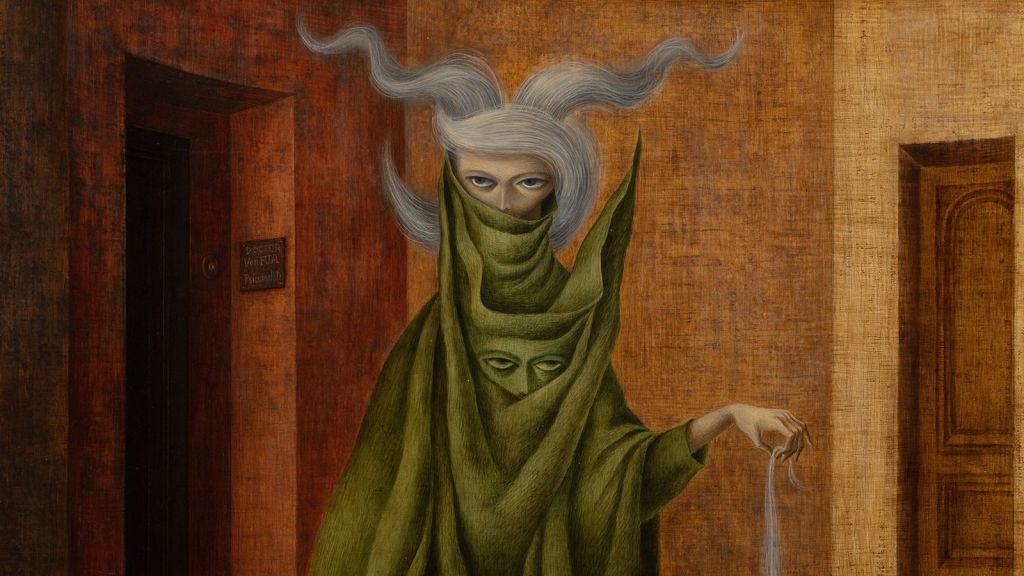
“I try desperately to conquer the transitory nature of my existence, to trap moments before they evanescence, to untangle the confusion of my past. Every instant disappears in a breath and immediately becomes the past; reality is ephemeral and changing, pure longing.”
Isabel Allende, Portrait in Sepia
“She sowed in my mind the idea that reality is not only what we see on the surface; it has a magical dimension as well and, if we so desire, it is legitimate to enhance it and color it to make our journey through life less trying.”
Isabel Allende, Eva Luna
Storytelling is a fantastic linguistic realm that seeks to discover the visible and elusive realms of reality and human experience. Stories unravel the entangled intricacies of memories, endeavoring to express the complex nature of experiences, events, and emotions. Stories encompass both memory and myth, unveiling the mystical and tangible dimensions of the human experience that often remain unseen. Through this realm, we can see the invisible and hear the inaudible – revealing certain voices, perspectives, and emotions that are sometimes silenced. In Los Cuentos de Eva Luna, or, The Stories of Eva Luna, Isabel Allende transfigures simple tales into cosmic poetry, illuminating fragments of life that are often unexplored or ignored. Her enchanted realms explore the boundaries between fantasy and reality, mythology and history, and the female body and soul. In Cuentos, Allende tells stories that redefine and reimagine reality, uncovering a myriad of representations and a tangled web of perspectives that recreate identity and memory.
Within her narratives, Allende liberates female voices previously silenced by the historically patriarchal underpinnings of Latin America. She weaves an elaborate tapestry of female mysticism, sexuality, and eroticism that merges the real and the surreal, the possible and impossible, and the imaginary and magical. The enchantment and exotic lyricism weaved into the pages of Cuentos lay bare the fluid, hybrid, and mythical nature of female existence. The magic of her stories comes from the miraculous, unique abundance of passion her female characters possess. Women in Cuentos forge their own destinies with the power of words and use language as a supernatural force to redefine their identity and societal position. Her female characters possess a miraculous erotic power and capacity for passion that arouse fear and veneration from all. Allende conveys a feminist attitude towards female sexuality that embraces both the delicacy and intensity of feminine passion. The mystical and spiritual dimensions of Allende’s narratives express a perception of reality that is translucent and permeable. Through the words of Allende:
Magical realism is a way of seeing in which there is a space for the invisible forces that move the world: dreams, legends, myths, emotion, passion, history. All these forces find a place in the absurd, unexplainable aspects of magic realism. It is the capacity to see and to write all the dimensions of reality.
(Allende 54)
Using the fluid nature of the magical realist genre, Allende constructs a version of reality that uncovers the innate magic of female sexuality. The stories in Los Cuentos de Eva Luna create a fictional space for women separate from the oppression of colonized, patriarchal societies. Within this space, female voices break their silence and transform their reality, sexuality, and identity through marvelous tales of magic, love, and female passion.
The tales in Cuentos transcribe the romantic and sexual world of women. In the world Allende creates, women possess an ethereal aura of eroticism and sexuality that gives them immense power over their condition. By merging the female body with magic, the stories portray and contextualize female sexuality as a powerful force that rebels against traditional perspectives regarding female sexuality and identity. The female body is portrayed as divine, possessing an inexplicable power over men. Allende manipulates the participial construct of the “Other,” or the historical ostracization of an individual that relegates their role in society. The otherworldly eroticism of the female body reshapes the “otherness” of women as an impenetrable, boundless, and supernatural force. In the colonial, repressive, and misogynistic culture Allende repudiates in her literature, female sexuality is often controlled and suppressed – women are stripped of their power and forced into a subservient role. In “Dos Palabras,” or “Two Words,” Belisa Crepusculario, aware of her limitations as a woman in a male-dominated society, escapes her desperate poverty by forming an intense passion for words and extraordinary control of language. Allende uses the magical realist technique of ambiguous exaggeration to portray Belisa’s grave condition of being “born into a family so poor they did not even have names to give their children” (Allende 10). Despite her situation, Belisa eventually discovers language, which she uses to name herself and reject her poverty, finding “the poetry of ‘beauty’ and ‘twilight’” and “cloaking herself in it” (Allende 3).
As a member of a marginalized class in society, Belisa knows that her choices as a poor woman in Latin America are limited. However, after realizing that “words make their way in the world without a master, and they can belong to anyone who is clever enough to understand how to use them,” she decides to escape her condition. She finds power through selling words (Allende 10). She travels from cold mountains to sweltering desserts, selling words to others who are enchanted by her mystique. Her pure passion for language gives her words a divine aura, eventually capturing the fascination of the Colonel, a stereotypical, dominant machismo figure. The Colonel asks Belisa to sell him a speech, but when she looks into his eyes, she sees a gaping emptiness inside of him – as if his soul was yearning for her to somehow wondrously cure him.
After seeing the loneliness inside him, Belisa whispers two enigmatic words in his ear before she departs. As The Colonel continues to rise in political power, he develops an inescapable passion for those two words and becomes ensnared by Belisa’s power; the memory of Belisa is ineluctably etched into his psyche. His obsession begins to consume him entirely, and “every time he thought of those two words, he thought of Belisa Crepusculario, and his senses were inflamed with the memory of her feral scent, her fiery heat” (Allende 17). The Colonel becomes ravaged with desire and eventually cannot seem to function; he walks around “like a sleepwalker, and his men realized that he might die before he ever sat in the presidential chair” (Allende 17). In a state of utter desperation, he pleads with and begs Belisa to take back her words and the spell she used to bewitch him. Instead, to his surprise, she stares longingly into his eyes and gently takes his hand.
After this, his fellow-men realize that “their leader would never undo the witchcraft of those accursed words, because the whole world [saw his] voracious-puma eyes soften” (Allende 17). By accusing Belisa of witchcraft, the male characters of “Two Words” give her a supernatural ability they will never acquire or even begin to understand. They may appear to control her world through their societal role as male soldiers, but Belisa holds a much greater power over them – the magic of language. Once a personification of male dominance, the Colonel is now a vulnerable servant to Belisa’s magic. His desire for her burns so intensely that he weakens until he becomes utterly powerless against her control.
Using only two words, Belisa transforms a man and deconstructs his machismo persona. She acquires a mystical power through her femininity and eroticism, symbolically represented by the two words she speaks to The Colonel. In a world where desire can seem like a fatal fever, and two words alone can leave a powerful man defenseless, Allende characterizes the capability of female sexuality as infinite. The tale dissolves realistic societal boundaries without leaving the realm of possibility. The magic of “Two Words,” simply lies in the sheer intensity of human emotions. Desire, lust, and love appear to have a supernatural complexity; however, the most prominent instance of magic in the story is found in the representation of female sexuality. Simply by embracing her femininity, passion, and sexuality, Belisa transcends her condition as a poor woman. Allende represents and responds to the historical marginalization and silencing of women by giving Belisa a wondrous power and passionate voice. Using the power of her exotic words and storytelling, Belisa reconstructs the gender roles assigned to her. She transforms the repressive cycle of patriarchal domination through a uniquely feminine and erotic form of resistance. In “Two Words,” the female voice breaks the silence of suppression and subverts the traditional notions of gender through the magic of storytelling.
The polyvocal nature of magical realism thus allows Allende, like Belisa, to transcend the limits of female discourse. Allende transcends the timeless struggle of translating emotions into words by using imagination to manipulate language, thereby defying conventionality and depicting fluid, multivalent representations of women and reality. By leaving the magical occurrences in the story unexplained, Allende manipulates silence and creates uncertainty, giving Belisa and her words an enigmatic mystique and thus representing the mystifying nature of female sexuality. Using the sense of ambiguity that the genre of magical realism engenders, Allende redefines female silence.
Dating back to ancient times, female sexuality has been traditionally viewed as the passive counterpart to male sexuality. Female erotic desire is often considered inadequate or insignificant compared to men’s desires. Paradoxically, the second that female sexual desire becomes intense, it becomes associated with sin, corruption, and evil. As a result, women have been continuously stripped of their sexuality throughout history. Furthermore, female sexual repression has become deeply embedded in society, especially in profoundly Christian areas like Latin America. In “Niña Perversa,” “Wicked Girl,” Allende rejects the erotic repression of women and attacks traditional gender roles by explicitly embracing the perverse and sinful nature of female erotic desire. In “Wicked Girl,” Allende tells the story of a young girl sexually awakening. After witnessing an erotic scene between her mother and her mother’s lover Bernal, the female protagonist, Elena, becomes impassioned and inflamed with lust for Bernal.
At eleven years old, Elena rejects conventional societal notions about the purity of female sexuality and experiences an uncontrollable, wondrous wave of sexual desire. Her obsession grows so outrageously intense that Elena almost dies from pleasure if Bernal just speaks to her. Her sensuality becomes so heightened that it transcends her being; she “submerges herself in a fanciful reality that completely replaced the world of the living” (Allende 24). Like The Colonel from “Two Words,” Elena becomes so consumed by sexual desire that it seems like she is under a sort of uncanny, inexplicable spell. When she can no longer control her lust, she sneaks into Bernal’s room and attempts to make love to him. As she ferociously and passionately kisses him, Allende writes that an “eternal stealth exaggerates the ethereal air of the child who moved in an aura of silence, vanishing in the shadows of a room only to appear suddenly as if returning from another dimension” (Allende 19). Elena relishes acting on her desires, but when Bernal feels her fragile, birdlike body and realizes that he is caressing a child, he slaps her in a fit of rage and screams “wicked girl” at her repeatedly. Elena is sent to a religious school to repent for her sins and is thus condemned to a life of degradation and sexual repression.
Over the years, Bernal became “consumed by a constant burning desire for her that fired his blood and poisoned his mind,” and “the child’s image had stayed with him intact, untouched by the years” (Allende 26). Like the Colonel, his erotic desire for Elena and his relentless memories of her take control of his entire existence. After years spent tormented by his memories of Elena, his elation when she finally returns home is destroyed when he discovers that she is now practically chastite. Once again, the supposedly dominant man of the story is left vulnerable and subservient to female sexuality. Bernal frantically and desperately confesses his obsession to Elena, but she does not even remember their sexual encounter. She repressed the memory of Bernal along with her sexuality, and Bernal is left desperate and powerless, utterly destroyed by his attempt to repress female sexuality.
Allende probes into the association of female sexuality and evil by conjuring up obscure, bewitching images and symbols that embrace female eroticism. As Elena watches her mother and Bernal make love, she describes her mother as a “round, rosy, moaning, opulent siren, an undulating sea anemone,” and says that Bernal “seemed rigid and clumsy, moving spasmodically like a piece of wood tossed by inexplicable high winds,” contrasting their sexual prowess (Allende 23). The sensuality and magic infused in every movement witnessed between her mother and Bernal sparks Elena’s intense sexual awakening. Allende paints Elena and her mother as sexually divine feminine goddesses, while Bernal lacks any sense of erotic power. Through her feminine sexuality, Elena stays eternally powerful and intact in Bernal’s mind. The perseverance of Elena’s image in Bernal’s mind transfigures her character from a sinful, young girl into a mythical, impenetrable erotic being. The miraculous nature of her sexuality is forged through her implicit embrace of the taboo.
Los Cuentos de Eva Luna tells stories that redefine the shameful association of female sexuality with perversity and taboos such as witchcraft, promiscuity, lust, and treason. In “Wicked Girl,” these “wicked” sins empower Elena. Allende, therefore, re-evaluates conventional views of female sexuality; her female protagonists possess an extraordinary spiritual, erotic power that transforms them from sinners to goddesses. By embracing her sin and sexuality shamelessly, Elena rejects the association between female sexual desire and sin. Allende weaves magic throughout the story, enhancing the power of Elena’s eroticism. By turning the tables on the idea of feminine sexual taboos, Allende empowers women by reversing gendered sexual power roles. In the context of phallocentric discourse, the association between the sexuality of Latin American women with evil and perversity diminishes the power of female sexuality and exacerbates the “otherness” of women. Contrarily, in Allende’s stories, women discover their power in the same places that they have been historically suppressed; her female protagonists use the “sinful, shameful taboos” of witchcraft, magic, sexuality, spirituality, and sin to write their own destiny. Like Belisa, Elena transcends her condition and refuses the demonization and “othering” of women by embracing the mystique of her darkly enchanting, nymphlike sexuality and magical power.
In “María La Boba,” “Simple María,” Allende turns the tables on the stereotype of female prostitutes as disgraceful victims of masculine desire. After being struck by a train as a child, María escaped into the fantastical realms of her mind and adopted an idealistic facade. She eluded the trauma of her suffering by romanticizing her life and living inside her romantic delusions. As the years go on, María continues to avoid confronting the loneliness inside her, eventually causing her mind to deteriorate until she retreats into a permanent, childlike state. After the death of her husband and child, María’s loneliness and longing for intimacy grow more potent than ever. She tries to fill her void by finding solace through her sexuality and intimacy through prostitution. When she discovers sex for the first time, María “believed it was the blessing from heaven that the nuns in her school had promised good girls in the Beyond;” she can escape her suffering and harsh reality through her innocent, childlike, and pure lens – a lens entirely contradictory for traditional notions about female prostitutes (Allende 97). Her longing for intimacy and desire to ameliorate her loneliness manifest sexually through prostitution, but her mind continues to remain pure and shameless. María does not understand sex or any of the societal or moral implications placed on female sexuality and female prostitution. For María, having sex is no different from being hugged. Utterly oblivious of her actions, she continues to sleep with men. Her mind is so warped by its romantic facade that she cannot differentiate between sex, love, sin, prostitution, pleasure, and intimacy. Men from all over the world became enchanted by María after hearing “the gossip that there was a woman who was able, even if briefly, to sell the illusion of love” (Allende 97). María, incapable of logic and reasoning, continues to believe in the fantastic illusion that she was madly, passionately in love with every man who entered her. María’s absurd, miraculous belief in love is “what made her a living legend” (Allende 91). Therefore, her magic power is her divine, feminine sexuality, which, like Belisa and Elena, allows her to transcend her condition and maintain control of her surroundings.
Within her psychological realms of fantasy and fairy-tales, María longed for the unattainable, and “in every passing man, illuminated by an imagined love, holding back the shadows with fleeting embraces,” María “sought that illusion” (Allende 98). To those who knew her, María was like “a creature caught in the limbo of an invulnerable innocence, a woman dedicated to exploring her own senses with all the playfulness of a cub” (Allende 96). María is characterized as a purely innocent, devotedly romantic, and sexually naive woman-child. She is a tragic paradox – a happy, hopelessly romantic, sexually powerful child, yet a sad prostitute romantically loved by no one. Through the paradoxical nature of María’s character, Allende unveils the paradox of associating female sexuality with sin. For María, reality does not exist; she holds onto impossible illusions to endure her pain and loneliness. In the fictional world of “Simple María,” she lives “beyond the torment of hope, protected by the armor of her invented love” (Allende 91). María marvelously fabricates her memories, “filling in the blank spaces with fantasy, until they had reconstructed a past for her,” and thus constructs her own magical and erotic reality (Allende 91).
In Los Cuentos de Eva Luna, female characters like María reconstruct their reality and acquire mystical powers through their female sexuality. María possesses the uncanny ability to create her own universe and exist in a world of delusion – all by embracing her sexuality. Despite her naivety, María commands the game she invents – she decides the rules. Like other stories in Cuentos, the sheer power of her eroticism and her marvelous sexuality nearly terrify the men around her. María’s character defies the patriarchal notion of prostitution as evil and villainous, thus rejecting associations between female sexuality and sin. María, like Elena, develops transcends the tragedy of her condition through embracing sin. No matter how naive she is, she continues to control the men around her using her magical, erotic force. Therefore, ” Simple María ” demonstrates a reversal of sexual power concerning who chooses and who controls. Like María, the female protagonists of Cuentos use their female voice and sexuality as the keys to unlocking the gender hierarchy and dismantling patriarchal oppression.
At the heart of Los Cuentos de Eva Luna is the portrayal of feminine eroticism as a powerhouse for females to transcend their condition and discover their identity and sexuality through magic. Allende uses different perspectives framed within a feminine framework to replace the image of the female body as a silent object of male desire with an image of the female body as a means of controlling, manipulating, and transcending an oppressive, patriarchal society. For the women of Cuentos, female sexuality takes on a magical significance that male sexuality cannot achieve. In “Si Me Tocaras El Corazón,” “If You Touched My Heart,” Allende tears apart the image of the female body as an object of male desire by creating a world where the objectification of women is made literal. One day, as Amadeo Peralta walks the streets of the fictional town Agua Santa, he becomes enchanted by a nymphlike girl with a strange charm as she plays soft music on a wood psaltery. He cruelly abandons her without remorse after seducing her with false promises of eternal love and flowery romantic sentences. Peralta forgets about the girl until a week later when she unexpectedly appears at his house “inflamed with the fever of love” (Allende 54). Unable to resist his lustful desires, Peralta impetuously locks the girl, Hortensia, in an underground cell for over forty years.
Even when she is entrapped and seems helpless, Hortensia still consumes and plagues Perlata’s mind, similar to how the female protagonists in “Two Words” and “Wicked Girl” control the men in their narratives. Allende writes that Hortensia is “stuck in his consciousness like a persistent nightmare” (Allende 55). Despite her enslavement and clinging to Peralta with “the terrifying submission of a slave,” Hortensia somehow still sexually controls him and dominates his thoughts (Allende 55). Her imprisonment continues throughout the years, and she eventually begins decaying and “turning into a subterranean creature” (Allende 57). In a world where she was isolated from everything except her sexuality, “her senses grew sharp and she learned to see the invisible; she was surrounded by hallucinatory spirits who led her by the hand to other universes,” her sexuality becoming the only means of control she has (Allende 57). Like María, Hortensia possesses an innocence that contradicts her actions and appearance. The paradox of her childlike yet erotic innocence and purity allows her to use her imagination to escape her fate. Had she seen herself, “she would have been terrified by her appearance; as she could not see herself, however, she was not witness to her deterioration: she was unaware of the scales sprouting from her skin, or the silkworms that had spun a nest in her long, tangled hair” (Allende 57). Once a youthful, vibrant nymph, Hortensia is transformed into a monster, “her toenails thickening like an animal’s hooves, her bones changing into tubes of glass, and her belly caving in” (Allende 57). When strangers finally discover her and free her from her cell towards the end of the story, Hortensia is unrecognizable. However, even though Peralta imprisons and neglects her, she remains faithful to the idea of love – even when her beauty tragically wilts away – just like María. She becomes an uncanny, supernatural creature and still persistently believes she is as beautiful as ever, living under a facade. Like María, Hortensia lives through her realms of magical delusions and eroticism to escape the pain of her tragic condition.
The metamorphosis of Hortensia reveals a metaphor about the nature of female objectification and the hybridism of female identity. Allende portrays the sexuality and identity of Hortensia as fluid and mutable; she is able to morph from a woman to a supernatural creature. In “If You Touched My Heart,” Hortensia becomes nothing; her sole purpose is to be an object of male desire. Her body is hypersexualized and rendered monstrous, and her objectification by Perlata eventually destroys her body and soul. The tragic, destructive fate of Hortensia forces the reader to confront the patriarchal and political oppression present in the novel and in modern society. Hortensia becomes converted into a mere object for the male gaze. By relegating women as simply just objects of male desire, the sexuality and identity of women is destroyed, an act symbolically manifested through Hortensia’s decay. In the narrative, Hortensia personifies the “Other” when she metamorphoses into an inhuman creature. She is consigned to an existence where she is an inhuman object with the sole purpose of satisfying male desire.
Allende uses the supernatural nature of Hortensia’s enslavement and metamorphosis to provide the framework for the metaphorical actualization of the objectification of women. The story of Hortensia exposes the enslavement of women inherent in patriarchal and authoritarian systems. Throughout Cuentos, an obsession with women’s sexual and uncanny power emerges as a critical theme in the stories. Hortensia’s grotesque body yet erotic encapsulates the patriarchal fear of female sexual power and control. In Cuentos, gender roles are thus reversed; the female characters possess and control the male characters. The heterogeneous, mutable nature of female corporeality merged with the supernatural framework of the story gives Hortensia the power to escape her condition through her body. In “If You Touched My Heart,” and throughout Cuentos, Allende writes narratives that denounce phallocentric constructs and give women the space to choose their own sexual path and experience pleasure. The female characters in Cuentos repudiate the societies that exploit female sexuality and render women powerless. Through the paranormal metamorphosis of Hortensia’s character, Allende unveils the female perspective on the sexual objectification of women, thus subverting common pre-assumptions about female sexuality. Allende’s distinctive female perspective within the magical realist framework allows her to defy traditional conceptions of the female body and write a narrative that expresses and reshapes the female sexual experience.
The women in Los Cuentos de Eva Luna use their eroticism and sexual energy to dislocate repressive structures of patriarchal views. Allende expresses a feminist perspective that portrays female sexuality as a potential powerhouse producing energy women can transcend and transform their lives. In stories where women can reclaim and redefine their “sinful and inadequate” sexuality, female eroticism becomes power. Marginalized and seemingly powerless female characters such as María and Hortensia somehow defy authority and shatter stereotypes. The magical properties of Allende’s stories enable her characters to transcend the ascribed roles of women in patriarchal societies. Embracing their femininity and eroticism, the women of Cuentos use their sexuality to subvert, transform, and overcome the silencing and marginalization imposed on them. Sensuous, fierce, and mystical women who embody a uniquely female aura break conventions and dominate their world. Within the fluid framework of magical realism, female sexuality is given a mystical power that empowers the women of Cuentos to redefine female sexuality as a multifaceted, fluid, and impenetrable force.
The textual intricacy and polyphonic nature of the magical realist genre enable stories like those in Cuentos to reconstruct conventional constructs. Within the magical realism framework, women can transform their unjust reality by re-inventing new roles for themselves. In a magical realist text, reality is transfigured, emptied of conventional perspectives, and re-invented through a new, multidimensional lens. Magical realist narratives thus create an ideal space for the resistance and opposition of societal norms. Magical realist texts perpetually facilitate reconceptualization by perceiving reality as a permeable construct and by constantly intermingling hybridity and infinite possibility. In a dimension where reality itself becomes mutable and fluid, societal structures of gender can effortlessly be transmuted. Storytelling can give women the voice to establish their own reality, as personified by Belisa in “Two Words,” and by Allende in Los Cuentos de Eva Luna.
Magical realism stories, like those in Cuentos, can reconstruct and reassess the marginalized subjectivities of society and use the fantastic to express metaphors that confront issues like female suppression, repression, and abuse in colonial and patriarchal societies. Allende uses magic to express the female experience and demonstrate the many ways in which women can transcend difficult conditions. For instance, Belisa transcends their condition by discovering and then using the magical effects of language. Women entrapped, such as Hortensia and María, escape by retreating in silence and reverting into a psychological state of fantasy and delusion – which is nevertheless an extraordinary power of its own. Allende’s stories illustrate that whether a woman transcends or escapes her plight, she still possesses a unique and magical power.
Magical realism gives a voice to ones previously unuttered, like the voices of Natives and women in Latin America. By blurring the lines between history and fiction, magical realism defies the monolithic treatment of history and represents the unheard histories and alternative realities previously buried by partisan mindsets. Magical realism places fiction and history side by side to unveil the fabrication inherent in history. The narratives expose the subjectivities of history and realism – constructs that are no different from storytelling itself. Natives and women in Latin America have been made acutely aware of the delusory capacities of “factual” history and “observational” reality from living under a historically oppressive society. Magical realism creates a narrative space where marginalized members of societies, such as Natives and women, can reveal their own truth and transgress the roles forced upon them.
In Los Cuentos de Eva Luna, Allende redefines femininity and reveals it to be socially constructed, thereby reclaiming the role of women in society. In her narratives, she destroys the idea of objective reality to subvert the traditional, imprisoning conceptions of women written under male domination – thus liberating the female body from a masculine colonizing discourse. By inscribing her stories in a narrative framework where reality is subjective, Allende enables female characters to assert their role in society and fill in the gaps left behind by patriarchal history. Stories like “Wicked Girl,” and “Simple María” embody the unrestrained expression of erotic, feminine desire. By deconstructing the phallocentric perception of female sexuality, Allende unveils the nuances of female sexuality that have often been ignored in literature. The idea that female sexuality is limited is invalidated through the intensity and ferocity of Elena’s lust. In “Simple María,” the association of female sexuality with sin is nullified through the paradox of a sexually innocent prostitute. By transgressing the limitations of patriarchal views, characters like Elena and María deconstruct their sexual roles and reinterpret the female experience entirely.
In Los Cuentos de Eva Luna, magic functions like an invisible framework that liberates women. Allende’s stories act as a re-conceptualization of female sexuality within a mode of discourse that transcends and transfigures perceptions of reality and truth. Magical realism establishes a discourse that dissects and perceives every aspect of reality and humanity through innumerable angels and dimensions. Female identity and sexuality are constantly rebuilt and recreated and are therefore constructs that can only exist in a fluid narrative, like the magical realist text. The continuously morphing, changing bodies and identities of the women in Cuentos encapsulate this perspective on female identity. Hortensia metamorphoses into a supernatural monster, Elena’s wildly ferocious sexuality eventually becomes nonexistent, Belisa escapes her helpless condition and becomes an omnipotent power. María, who once embodied sexual purity, becomes a prostitute. The capacity for female change is expressed through the ever-changing mystical abilities of the female protagonists of Cuentos. Without magic, the changeability of Allende’s characters would lose its significance; without the characteristics of magic realism, the message would simply not be strong enough. The narrative framework of magical realism is like a mirror that frees female characters from a fixed identity. By juxtaposing fantasy with harshly real societal issues, magical realism considers reality to be a kaleidoscope of mirrors and infinite possibilities.
The fantastic, all-encompassing perspective engendered by magical realism implies that nothing is concrete. Within the kaleidoscope of reality, stories can give women the power to imagine their existence according to their own desires and perspectives. Feminism often searches for an alternative perspective grounded in susceptibility, one that can allow female potential to be limitless and unrestrained. This perspective can be found in the multidimensional, metaphysical point of view generated by the genre of magical realism. Magical realist texts create a mysterious space where anything can happen. The magical realist text thus enables women to deconstruct models of reality and reconstruct their own versions. Magical realism creates a new space for women like Allende to write their narratives; it is an alternate sphere of existence and perception. Within this space, Allende uses the magic of language to unveil and transform women’s experiences in society.
Within the tapestry of dualities that Allende weaves in Cuentos, the female voice emerges. Storytelling gives female characters the agency to tell a more complex and encompassing reality. Magical realist narratives create a space for writers to transgress the boundaries and limits of fiction and reality. The intermingling of ordinary and extraordinary realms establishes a dualistic mode of thought. It generates an eminent hybridized perspective that interrogates the suppression imposed on marginalized societies by colonial and phallocentric societies, creating an ideal discourse mode for women. In the magical realist text, fragments of memory and myth come together to reconstruct the past through an abundance and variety of historical perspectives. In mystifying ambiguous realms, natural and impossible events are juxtaposed to uncover the deeper truths and hidden meanings traditionally obscured by rigid realities and historiographies. When obstructed messages emerge, conventional notions of identity, space, time, truth, and reality are interrogated and disintegrated. Therefore, magical realism provides the ideal space to rewrite and redefine feminine identity and sexuality – allowing female writers to take back the innate mysticism and power of women that has been previously lost in worlds of repression.
In Los Cuentos de Eva Luna, Isabel Allende weaves together a tapestry of emotion, memory and myth that tells evocative tales of female sexuality, mysticism and empowerment. The tapestry weaved by storytelling exists in the literary realm of magical realism – a fluid, hybrid, and permeable space that creates a framework that uses magic to express what it means to be a woman. Isabel Allende, like her female protagonist Belisa, uses the power of language to create new realities that break female silence and unveil the female identity and sexuality. The female characters of Los Cuentos de Eva Luna possess an exotic power that empowers them. Allende writes narratives that distort conventional perceptions of reality and women that reverse and reconstruct the hemogies of colonial and patriarchal societies. By fusing reality and fantasy, magical realism establishes a world without limits, creating room for endless expression and new perspectives. Magical realism creates a polyvocal, hybrid and mutable space for women to explore their mythical nature, feminine identity, and empowering sexuality – determining their own destiny. In her stories, women transcend the boundaries of their condition and embrace the divinity of female sexuality, giving them a distinct power impenetrable by any force.
Allende paints a kaleidoscopic vision of a narrative, creating fictional realms that embrace the mysticism inherent in the universe. She merges realistic and fictional realms to create a sacred place for those alienated, silenced, and repressed – like women. Like the female protagonists in Los Cuentos de Eva Luna, Allende’s stories tell women that there is an immense power and magic in female identity. Through the power of female sexuality, personified by characters like Belisa, Hortensia, María and Elena, women in Cuentos escape, transcend, and transform the world around them. The imaginative ways Allende explores women enable her stories to dismantle and challenge patriarchal and colonial conventions. The complexities of the female identity is encapsulated through Allende’s exquisite portrayal of female sexuality as a flowing, abundant, and infinitely powerful force. In the tapestry of Los Cuentos de Eva Luna, the metaphysical kaleidoscopic narrative framework of magical realism creates a fictional, spiritual realm where women can uncover their feminine passion, and exist in any way they want. Belisa Crepusculario exists through her passion for words, Elena through her sinfully exotic lust, María through her fantastical romantic realms, and Hortensia through her mystical metamorphosis. Like the women in Cuentos, Isabel Allende exists through her divine, mystical worlds that evoke the depth and beauty of female sexuality and identity. She exists passionately through the magical realms she creates for the female soul and marvelously writes what it means to be a woman in the world.
Works Cited
Allende, Isabel. The Stories of Eva Luna. New York :Scribner Paperback Fiction, 2001.
Allende, Isabel. “The Shaman and the Infidel” (interview). New Perspectives Quarterly 8.1 (1991): 54-58.
‘Let Women Find a Voice in the Church’: The Inseparability of Religion and Knowledge for Women in the Early Modern Transatlantic Hispanic World
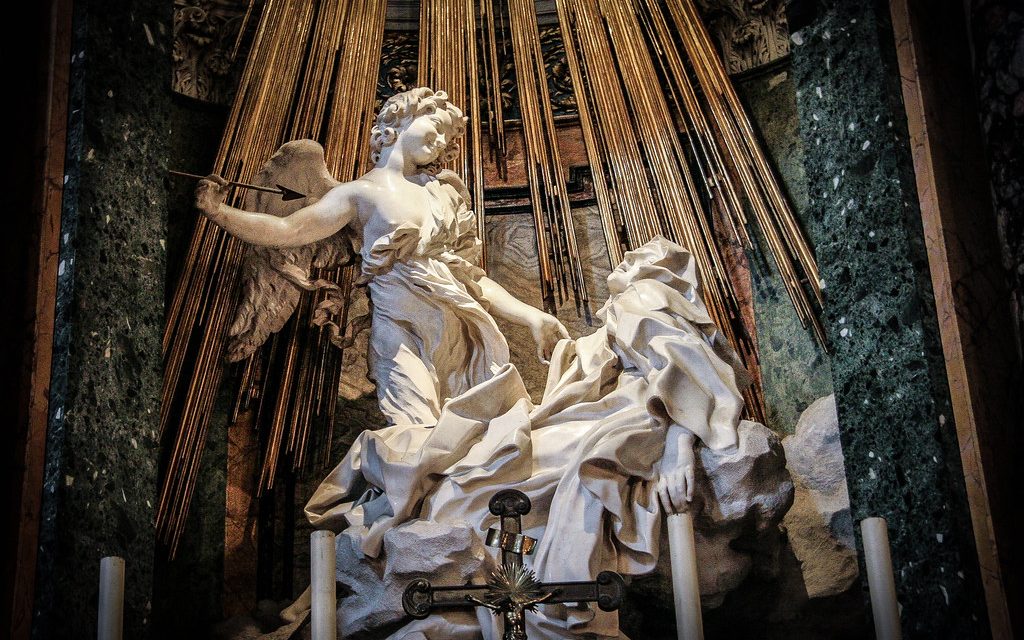
The history of the world cannot be separated from the history of religion. The secularized approach to politics that dominates most modern societies surfaced after centuries upon centuries of religious institutions ruling over everything and everyone. Women in the early modern world were confined within prisons of patriarchal political edifices and misogynistic ecclesiastical dogmas used to justify and enforce their subordinate position. The Catholic Church and Inquisition controlled and silenced female bodies and voices by declaring misogynistic interpretations of holy Scripture as divine truths impossible to challenge. The notorious words declared by St. Paul in Corinthians became the grounds used to vindicate the muting of women’s voices in the early modern world: “Let women keep silence in the churches, for it is not permitted for them to speak, but let them be submissive, as the Law also says. But if they wish to learn anything, let them ask their husbands at home, for it is unseemly for a woman to speak in church” (I Cor. 14:34– 35). Following the preaching of the apostle Paul, the Council of Trent implemented a strict enclosure on women that demanded complete obedience and silence, ensuring women be imprisoned within a confined, passive, and domestic sphere. Women were excluded from entering what Stephanie Merrim coins “the city of knowledge… [the] seductive, institutionalized, male-controlled, and almost exclusively male” realms of literacy and education (Merrim 232). For those averse to marriage, a life of presumed religious vocation allowed some women to enjoy more intellectual freedom without the domestic constraints imposed by marriage and childbearing. The monastic convent became society’s only purely feminine space for women in the early modern transatlantic world. The uniquely feminized space of a convent provided a sanctuary where women could devote themselves completely to intellectual and spiritual pursuits and acquire a voice through written word. Many nuns transcended the constrictive gender norms placed on them and breached the confines of the convent by establishing a spiritual and intellectual authority that endowed their writings with the kind of wide-reaching influence and power traditionally accessible only to men. In the Hispanic world, holy women were living contradictions: ultimately subordinate to male authorities that limited their movement, yet still able to exercise their own agency by delicately maneuvering through and adopting the same structures designed to oppress them. Shrewdly aware that the literary voice they spoke in was almost always transcribed by the male-dominated Church, many holy women cleverly masked and manipulated their words to conceal subversive and skeptical discourses under an assumed pretense of obedience and submission to the doctrines they were covertly contesting. By carefully appropriating the behavioral and linguistic expectations of the Church, religious women resisted oppressive authority even as they participated in the conventional monastic practices of humility, obedience and penance. Instead of surrendering to passive indifference, holy women writers channeled their religious fervor into a vehicle that could transport them to the “city of knowledge.”
Two remarkable women in the early modern Hispanic world possessed an intellectual gift and an insatiable hunger for knowledge, yet each personified one of the two main purposes that drove the hearts of many Hispanic nuns. On one side of the Atlantic, a zealous love and relentless thirst for knowledge motivated the Hieronymite Mexican nun Sor Juana Inés de la Cruz, while Saint Teresa of Ávila in Peninsular Spain yearned to fully unite with God and convincingly verbalize her miraculous mystical experiences to others. Even though these two women lived in two separate periods of time and on two opposite sides of the transatlantic world, there are similarities in the lives they lived and works they wrote that mirror each other. As women born into similar patriarchal societies desperate to restrict the intellectual potential of women and condition them to adopt a naive and docile character, Saint Teresa and Sor Juana, against countless odds, discovered a power within conventual life that enabled them to achieve their spiritual and intellectual goals and vocalize a voice so strong it forced those in power to listen. In two of their most renowned works, Saint Teresa’s Libro de la vida and Sor Juana’s Respuesta a Sor Filotea, the figurative sisters adopt the gendered customs of ecclesiastical decorum by noticeably professing the humility, obedience, and piety expected of nuns while furtively advocating for a woman’s right to education and exposing the flaws and hypocrisies infecting the Church. The women use a rhetoric of humility and femininity that conforms to the gendered rules and regulations of the Christian Church in order to establish a compelling authority that enables Saint Teresa to endow her described mystical visions with credibility and allows Sor Juana to prove her intellect valuable. As a result of this clever rhetoric, Sor Juana and Saint Teresa manage to evade the wrath of the Spanish Inquisition and deflect accusations of impiety and heresy often faced by religious women. By appearing to conform to the institutional standards of Christianity while discreetly subverting them, the writings of Sor Juana and Saint Teresa demonstrate the claim that: “women’s fiction can be read as a double-voiced discourse, containing a ‘dominant’ and a ‘muted’ story,” for their writings must have been approved by male religious figures (Showalter 201). Sor Juana and Saint Teresa disputed the misogynistic interpretation of St. Paul’s injunction to “let women keep silence in the churches,” and mounted the gendered hierarchies of the early modern world to formulate a voice from within convent walls designed to restrain them.
Throughout history, society has attempted to gender knowledge and apostolic life as male. At a time when women were pushed into submission and relentlessly dissuaded from speaking about theological, academic, spiritual matters, the physical enclosure of women within the closed spaces of a domestic home and a convent preserved the hierarchical systems of male domination and female subjugation in both New and Peninsular Spain: “injunctions of the preachers and the humanists alike restricted woman to the home, to silence, to plainness; they required a total flattening of her expressive will, her body, her voice, her ornament” (King 39-40). Nonetheless, the convent forged a communal feminized space that fostered a sense of solidarity amongst women and at the same time, offered women the educational opportunities and quiet solitude needed to study and learn. For women, monasteries worked as “one of the most important institutions in the lives of all women of Spanish descent, as an acknowledgment of status, an alternative to either marriage or untenable marriage conditions, a refuge from wars, a source of education, and a repository for excess daughters” (Untold Sisters 295). To prove one’s saintliness and virtue and chronicle one’s personal spiritual experiences, Christian Hispanic nuns and their lifewriters wrote Vidas, detailed autobiographies that merged introspective narrativity and individualized identity with mystical and spiritual realms of reality. To glimpse beyond the veil into the souls of early modern women writers, one must first dissect and decipher the double-voiced discourse found within the complex rhetorical layers that fabricate the framework of the Vidas: “While the purported objective of their work is always the praise of God and promotion of both the author’s and the audience’s fidelity to the Church, we have discovered much more: rare glimpses into daily life, relationships of strife and affection with other women, flashes of insight, assertions of individual power, and daring leaps into the submerged inner world of imagination and feeling” (Untold Sisters 2). In 1588, Saint Teresa of Ávila wrote the paradigm for subsequent spiritual autobiographies in the Hispanic world: Libro de la vida (The Book of Her Life). In Libro de la vida, St.Teresa narrated a model path for other devout women to acquire a powerful spiritual and intellectual presence that was integrated into the ecclesiastical order. In 1691, paralleling the role model of St. Teresa, Sor Juana penned Respuesta a Sor Filotea, an autobiographical letter which, although not a Vida, “uses narrative attitudes common to most writing by nuns and to women’s autobiographical works: self-effacement and proclaimed humility, which disguises self-assertion, competitiveness, and ambition; veiled irony and commentary – at times self-criticism on the act of writing itself” (Untold Sisters 337). The mystical autobiographies of nuns imitating the exemplar of Saint Teresa craft a literary space by wielding a uniquely deceptive and feminine writing style that authorizes women to challenge and examine the frameworks of Christianity, gender, and politics in the Hispanic world.
The reformer of the Carmelite order, Saint Teresa of Ávila, lived a life characterized by both contemplation and action. Although her method of contemplation was highly personal and inwardly directed, her actions extended well beyond an interior space and impacted the world around her. She stationed her authority in an orthodox methodological discourse acceptable to the Church: “Teresa of Ávila bent her needs to the wishes of the Church in a complex mix of submission and subversion. While bowing to and praising the Rules of silence and of ‘holy ignorance’ for women promulgated by the Council of Trent, she pioneered a persuasive, down-to-earth, ‘homely’ yet spiritual style that would pose no threat to men” (Untold Sisters 10). Along with channeling essential doctrines and tenets of Christianity to paint an image of herself as an exemplary nun, St. Teresa underlined her innate intellectual capacity and maintained that it cultivated her intimate mystical connection to God. By demonstrating her literary talents, proving her natural intelligence and avouching a profound love for knowledge, especially for “Divine Truth,” St. Teresa expresses a perception of knowledge that intertwines intellectual studies with divine enlightenment to substantiate the need for religious women to learn. She extols the divine purposes of learning earthly knowledge: “Learning is a great thing, for it teaches those of us who have little knowledge, and gives us light, so that, when we are faced with the truth of Holy Scripture, we act as we should. From foolish devotions may God deliver us!” (Libro 8). As she explains early on in her Vida, she spent so much of her childhood consuming countless tales of saintly virtue and chivalric romances that she even began to measure her happiness through books: “so excessively was I absorbed in it that I believe, unless I had a new book, I was never happy” (Libro 13).
To couple her intellectual appetite with her divine mission as a nun, St. Teresa describes her natural fondness for learning as if it were an unavoidable symptom of her existence divinely ordered and willed by God Himself. Since books act as a natural bait to her soul and teach her Christian values, it naturally follows that an all-powerful God must have intended her to be intelligent: “When I had no book […] my soul would at once become disturbed, and my thoughts would begin to wander. As soon as I started to read, they began to collect themselves, and the book acted like a bait to my soul” (Libro 24). She claims that studying is not an activity she chooses to do, but one she must to do as part of performing her duty as a nun: “I believe myself that, if a person who practices prayer consults learned men, the devil will not deceive him with illusions except by his own desire; for I think devils are very much afraid of learned men who are humble and virtuous” (Libro 81). For many years, she writes that she “never dared begin to pray without a book; my soul was as much afraid to engage in prayer without one as if it were having to go and fight against a host of enemies,” suggesting that without access to books and knowledge, she would find it impossible to engage in the highest forms of prayer since learning can help her approach to God. For St. Teresa, knowledge of and love of God and the divine are not only interwoven but inseparable; cerebral activities can stimulate spiritual experiences, reading can support one on their journey towards spiritual advancement and a mastery of the written form can allow one to transcribe and share God’s word. For St. Teresa, “those who walk in the way of prayer have the greater need of learning; and the more spiritual they are, the greater is their need” (Libro 82). Each and every religious figure, man and woman, has a responsibility to pursue theological and worldly knowledge as an essential part of their divine calling, for one must know God and His Will if they wish to serve as His servant.
For the vast majority of Hispanic nuns living under the conditions of enforced orthodoxy, St. Teresa established a prototype, a blueprint for utilizing a forged pretense of orthodoxy to manifest in plain sight a discourse that subverts patriarchal structures and transgresses ecclesiastical norms. Sor Juana, albeit less of mystic and more of a scholar, mirrors the figure of St. Teresa and takes advantage of the power she is endowed with as a religious figure, rather than just a simple woman, to climb up the social hierarchy ladder of New Spain. She harnesses her religious authority as a nun by drawing frequent allusions to religious and mystical experiences in her writings and demonstrating her immense theological and scriptural knowledge. Her voracious hunger for knowledge emerges as a constant and unifying thread in her work, echoing the intellectual fervor for reading, writing and learning described by St. Teresa throughout Libro de la vida. Sor Juana had always shunned the traditional path of marriage and family and came to realize at a young age that a monastic setting would grant her the freedom to study with only a few interruptions caused by community obligations. At first, she joined a Carmelite convent, which she left after a few short months for the Hieronymite religious order of San Jerónimo where she would spend the rest of her days. In La Respuesta, Juana illuminates the sheer power of her intellect and defends her desire to learn to a superior ecclesiastic power in a process where she “transforms the burning love for Christ and knowledge of the divine universe through spiritual experience seen in Teresa and Madre María into an insatiable love of learning in order to understand the Queen of Knowledge, theology” (King 33). In 1690, the Bishop of Puebla, Fernández de Santa Cruz, published a letter under the pseudonym of a nun, Sor Filotea de la Cruz, in which he praised Sor Juana’s intelligence but criticized the subjects of her poetry and her excessive study of the sciences and other non-sacred disciplines. In 1691, Sor Juana responded by writing La Respuesta a Sor Filotea, a letter advocating for her intellectual freedom and the opportunity for women to be educated.
To her male ecclesiastical superiors who wanted to infiltrate and control the feminine space of convents to implement their own methods of power and control, Sor Juana seemed more interested in academic affairs than in her sacred duty as a nun and thus needed drastic reform. Sor Juana fiercely disagrees and works diligently to defend her scholarly pursuits in La Respuesta by taking after St. Teresa and depicting her intellectual calling not as a conscious choice she makes but as a natural consequence of God’s will. Resembling the stratagems of St. Teresa, Sor Juana similarly declares that she is dependent on books for happiness when she writes that her “desire for learning was stronger than the desire for eating-as powerful as that is in children,” describing her intellectual fervor with the same emphasis on intensity that occurs in Libro de la vida (La Respuesta 15). Sor Juana maintains that she can better reach divine illumination by praying and studying multiple worldly disciplines, for, like Teresa, she considers both theological and secular education imperative to the understanding of Biblical passages and accessing scriptural knowledge. She proves each individual subject valuable for understanding the divine and contends that as a nun, she must continue her studies to strengthen her relation to God: “directing the course of my studies toward the peak of Sacred Theology, it seeming necessary to me, in order to scale those heights, to climb the steps of the human sciences and arts” (La Respuesta 19). She then proceeds to ask a series of rhetorical questions that use Biblical references and key doctrines of Christianity to highlight the importance of a secular education. She poses the question: “How, without Logic, could I be apprised of the general and specific way in which the Holy Scripture is written?” to claim that one must have a decent grasp of logical thinking and philosophical reasoning to understand the language and voice of reason in the Word of God (La Respuesta 19). Like St. Teresa, Sor Juana emphasizes the omnipotent and almight nature of God’s power to posit the ensuing logical statement that since “all things issue from God, Who is at once the center and the circumference from which and in which all lines begin and end,” then it sensibly follows that her scholarly inclination must be part of God’s plan, therefore, by studying, she is only demonstrating complete obedience to Him (La Respuesta 23).
St. Teresa became a paradigm for centuries upon centuries of Hispanic nuns not only because of what she came to symbolize but because other women adopted her skillful rhetoric of deception as a didactic tool to conceal a double-voiced discourse. In Teresa of Avila and the Rhetoric of Femininity, Alison Weber examines St. Teresa’s mastery of rhetorical devices which include her adoption of misogynistic tropes, her calculated assertions of humility, and her convenient obedience to the Church’s gendered orthopraxy amongst many more. At a time when mystical female visionaries who claimed to possess divine, supernatural gifts were relentlessly accused of servants of the devil or deceivers, St. Teresa designed deliberate stratagems of deception to negotiate the legitimization of her spiritual visions and her religious authority in the face of ecclesial power and inquisitorial control. After being initially accused of deception, she employed her covert yet compelling rhetoric to gain the institutional recognition of her sanctity while furtively challenging and reshaping the discourse on female visionaries. Christian saintliness consisted of moral elements and extraordinary manifestations of power authenticated by demonstrating evidence of having special access to God, a devotion to asceticism, professing humility, and performing acts of charity. Nuns in the convent “wrote from a position of perceived strength and avowed weakness” and employed “formulas of obedience, greeting, self-deprecation, respect, gratitude, and closing” within written prose that purported to be an act of obedience but was always an act of defiance (Hispanic Nuns 16). Saint Teresa describes herself as a powerless, weak and sinful woman writing not for her own pleasure but because superior powers demanded her to write: “only those who have ‘commanded me to write this one know that I am doing so” (Libro 22). St. Teresa and Sor Juana recognize the power that the male-dominated Church has over their lives and writings, however rather than deny this power, they accept it wholeheartedly to gain respect and power for themselves. Teresa begins her Vida by acknowledging that “the authority of persons so learned and serious as my confessors suffices for the approval of any good thing that I may say” (Libro 39). She continues the passage by placing an immense value on traditionally female household tasks and even esteems domestic work above written work when she writes, “I am almost stealing the time for writing, and that with great difficulty, for it hinders me from spinning and I am living in a poor house and have numerous things to do,” aligning herself with the domestic tasks women were expected to perform and illustrating their indispensable value (Libro 61). She declares submission to the higher powers commanding her to write while paradoxically expressing gratitude being allowed this privilege, “as I have been commanded and given full liberty to write about my way of prayer and the favors which the Lord has granted me,” and piously adopts the Christian practice of penance when she wishes she “had also been allowed to describe clearly and in full detail my grave sins and wicked life” (Libro 9). Even the purpose she declares her own for writing the text coincides with conformist Christian values: “may lead my confessors to know me better so that they may help my weakness and I may be enabled to render the Lord some part of the service which I owe Him,” wishing to utilize her written word as a way for male confessors to better apprehend her rather than a subversive and defiant discourse (Libro 9).
St. Teresa repeatedly invokes the ecclesiastical authority of her male superiors whom she recognizes as men who possess the authoritative power to validate her mystical experiences amongst the Christian population. At the same time that she is extolling her male superiors however, she is also utilizing her religious authority as a nun to assert the transcendent and divine nature of her visionary gift, a gift which she claims was given to her by the omnipotent power of God whose power surmounts any wordly institution. By admitting the power of the Church and submitting her text to its approval, she oscillates between affirming her experience and framing her experience within institutional bounds to secure her claim to credibility and voice her sacred truths. She ascribes to and affirms the misogynistic Catholic claim that women are ignorant and naive when she proclaims, “I praise God greatly, and we women, and those who are not learned, ought always to give Him infinite thanks, that there are persons who with such great labour have attained to the truth of which we ignorant people know nothing,” at the same time however, she insists that her mystic visions come from God, which would mean she experiences the opposite of ignorant – divine enlightenment (Libro 82). By declaring pure and pious intentions wholeheartedly welcomed by the Church, she is granted permission to publish her Vida which, with the Church’s support, reaches further and further. St. Teresa describes herself as “a wicked and miserable creature” and a “poor woman…who [is] weak and lacks fortitude,” belittling herself and demeaning her abilities to appear less contumacious, insubordinate, and unorthodox (Libro 68). She frequently glorifies humility as an utmost Christian virtue and states, “the entire foundation of prayer must be established in humility, and that, the more a soul abases itself in prayer, the higher God raises it” (Libro 141). Further into her Vida, St. Teresa warns against certain directors, presumably male, whose lack of experience and/or knowledge can often result in terrifyingly detrimental consequences: “he must be a man of experience, or he will make a great many mistakes and lead souls along without understanding them or without allowing them to learn to understand themselves” (Libro 79). She continues to caution against the ignorance and naivety of these supposed leaders: “I have come across souls so constrained and afflicted because of the inexperience of their director that I have been really sorry for them” (Libro 79).The language of obedience and submission written in Libro de la vida stealthily hides a rhetoric of incertitude and abjection upon which St. Teresa evinces her fallibility and incompetence to raise skepticism as a tactical weapon she operates to disclose lack of knowledge and experience amongst many of her superiors. Once the reader, especially a male ecclesiastical power, can respect and visualize St. Teresa as the exemplar of a nun who exemplifies orthodox Christian values, she gains recognition and authority within the institution.
The position held by the nun in seventeenth-century New Spain was not one that allowed for complete intellectual agency but one that demanded a woman’s total submission to the patriarchal, oppressive power of the Church. In order to be heard by men in power within a supremely restrictive and rigid institution, Sor Juana saw that she needed to embody the severe humility expected of nuns through her written persona. For this reason, she writes with “a conventionalized ‘woman’s voice’ – employing a rhetoric of humility, submission and subordination” to obtain a respected credibility within the institutionalized Church as St. Teresa had done nearly a century before (Hispanic Nuns 10). In La Respuesta, Sor Juana indirectly legitimizes her scholarly and creative endeavors when she invokes the sacred symbol of a female creator: the Virgin Mary. She goes on to extensively list forty-three different historical, Biblical, mythological, and classical female figures as evidence that women are more than capable of excelling and finding a place within the “city of knowledge.” Sor Juana invokes numerous examples of mystical and scholarly women to compare her condition to and by doing so, situates herself within a long line of esteemed monastic women who had authored spiritual autobiographies to link her achievements to theirs and use their already established credibility and veneration to substantiate her own. She openly compares herself to St. Teresa when she begs the question, “How are we to view the fact that the Church permitted a Gertrude, a Santa Teresa, a Saint Birgitta, the Nun of Agreda, and so many others, to write?” as a method for disproving those who use St. Paul’s dictum to exclude women from education by highlighting the hypocrisy of venerating nuns like St. Teresa and censuring nuns like herself (La Respuesta 59). She points out that the Church has historically allowed women who are not saints to learn the Word of God and notes that “when Santa Teresa and the others were writing, they were not as yet canonized” (La Respuesta 59). At the time she explicitly associates herself with St. Teresa, she covertly utilizes her rhetoric of obedience and “situates her wordplay and its subversions within institutional and intellectual structures of power” to achieve a similar goal of obtaining an authoritative voice within the Church (Hispanic Nuns 8). Like Teresa, she highlights the value of women’s domestic activities when she illustrates a correspondence between the art of cooking and scientific speculation and observes that the “yolk and the white of one egg are so dissimilar that each with sugar produces a result not obtainable with both together” (La Respuesta 43). She then ventures to make an even bolder claim when she fiercely declares “how well one may philosophize when preparing dinner… had Aristotle prepared victuals, he would have written more,” daring to criticize even the great Aristotle to expose the ignorance of men who consider the practice of cooking to be feminine and un-intellectual when in fact, it contains immense intellectual value (La Respuesta 43). Men like Aristotle and the men who rule the Church with a patriarchal iron first tend to demean each and every feminine activity and characteristic, however, as Sor Juana remarks, these men are so caught up with trying to keep women oppressed that they render themselves blind.
Sor Juana’s concealed rhetoric of humility, submission, and conforming femininity shares striking similarities to the one pioneered by St. Teresa in Libro de la vida. In La Respuesta, Sor Juana cleverly masks her subversive discourse that shrouds a proto-feminist subject matter through hiding under a cloak of self-deprecation where she constantly avows her presumed lack of intelligence. Sor Juana commences the letter with an exaggerated yet eloquent apology for taking so long to formulate an answer. She begs for forgiveness and explains that she simply did not know how she could ever adequately respond and “express [her] appreciation for a favor as unexpected as extreme” since, she states, “I know nothing I can say that is worthy of you” (La Respuesta 3). The same kind of elaborate and verbose expression of humility recurs throughout the letter as Sor Juana constructs a portrait of herself as a poor, powerless and feeble nun desperate for the approval of the Church. An satirical and ironic tone colors her repeated assurances that she will always obey the rules and hierarchies of the Catholic Church: “If ever I write again, my scribbling will always find its way to the haven of your holy feet and the certainty of your correction, for I have no other jewel with which to pay you” (La Respuesta 73). Even though Sor Juana admits she is “driven by the hunger for knowledge,” and that her “dark inclination [for knowledge] has been so great that it has conquered all else,” she nevertheless describes her intellect as merely another way in which she can serve God: “I strove mightily to elevate these studies, to dedicate them to His service, as the goal to which I aspired was to study Theology…it was seemly that I profess my vows to learning through ecclesiastical channels […] debilitating for a Catholic not to know everything in this life of the Divine Mysteries that can be learned through natural means” (La Respuesta 17).
Sor Juana, like St. Teresa, recognizes that the Church expects her to personify an almost excessive humility and rather than allowing her humility to detract from her reputation, she cleverly manipulates it to assert her religious authority as a nun. Early on in La Respuesta, she compares her position of inferiority to that of Moses: “Moses thought himself unworthy to speak with Pharaoh, but after he found himself highly favored of God, and thus inspired, he not only spoke with God Almighty but dared ask the impossible: shew me thy face” (La Respuesta 7). By comparing position to Moses, Sor Juana suggests that women are far more worthy than ecclesiastical powers often presume and through relating herself to a respected, holy Biblical male figure like Moses, she gains credibility amongst her superiors. Furthermore, throughout La Respuesta, she describes her intellectual journey with descriptions and phrases of bodily suffering, pain and blood that conjure up Jesus’s sacrifical suffering. By intensely describing her suffering, Sor Juana adopts the Christian value of piety and associates her suffering with that of Christ, further underlining her lack of choice and religious authority: “I have with envy heard others state that they have not been plagued by the thirst for knowledge: blessed are they. For me, not the knowing, merely the desiring to know, has been such torment” (La Respuesta 27).
The systematic oppression of women in the early modern transatlantic world fought to ostracize and exclude women from the “city of knowledge” and confine the bodies, souls and minds of women within the stifling and suppressive spaces of religious convents and domestic homes. Within these cloistered spaces, men in power could control and restrain the female body, but slowly realized that it was impossible to completely enclose the female mind and silence the female voice. Sor Juana Inés de la Cruz and Saint Teresa of Ávila are but two examples of women who, facing immeasurable odds, discovered a path into the “city of knowledge” that allowed their minds to soar and their voices to shout. Although both of these religious women hungered for knowledge, they did so for their own separate reasons. St. Teresa holds the belief that even though worldly knowledge can bring one closer to God, it is not through the intellect that we attain divine truth but rather the opposite. She proclaims that without divine enlightenment, reading, and other intellectual activities bear no fruit when she confesses, “I spent a good many years doing a great deal of reading and understanding nothing of what I read,” before acknowledging that despite that, “when His Majesty so wills, He can teach everything in a moment, in a way that amazes me” (Libro 73). St. Teresa warns her readers against the distracting power of the intellect and the senses and advises individuals in the highest state of prayer to “put their learning side” so that they may empty their mind to make room for the more important “Divine Truth” (Libro 92). Whereas the works of St. Teresa aimed to authentically describe her mystical experiences and express her longing to for total union with God, Sor Juana wrote and studied out of a fervor for reading and writing and an insatiable thirst for knowledge. Neither woman desired marriage with a human man, but both were married nonetheless: St. Teresa to God and Sor Juana to her scholarly passion. In the societies of sixteenth-century Peninsular Spain and seventeenth-century New Spain, religion was a paradox of power, an instrument that could subjugate women while at the same time offering a route with more freedom.
Hispanic nuns spoke with a voice always transcribed by the all-powerful hands of the Church. Whether or not directly or indirectly addressed the notorious dictum of apostle Paul to “let women keep silence in the churches” in their texts, Sor Juana and St. Teresa were monastic women writers who discovered a voice within the ecclesiastical power that hid behind a mask of obedience and submission while secretly containing a double-voiced, subversive and proto-feminist discourse. The Hispanic nuns each adopted their own rhetoric of humility, femininity, and deception that simulated a subservient conformity to Catholic dogma while behind closed doors, the two women knitted their discourse with the very threads of the Church. Within the confines of the convent, the two women discovered a “room of one’s own,” a metaphor devised by modern feminist Virginia Woolf to describe a private space away from marital and domestic responsibilities where women could concentrate and finally liberate her creativity. Sor Juana and St. Teresa woke up each day in two very different “rooms of their own,” and yet, each woman combined their spiritual devotion and intellectual fervor to articulate a voice that men in power strove to mute. Nevertheless, the voices of Sor Juana Inés de la Cruz and Saint Teresa of Ávila shout so loud that they escape the early modern convent walls and reverberate in modern ears.
Works Cited
Arenal, Electa, and Stacey Schlau. Untold Sisters : Hispanic Nuns in Their Own Works, Revised edition, University of New Mexico Press, 2010. ProQuest Ebook Central, https://ebookcentral.proquest.com/lib/reed/detail.action?docID=1118971.
Beauvoir, Simone de, et al. The Second Sex. Translated by Constance Borde and Sheila
Malovany-Chevallier, First American edition., Alfred A. Knopf, 2010.
Juana Inés de la Cruz, et al. Poems, Protest, and a Dream : Selected Writings. Penguin Books, 1997.
King, Margaret L. Women of the Renaissance. University of Chicago Press 1991.
Merrim, Stephanie. Early Modern Women’s Writing and Sor Juana Inés de la Cruz. Nashville, TN: Vanderbilt University Press, 1999. Print.
Myers, Katheleen Ann. ‘The Tenth Muse: Sor Juana Inés de la Cruz (1648–1693) — Letters and Learning in the Church’, Neither Saints Nor Sinners: Writing the Lives of Women in Spanish America (New York, 2003; online edn, Oxford Academic, 3 Oct. 2011).
Showalter, Elaine. “Feminist Criticism in the Wilderness.” Critical Inquiry, vol. 8, no. 2, 1981, pp. 179–205. JSTOR, http://www.jstor.org/stable/1343159.
St. Teresa of Avila, St. Teresa. Complete Works St. Teresa of Avila Vol1, Bloomsbury Publishing Plc, 2004. ProQuest Ebook Central, https://ebookcentral.proquest.com/lib/reed/detail.action?docID=5309519.
Weber, Alison. Teresa of Avila and the Rhetoric of Femininity. Princeton University Press, 1990. JSTOR, https://doi.org/10.2307/j.ctv15r5dsh.
 Ava Linda Feliz-Sutter