
The Virgin Ceiba
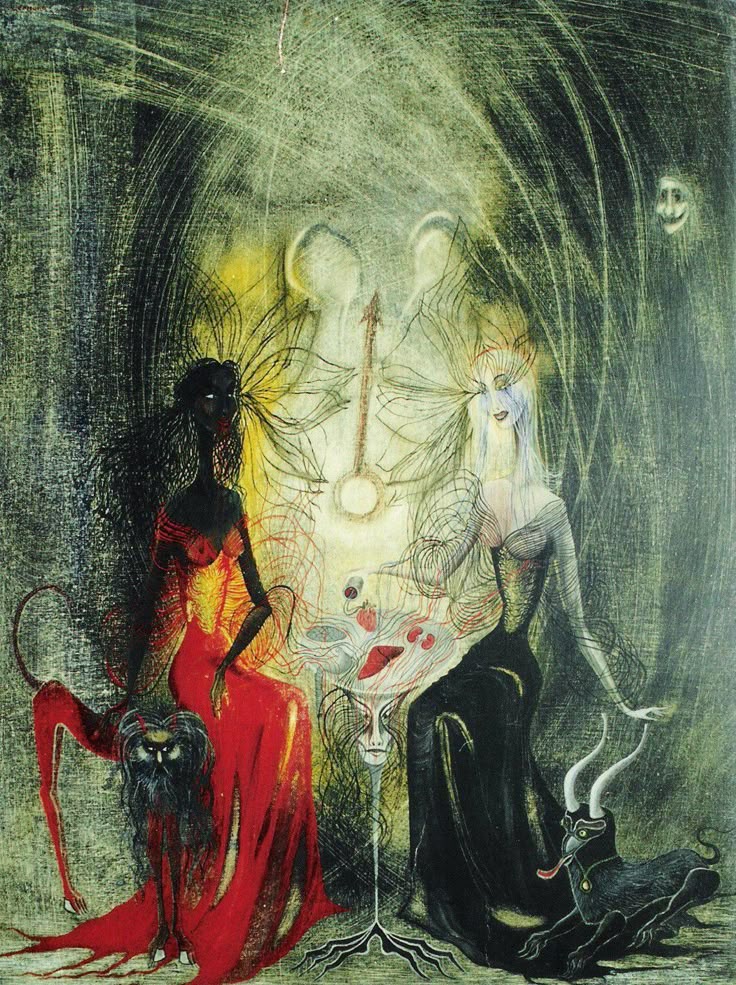
At the ripe age of thirteen, Anacleta de la Cueva first felt that indelible spark of destiny kindle within her soul. She cupped it close in her small hands, letting its pale glow illuminate the dark corners of her path. Soon she walked with lifted shoulders, gliding through the halls of her home with newfound poise. She would skip and chatter to her parents, her dolls, even to the ants on the floor, always proclaiming she was meant for something more. Yet for all her confidence, she never seemed boastful. Even months later, when she received her first vision and that ember burst into flame, Anacleta remained steady in her humility. From that night on, she carried in her heart a certainty few ever glimpse: though the road ahead lay hidden, she knew it would end in the arms of God.
The Virgin Mary first came to her not through sight but through sensation. Still too young to name it, Anacleta had already felt a strange, implacable loneliness seep into her once-blithe blood. Each night she knelt by her bed and whispered pleas into the cold, begging the Lord to cast out whatever pest had nested in her thoughts. She had once been so carefree, wholly content with the love of her father, mother, and guardian above. Now, scarcely an adolescent, she wept herself swollen over a void she could not trace. Convinced no other cause could explain so strange a malady, Anacleta believed herself poisoned.
At first the infection worsened slowly, day by day, until one pale December night her ache swelled with sudden force, rising like smoke to lodge in her throat. Desperation tightened around her limbs, binding her still, until tears blurred her sight and she could no longer tell where sorrow ended and suffocation began. Then, gasping through the frost, she felt it: a faint breath of warmth scrape her skin. She froze. On such a frigid night, the heat itself felt uncanny. Yet the graze bore a tenderness too otherworldly to mistake. Evanescent as it was, Anacleta read it at once as a sign from God, an answer to her endless prayers—so full it left her convinced she had been healed.
In the months that followed, her solitude thinned into a sadness she could bear. Convinced some celestial ear had heard her plea that night, Anacleta drifted through her days, buoyant as a petal on water, trusting the cure was already at work. Some days pressed heavier than others, but never as dark as before, for now she prayed with the secret assurance that someone above had listened.
Yet one quiet night in February, just as she had begun to settle into that tenuous calm, her mother appeared at the doorway with the words no child should ever hear: her father had died in the night, taken without warning by the plague. A gale slammed into her chest. Moments later it ripped through her veins, ravenous to burrow deeper. The venom she had once believed divinely cleansed—had returned, keener than ever.
Until then, Anacleta had known little of grief. She had never imagined it could strike so quickly, or why it seemed to aggravate the toxin already coursing through her bloodstream. From that moment on, alongside her strange malaise came a second torment: the specter of her father. Her nights grew sleepless, her hope withered, her light wilted. Still, she clung to her faith, meeting her sorrow the only way she knew. Night after night she knelt in prayer until she collapsed on the floor, when her mother would tiptoe in, stealthy, worried, to lift her back to bed.
For weeks the silence held indifferent. Then one night, her cry seemed to pierce the heavens. At last her prayers were answered—not with a fleeting touch this time, but with a true, ardent kiss. Startled yet enraptured, Anacleta wept as a figure took shape in the fog drifting through the open window. She rubbed her eyes in disbelief. Crowned in stars, robed in specks of cerulean and sapphire, stood the High Lady, her face aglow with moonlight.
“My daughter, do not be afraid,” she said at last.
Anacleta told herself it must be an illusion. Yet the words fell soft against her cheek—like snow that would not melt.
“Tonight’s moon rises only to greet tomorrow’s sun, and the storm flooding your soul is but a divine deluge, sent to clear the path ahead.”
No doubt remained in her mind: an arm’s length away, on the other side of her bed, it was the Virgin Mary who spoke.
“Endure, my child,” she said with a kind smile. “The Lord placed that ache in your heart only to hollow a chamber within, for there He will enter, and there He will dwell.”
At her final word, the Virgin dissolved into mist. Exhausted from shock, Anacleta curled on the floor and sank at once into deep sleep. All night the spectacle replayed in her dreams, each time confirming what she already knew: the Virgin had come, her kiss was real, her words were true.
She held these tenets with the same intensity with which she had once clung to her pebble of destiny. But unlike that fleeting kismet, Anacleta guarded her private moment with the divine like a sacrament, terrified that even speaking of it might fracture its sanctity. Yet the opposite proved true. Her Grace returned night after night, in dreams, in prayer, in the flicker of candlelight, in the whispers of the wind, each time her aureole brighter, her caress softer, her clutch more complete.
As their bond deepened, the Holy Mother revealed her true desire: not silence, but praise, for Anacleta to become her lips on earth, gathering her words and carrying them into the world like a feathered courier. At first the request filled her with dread. Even in her innocence, she had sensed the Church’s narrowing regard, the eagerness of friars to brand mystics as witches and seers as deceivers. Shrewd as she was, she learned to veil her revelations in modesty and cloak her prophecies in restraint. Yet with each visitation, her love for the Virgin grew until it became too powerful to resist. She confided first in her mother, then in the Franciscan at Vinuesa, and by week’s end even the Guardian of the Royal Convent in Atienza had heard of the girl whose passage into womanhood was marked by miracle.
Luckily for Anacleta, the very woes that had once driven her near to damnation had also tempered her spirit—sensitive, pure, and diffident enough to shield her from suspicion. Month by month her love swelled, her fervor widened, her piety strengthened, until at last, shortly after her fourteenth birthday, the long-awaited moment arrived. Yielding to the urgings of her mothers—both earthly and divine—Anacleta shackled her soul, cast the chains heavenward, and took the final step of her exodus with joy. From the ivory peaks of the Picos de Urbión she descended into the Gothic abbeys and narrow alleys of Salamanca, where she granted the Queen of Heaven her wish and entered the Convent of Santa Clara.
As a young novice, Anacleta learned to mend habits, recite psalms in Latin, and obey without question. Above all, she mastered the art of alchemizing suffering into devotion. Any desire for rosy dresses or her mother’s lullabies was soon conquered by the convent’s revelation: pain was beautiful.
Yet Anacleta’s faith did not rest on sisters or scripture alone. She tended it as a farmer tends his fields, certain the harvest would come. Just as rain promises fertile soil, she took the faint trace of rose in copal smoke as a pledge that her servitude was not only seen, but soon to be acknowledged. And sure enough, Her Holiness returned again and again—at times radiant in lapis and gold, at others gleaming in the pearl of a rosary bead, most often as nothing more than sensation: a sharp flush in her cheeks, an irresistible urge to weep. However she appeared, the outcome was always the same: her presence emptied Anacleta’s fear and filled her with a wholeness so complete that agony and adoration became one.
Before long she began to seek sorrow willingly, opening herself to its void, hoping to catch His light in her fissures. And so, after a single year of confessions and fasts, she made the choice without hesitation. Kneeling before the altar, Anacleta took the veil and swore her vows of chastity and submission—reborn as Sor Anacleta de la Luz Carmesí, bride of Christ.
Word of Anacleta’s rare piety and mystical gifts spread through Castile almost as soon as she was professed. Weeks later, when a letter arrived from the Archbishop of Mexico requesting Spanish-born nuns for the expanding missions, it was no surprise the Abbess named her first. Many thought her too young, too newly avowed, but her ardor pulsed too brightly to be overlooked. And so, in May 1561, scarcely fifteen and younger than most ever sent abroad, Anacleta left her nest once more, bound for the tropical wilds of Cuetzalan in the Sierra Norte de Puebla, New Spain.
Her first days in the New World differed little from those in the Old. She rose before dawn, recited the Hours, folded linen, and took her meals in silence. The beaterio of Santa Rosalía de las Lluvias housed nine sisters: two elder Castilian nuns, three mestiza beatas, two newly baptized native servants, and one infirm elder, Sor Gregoria del Rosario. The Castilians, long settled in the colony, showed little interest in Anacleta, likely deeming her too young and untested. The beatas were polite but distant, offering only a cordial nod. The servants were just as reserved, speaking to her solely of chores.
At first the isolation did not trouble her. It even offered small consolations, moments of peace she needed to endure such a strange, secluded place. When sent for beans or squash, Anacleta would tarry, slowing her steps to savor the bristles of stalks against her fingertips as she meandered the rows of maize. Yet her deepest solace lay just beyond, where the golden field opened into unknown wilderness. From the meadow’s edge she fixed her stare on foliage rising in lustrous tiers of green. Some force always seemed to beckon her inward, but the threat of vipers and pumas always held her back. Instead, she strained her eyes until she could imagine the jungle enfolding her into a chrysalis of leaves. Even then, she would return to the beaterio gates with that wild vision pounding in her mind, its allure tugging her closer still.
So consuming were these savanna daydreams that nearly two months passed before Anacleta realized her visits from the Holy Mother had ceased altogether. For a time, the forest’s spell had renewed her almost as fully as the Virgin once had. But a glance alone could not sustain her soul forever. The long days without a single word from Mother, Son, or Spirit finally shattered upon her, splintering the illusion. She stopped walking the fields, forbade herself to dream of the jungle, and turned instead to the only weapon she knew against despair. Night after night she crawled across the chapel floor, groveling at Christ’s feet, searching for the flaw that had driven Him away. But the silence held, and with each day another thread came loose, unraveling her bit by bit.
At last her old malady returned—faster, hotter, hurling her into a grave fever. Unable to discern the cause, Mother Superior declared it the phthisic plague—the same that had taken her father. With no doctor nearby and no remedy at hand, she laid Sor Anacleta in an empty infirmary bed beside the fading Sor Gregoria and placed her care in the hands of one of the young beatas: Leonor Xóchitl de la Cruz.
To Anacleta, the arrangement felt like a cruel jest. Only weeks before she had been Christ’s bride, the Virgin’s chosen child, the Church’s exemplar of devotion. Now she lay reduced to a madwoman, left to decay beside an old, forgotten nun already at death’s door. She imagined her caretaker’s resentment at being pulled from holy duties to tend an invalid and bore the thought like a second illness. Yet if Leonor had in fact harbored any bitterness, she never showed it. Each morning without fault she entered the infirmary with a sponge and clay basin, patient as she bathed Anacleta, gentle as she drew a comb through her tangled curls, careful never to pull a single strand. Still she spoke little, and Anacleta kept silent in return, first from shame, then from fear that Leonor disliked her voice or her company altogether. But as the days wore on, Leonor’s compassion proved steadfast and genuine, melting Anacleta’s trepidation and sowing in its place a longing for connection. After nearly two weeks of silence, Anacleta resolved at last to speak.
“Does it feel swollen to you?” she asked one afternoon as Leonor pressed a warm cloth to her chest, trying to ease the rasp in her lungs.
Leonor looked back, puzzled.
“My throat—does it feel swollen?”
Leonor touched her neck lightly, then drew her hand away. “No, Sister.”
“Does my voice sound strange? Ill?”
“I do not know, Sister.”
Anacleta paused, searching for what else to say. “Do I seem so sick to you?” When no reply came, she hurried on. “Forgive me, Sister—I hope I’m not troubling you. I can’t seem to read my own symptoms. I think the fever has driven me a bit mad.” She hesitated, then spoke more softly, “It’s so lonely in here, left with nothing but my thoughts. You’ve been so kind to me… I only wish I could know more about you.”
She took Leonor’s silence as permission to go on. “How long have you been in the beaterio?”
“I’m not sure,” Leonor said after a pause. “I haven’t kept count.” But as soon as she caught the desperation in Anacleta’s eyes, her shoulders eased. “No more than a few years. Two, maybe three.”
“How did you come to Santa Rosalía?” Anacleta asked, lowering her stare as though afraid to push too far. Still, she could not help herself. Something in Leonor’s muted gray-blue eyes transfixed her, like seawater under a storm-heavy sky. Their depths seemed endless, darkening to indigo in shadow, silvering to pearl in light, flowing with hidden currents of intimacy and infinity.
Leonor noticed the stare. Unbeknownst to Anacleta, she too was ensnared by the flecks of gold and amber in Anacleta’s eyes. Their pupils widened, locked, until Leonor at last broke the silence.
“If you truly wish to know, I’ll tell you. But I should warn you—my story is far from calm, far from ordinary.” She hesitated. “And I’m not sure you should hear such darkness while you’re burning with fever.”
“I don’t mind, Sister. You might be surprised at the shadows in my own past. I won’t be frightened, I only want to know you. And for that, I need to hear your story.”
Leonor lowered her eyes to the basin, as if to anchor herself before she began. “My mother and I came from a small village just south of here—Xiloxochico. My father was Castilian. I never knew his name. But my mother’s was Citlali—‘star’ in Nahuatl, a name that suited her. She was full of life, tireless, tenacious, but with an old soul. More than a healer, she was a singer. She healed through her songs. My grandmother had taught her the sacred art of in xochitl in cuicatl—”
“In xochitl in cuicatl?” Anacleta gently interrupted.
Leonor smiled, bittersweet, slightly sad. “Forgive me, I forget you don’t speak Nahuatl. You really should learn—most of the sisters know at least some. I could teach you, if you’d like.” Her timidity faded as she went on. “In xochitl in cuicatl—‘the flower, the song’—is our word for poetry. Where I come from, poetry isn’t just words on a page. A flower is never only a flower, and a song is never only one voice. Flowers hold the deepest powers of nature. Each one is a key that unlocks a song, and every song brings us closer to truth. That is why flower and song can’t be separated: the flower gives birth to the song, and the song gives birth to the flower. Through the flower we chant to God, and through the chant, God sings back.”
She glanced at Anacleta, worried she had said too much and lost her. Yet far from lost, Anacleta hadn’t looked away once. She listened intently, her ears clinging to each word as firmly as her stare clung to the obsidian strands slipping from beneath Leonor’s veil. It wasn’t only the words that held her. It was Leonor’s voice itself—steady yet tremulous, soothing yet unsettling, like the pull she sometimes felt staring into the jungle from the edge of the corn field.
“I’m telling you this,” Leonor went on, heartened by Anacleta’s gaze, “because it was through in xochitl in cuicatl that my mother drew her strength. Each flower-song gave her wisdom, as a bee gathers honey, carrying it back to heal the living. She guided women through birth, reverted curses, mended grief.”
Her tone darkened, her features grew solemn.
“I was thirteen, only just entered into womanhood, when the Franciscans of San Miguel began descending into the lowlands,” she said after a long pause. “They ravaged village after village, tribe after tribe. Ancient or new, strong or weak—it didn’t matter. Word soon reached them of shamans, singers, flower-songs… of women like my mother. And their thirst for blood only grew. Healers became witches, singers idolaters, flower-songs the Devil’s work.”
“My mother was no fool. From the moment they set foot in Xiloxochico, she knew her days were numbered. Yet she neither fled nor hid. She clung to her calling—fiercer than ever. Her songs grew louder, her remedies more wondrous. Until one afternoon a friar caught her serenading a grieving widow. He seized her, spat curses, and gave her a choice: renounce everything—her songs, her tongue, her healing, her ancestors—and bury herself alive in a cloister, or die.”
Anacleta drew a worried breath, afraid to hear what came next.
“My mother did not surrender. Days later they returned with soldiers. I crouched behind the thorns of a mesquite bush, as paralyzed by fear as I was powerless to act. My hiding place didn’t last long. Before I could even grieve, they cut my hair, bound my wrists, and left me at the gates of Santa Rosalía. It has been my world ever since.”
She hesitated, her eyes flicking toward Anacleta as if bracing for admiration to curdle into judgment. But Anacleta’s expression only softened, her gaze turning warmer, almost loving. Even so, fear and habit pushed the next words from Leonor’s lips.
“It’s alright, Sister. I do miss my mother. But she was… cursed by pagan ways, lost in idolatry. Her death freed me. In the order I found my true calling; in her death, I found salvation in Christ. I was nothing but a sinner, a monster. Now I am His servant. For that, I am grateful.”
Anacleta was at a loss for words. She could hardly believe the disgust with which Leonor spoke of herself. Was it a performance, this self-hatred, or had they truly convinced this tender, beautiful girl that she was a monster? Either way, Anacleta’s heart broke. She longed to comfort her, though she knew no words could mend such wounds. All she could offer was to hold Leonor, to draw her into the tenderness the Virgin had once shown her. She was no Blessed Mother, but in her hold there was true affection, true care. And so she clasped Leonor’s hand, pulled her close, and held her until the midnight bells tolled their separation.
With Leonor back in her chamber, Anacleta was left alone—another night without sleep or solace. Lying awake, her every thought circled Leonor, heaving her into a maelstrom of yearning and heartache. Then, without warning, a warmth brushed her skin. Before she could grasp it, it burst into a blizzard of heat, wrapping her in its mantle. She did not hesitate, nor doubt—she knew at once. Her pupils widened, first with relief, then with joy. A bright, uncontainable smile bloomed across her face. The Virgin had returned.
She shut her eyes to let the Spirit enter. But when she opened them, there was no Mary—no glimmer, no golden kiss. Instead, a searing flash, then thunder. A mighty gust of love tore through her marrow like a comet, sweeping her into a starlit womb. The Presence was heavy, immense, enclosing her in a vortex before hurling her onto the black volcanic grit of a primordial desert. From the corner of her eye she saw it: a colossal tree, its branches sprawling impossibly wide in every direction. No one came, no voice spoke, yet Anacleta knew who dwelt within the trunk. She fell to her knees, arms outstretched, bracing for His embrace, when a knock at her door wrenched her from the brink of consummation.
Any trace of anger vanished when she turned the knob to find Leonor in the blush of dawn, a basin of water in her hands. She entered quietly, pulled up a stool, dipped the cloth, and pressed it to Anacleta’s cheek. At once its warmth sobered her, lulling her back from the terrible grandeur she had just witnessed.
Anacleta weighed her choices with each twist of the cloth. It wasn’t distrust that kept her silent—if anything, the opposite. To an outside eye, they might have seemed like opposites: Anacleta of the Old World, Leonor of the New—dark waves against fair curls, one gaze tempest-tossed, the other rosy like firelight. Yet beneath those differences lay a familiarity neither could explain nor deny—as if they had known each other long before Santa Rosalía, twin souls once bound and now torn apart. The very thought of losing Leonor, even of frightening her away, sent shudders down Anacleta’s spine. But when the cloth returned to her chest, pressed so lovingly into her skin, she knew she could no longer keep her secret.
“I have something I must tell you,” Anacleta confessed at last. “But you mustn’t think I’ve gone mad.”
Leonor’s face softened. “Sister, I would never have shared my own story if I feared judgment between us. Please—tell me what weighs on you.”
Anacleta let out a troubled sigh. “Before I left Salamanca, my Mother Superior made me promise to keep silent about certain… matters. She warned the line between mysticism and madness had grown dangerously thin—especially here in the Indies. So I obeyed. I held my tongue. I spoke of it to no one. But with you…” She drew a breath, steadying the knot in her chest. “Forgive me for hiding this part of myself.”
Her voice hardened. “Since I came of age, I have been visited by the Holy Spirit. In the stillness of dawn and dusk, He sent me His messenger: the Virgin Mary. Sometimes she spoke, other times she was silent, but always she came to anoint me with a kiss, to remind me that my suffering had meaning.”
Her pupils brightened with a sudden glee. “Oh, Sister—what visions they were! In every doubt, in every fear, there she was—wrapping me in her seraphic wings, soothing my sorrows, lifting my faith. I came to love her more than life itself. So when I was called to this land, I seized the chance to give my life to the Lord, for He had already saved mine a hundred times.”
The blush in her cheeks turned pale, the bustle draining from her voice. “And then, when I arrived…” She stuttered, as if on the verge of tears. “She stopped coming. No warning, no reason. At first I tried to go on as if nothing had changed. I wanted to see her again so badly I mistook the rustle of leaves for the sweep of her cloak. But deep down I knew. She was gone. And I could not bear it. I believe it was grief itself that made me ill.”
Leonor reached for her hands, her face tight with worry.
“Dear Sister—what concern I see in your eyes!” Anacleta cried, gripping back. “Please, let me finish before you make yourself sick with fear. I don’t know what summoned it, but yesterday, just before you came to my door…” Her voice quickened. “The Spirit returned. Only this time—” She clutched Leonor’s fingers tighter, as if to still their tremble. “It was not the Virgin. It was Him—the Lord Himself!”
“Oh, Leonor!” She erupted, alight with elation. “I can hardly speak of what He awakened in me—the terror, the rapture! His voice… my God, beyond words, sublime! And His touch—” She faltered, searching for words that would not come, then pressed on. “I’m afraid this is where you’ll think me mad…if you don’t already.”
Leonor shook her head softly, her thumb tracing the back of Anacleta’s fingers.
“I was with Him,” Anacleta said, her voice fluttering. “Not in heaven, not in the deserts of Jerusalem, but here—in the valley of Mexico. I beheld Him in all His glory when all of a sudden—” Her words erupted into a cry. “I longed for Him—not only as spirit, not only as savior, but as a lover! Don’t you see, Leonor? Why else would He rouse such gnawing in me, even when I was a child? He wants to unite with me—not only in paradise, not only after death, but here—in this soil, in this body, in this flesh!”
Her breath hitched, flaming with a delirious certainty. “I am not meant only to be His bride—I am destined to bear His child!”
Leonor gasped. “Oh, Sister, please—don’t speak such things! You frighten me…”
“You don’t believe me?” Anacleta’s voice quivered. “Why would I invent such a thing?”
“Of course I believe you,” Leonor quickly affirmed. “I swear it. But if the others hear, they won’t see devotion. They’ll see delusion—madness! You could be cast out, exiled… or worse.” Her voice cracked. “I can’t even bear to think of it.”
From that night on, Leonor scarcely left Anacleta’s side. With each day, their bond tightened, like a serpent’s slow coil around the throat. In the afternoons, as she braided Anacleta’s hair, she would sing the few hymns she still remembered from her mother. At night, reading from the Psalms or the Canticles of Solomon, Anacleta would break in with her own confessions—memories of longing and solitude, nightmares and dreams, visions and apparitions.
When her temperature soared and shivers wracked her frame past midnight, Leonor whispered the names of flowers in Nahuatl to distract her from the pain. But nothing could silence her screams. Night after night they rose until at last they pierced the thin infirmary walls, waking the entire beaterio in fright. Sisters would rush in, crosses clutched, to find Anacleta convulsing, babbling in tongues, weeping without end. Leonor would press her palm to Anacleta’s mouth, muffling each cry of ecstasy or howl of pain. And when the storm finally subsided, she would lie beside her, take her hand, and whisper:
“Tell me… what did you see?”
“In the sky,” Anacleta murmured one night, “a claw ripped straight through the stars. I was lying naked on a stone altar when a sudden twitch began to—”
“Anacleta!” Leonor cut her off, her body rigid with fear. “You mustn’t speak of this to anyone but me. Do you understand? Promise me!”
“I won’t tell them,” Anacleta promised, again and again. But the visions only grew stranger, each one harder to contain. Soon Virgin’s name vanished from her tongue altogether, her every word bending toward that haunting tree. As her body weakened, its image ripened. By day she swore vines crept around her ankles; by night her moans turned raw, almost bestial, forcing Leonor to keep vigil at her side, smothering each sound before it could escape into the corridor.
“I can feel Him, Sister,” Anacleta gasped one night, waking in sweat. “He wants me… He needs me—”
“Anacleta, please,” Leonor pleaded, glancing toward the door. “Enough!”
But Anacleta pressed on, as if powerless to stop herself. “Leonor, don’t you see? I’ve pieced it together. I see it now, clear as day—I know what He asks of me.” Her words tumbled out, giddy with conviction. “He has bound us together—entwined our destinies as one. I cannot obey Him without you.”
Leonor blinked, shaken. “I don’t understand. I thought… I thought your destiny was to bear His child.”
“It is!” Anacleta cried. “But first—I must conceive.”
Leonor pulled back slightly, her face caught between confusion and care. “But if the child is Christ, the conception would be immaculate… How could I—how could anyone—be part of it?”
“I do not know how it happened in Nazareth,” Anacleta said, “but I know how He wills it here, in the jungles of Mexico. At first I thought it would happen entirely within the dream. But when I reached for His embrace… I felt thorns against my skin. And when you knocked, breaking the spell—it came to me.” Her eyes shone. “His arms are not arms at all, but branches. He means to hold me not as a man, but as a tree! Why else would He come night after night in the same form—the same leaves, the same trunk? It is no coincidence—it is His command!”
Leonor frowned. “I am more confused than ever. What tree are you speaking of?”
“Think of it as Sinai, as Nazareth, a place of meeting. The Lord has chosen it as the ground where He will join me in the flesh. Moses had his mountain; I have this tree. As he heard God in thunder and stone, so shall I hear Him in the trunk of this living giant. Through the tree He will touch my womb, and through my womb, He will speak again.”
“Anacleta… do you really believe this tree exists outside your visions?”
“I am certain of it.”
“But how could you ever find it? A single tree in all this wilderness?”
“I know its face better than my own,” Anacleta answered in haste. “It comes to me each night, without pause, without reprieve.” Her gaze fell, fixed on something only she could see. “I know the moss on its pearl-gray bark, smooth in places, jagged at the base. I know the shadows in its creases, the bend of every branch. Even now I see it, its buttress roots fanning out, shimmering as if lit from within, its fibers catching daylight like strands of sun—”
“What kind of roots?” Leonor cut in, her voice suddenly urgent.
“Buttressed. Broad. Spread wide across the forest floor.”
“And the fibers?”
“They hang in wisps from the branches, like cotton, like—”
“Anacleta!” Leonor gasped. “I cannot explain it, but—I think I’ve seen that tree.”
“What?” Anacleta blinked, searching her face for answers. “Leonor, please… you mustn’t say such things just to comfort me.”
“I cannot be certain,” Leonor admitted. “It was long ago, and I was only a child. But hearing you now, it comes back to me.
“I must have been six, maybe seven. It was May, at the end of the dry season. Our village was celebrating Huey Tozoztli, the feast of fertility, rain, and maize. The elders led us children to sacred places—trees, caves, mountains—to give thanks to the gods of the earth. That year my mother and aunt brought me to make my first offering to Tlaloc, lord of rain, and Chicomecóatl, goddess of maize. I chose mine with care: a few dried cacao beans, a red feather, a chipped jade bead from my grandfather’s altar. My mother always said a first offering bound you to the land for life.
“We walked for hours through the hills and thornwoods until late in the afternoon we reached a wide cenote where—” She paused, her glance far off. “There it was. Taller than anything I’d ever seen, its roots spread over the ground like rays of sun. My tía called it a pochotl. I think the Spanish call it a ceiba, but—”
“Leonor!” Anacleta cried. “It’s the same tree—I know it! Don’t you see? Our Lord, our Christ, our very world—it needs us. You must help me find it!”
“Find it?” Leonor’s forehead tightened. “Anacleta, please… they’re already speaking of sending you away.”
“You might as well say you don’t believe me.” The brightness dimmed from Anacleta’s voice, leaving only hurt.
Whether Anacleta had been chosen to bear a new Christ or was only lost in fevered dreams, Leonor could not say for certain. She knew only this: God—or something just as mighty—had descended upon Anacleta with a hunger beyond lust, and whatever form He took—Virgin, seraph, vision, or tree—Anacleta burned for Him all the same. Yet something stranger, perhaps stronger, had taken root elsewhere. Not in the mountains of Spain or the lowlands of Mexico, but in the instant Anacleta met the silver gleam of Leonor’s eyes and saw her own amber mirrored there. In that moment, she was marked forever. No touch in heaven, earth, or hell could pierce her solitude as Leonor’s did.
And for Leonor, a single glance into Anacleta’s desperate, doe-like eyes was enough to make her yield. That night, at Anacleta’s behest, Leonor snuck from her chamber and tiptoed through the halls of the beaterio to the front door, where she whispered to the gatekeeper that the friars had granted them leave to seek a healer in the southern villages. At dawn, as the gate creaked open, Leonor obeyed Anacleta’s wish, and Anacleta followed her lead, guided only by the faintest pull—south, into the jungle.
They reached Xiloxochico within hours. Leonor had not returned since her mother’s death, yet the land seemed to greet her. Ravines and moss-dark cliffs, clouds snagged on their slopes—all welcomed her home. Orchids released their fragrance, as if rewarding her for remembering their secret language. For a moment, it was as if no time had passed. Yet she soon saw the stone cross hammered into the old temple ruins, and sorrow and shame rushed in at once. Before they could take hold, Anacleta had already reached for her hand.
“Do you remember which way from here?” she asked with a sweet smile, her caress easing Leonor at once. Neither could say when it began, but even the smallest gesture between them carried a magnetism—wordless, irresistible. They turned southeast into the lowlands, descending into a forest that thickened with each step. Down moss-slick switchbacks and through ankle-deep mud, their clasp never once let go. What Leonor had once crossed with her tía in a single day now took several. But by the fourth morning, the ground had grown so damp and loamy that she knew they were close.
At last the trail opened into a round hollow, volcanic walls draped in vines and moss, dew dripping into a still jade-green pool. Anacleta stumbled, nearly falling into the slippery soil. Clutching a branch, she gasped, “Leonor—look! Just as I dreamed!” Suddenly ablaze, she rushed forward—bareheaded, breathless, chasing the musk of earth and the metallic tang of water as if under a spell. Leonor called after her, but Anacleta had already vanished into the cleft ahead.
Roots sprawled like wings across the jungle floor, veined with moss and lichen that glazed the bark in shimmering sage and clouded green. The trunk, massive as a mammoth, rose like a leviathan from the sea before bursting into an emerald cascade above the canopy. Impossible to miss, impossible to mistake—the ceiba stood before them in its full majesty.
Leonor stepped into the clearing just as Anacleta’s awestruck face broke into tears. “I’m frightened, Leonor. Frightened and—” She stopped short, her voice catching as she stared at the white blossoms pushing out of the trunk. “My God… do you see them? Can you believe such beauty?” Her lips trembled—half awe, half fear. “Help me, Sister. I know what I must do—I just don’t know how.”
She lifted her tear-bright eyes. Leonor caught her wrist, pressed her palm to the wood, and guided it slowly down the trunk until the rough bark gave way to moss—warm, damp, alive beneath her touch.
She pressed Anacleta’s hand harder into the spine of the ceiba, her voice quickening. “Do you feel it, Sister? Nothing else is like this. Shh—listen. There… beneath the bark. That faint tremor—it’s His heartbeat. Close your eyes. Yield to it. Let Him move through you.”
Anacleta obeyed, lashes fluttering shut. A bead of dew slid over her knuckles as Leonor leaned against her, pressing her frail frame to the barked column. Wedged between Leonor’s curves and the giant’s ridges, her skin scraped along the grooves, shallow scratches marking where bark cut into soft flesh. Leonor pressed her palm deeper, fixing her in place—chest to trunk, ear to wood—until a pulse, steady and immense, thudded through the heartwood. The ceiba seemed to draw her in, folding her into its bends, until they were no longer two nor three but one: one spirit, one flesh, one soul. Then, with an abrupt twitch, the antlers of the tree heaved skyward, pods splitting open, releasing clouds of snowy floss that drifted down across the forest floor. At last Anacleta tore herself free to find Leonor waiting at her side. She collapsed into her arms, and together they leaned against the ceiba, holding fast as the hours slipped by.
At dawn, at Anacleta’s urging, they set out for the beaterio, vowing to guard the night as secret and sacred. On the road they spoke little—not from fear or shame, but because both knew they had crossed into a place words could not follow, an obscurer realm, verdant and deep, where language could not reach. All was calm until midway through the journey, when a sudden throb seized Anacleta’s belly, folding her forward with a soft cry. A pressure gathered low beneath her navel. She had sensed it coming for weeks, yet when the blood came—thin, dark, sliding down her thighs—it carried a chill no anticipation could ease. By nightfall, Leonor understood: there was no turning back. Anacleta was with child.
They returned to the beaterio to find Mother Superior and the friars waiting, arms crossed, vision narrowed, faces set in contempt. Fortunately, Leonor had rehearsed their story on the road: they had gone in search of a curandera said to cure afflictions of the mind, only to lose their way en route to Atotocoyan. Told plainly, without flourish, it was convincing enough to spare them harsher punishment.
For a few nights, life seemed to resume as before—two figures curled beneath a thin wool blanket, whispering in the dark how they might one day reveal their miracle to the world. But quiet soon gave way to chaos. Anacleta’s body betrayed them: fever, cramps, nausea, hunger, bleeding—what should have taken months erupted in mere days. Each night it grew harder to disguise the changes beneath her habit.
One evening the fetus kicked so violently that Anacleta escaped from Vespers, stumbling into a hidden side chapel. She fell to her knees before the crucifix, but the words stumbled. “Our Father, who art in heaven…” She stopped. The next line would not come. Father. Spirit. Son. Each name felt strange on her tongue. Yet her lips kept moving. Unbeknownst to her, the prayer no longer levitated toward a distant sky. It circled the air like a whirlwind, sank into the earth, and spread through the cosmos—toward the ceiba, toward Leonor.
Just as the realization struck, so did the next blow from within. Pain ripped through her, folding her inward as if she herself were the child. A cry tore loose from her throat, echoing down the corridors before she could smother it. When the sisters and friars arrived, they found her collapsed and unconscious at Christ’s feet.
After endless hours, Anacleta at last opened her eyes. The glare was brutal—white, harsh, bare—yet not so blinding that she failed to see she was back in the infirmary. As her vision cleared, a swarm of figures emerged into focus: Mother Superior, the nuns, the friars, all arranged in a semicircle. Their stare was flat, their faces stripped of concern. Her stomach sank, and with it a deeper horror: her womb felt hollow. Panic surged. She darted her gaze until it caught on a wooden tray before the two Castilian nuns. Upon it, laid on fine white lace, rested a dark, almond-shaped shell wrapped in pale gossamer strands of silk.
Relief swept through her. Tears welled in her eyes. “Oh—praise the heavens, praise the Lord!” Anacleta cried, nearly shaking with joy, blind to the looks of horror around her. “Mother, Sister, Brother—look! A miracle—Christ has returned!”
“She’s lost her senses!” one Castilian gasped. “Mother, what are we to do?”
“Child,” Mother Superior snapped sharply, “you cannot call this—this thing from your womb—our Christ.”
“Pay her no mind,” a friar barked. “She cloaks her sins behind this creature. She has dragged the devil into Cuetzalan. Fallen, deceived, blasphemous—do you understand the weight of your crimes? The shame you’ve brought upon yourself, your sisters, this holy house?”
Anacleta’s thoughts lurched and spun. Could they truly not see? Her glance scampered around the room, searching for Leonor hidden in the shadows, the Virgin flickering in the halo of a candle, for any sign she was not alone. But nothing came. A tear slid down her cheek. She had to confess.
“Yes, I have given birth,” she said at last. “That much is true. But what I’ve brought forth is not what you believe—”
“Not what I believe?” the friar roared. “You bore not a child of God but a monstrosity—something no woman, no mortal, should ever bear! There can be no absolution—”
“Father, I swear, I have not known a man,” Anacleta cried. “My sin is no greater than that of the Blessed Virgin. He came to me—here, in this very convent. For years His Spirit spoke through the Virgin, and then one night He came to me Himself. My suffering, my solitude—they were never punishments. They were His hand, shaping me for the destiny He had prepared in secret.”
She lifted her head, voice quaking with fear yet firm with faith. “I am Sor Anacleta de la Luz Carmesí—Wife of God, Mother of Christ!”
A gasp rippled through the room. Shock widened every eye. Yet Anacleta pressed on, her words falling faster, her zeal now unbound.
“He led me into the jungle to stand before Him, face to face. And there, He entered me, as the Spirit once entered Mary—though not as a dove, not as an angel, but as a tree. As sap, as leaf, as flower, He wrapped me in root and trunk and branch. And the fire He kindled within me—oh, Brothers, Sisters, the fire! I was made whole in a way I had never imagined. More alive, more radiant than I had ever been—even in the womb itself!”
“Blasphemy!” the friar roared. “You call God your lover? You claim this seed to be His Son? Madness—or worse, possession!” He turned sharply to Mother Superior. “Neither the girl nor this… thing can remain here. They will bring disgrace—and His wrath—upon us all.”
Anacleta and her child were locked in separate cells, far from the beaterio, farther still from Leonor. In the days that followed, Mother Superior, the friars, and the Council of Elders argued over her fate: confinement or exorcism? Penance or banishment? On the fourth day, the bishop delivered his verdict. Appalled by her testimony yet fearing scandal more than sin, he chose silence over trial. The council concurred. By episcopal decree, Anacleta and Leonor—condemned as her keeper and conspirator—were excommunicated. By dusk, they were denied communion, stripped of their habits, severed from the Body of Christ. Mother Superior’s command was final: they would leave Santa Rosalía at dawn.
When the sun rose to herald their departure, Anacleta, Leonor, and the child stepped through the cloister gates with nothing but a scrap of bread, a flask of water, and their cloaks. No breviary, no habit, not a single rosary bead was permitted. Their steps were heavy, their heads bowed in grief, yet neither looked back once. As soon as they crossed the threshold, Anacleta, cradling the child in one arm, reached with the other for Leonor’s hand. Together they walked beneath the searing orange blaze of the Mexican sun—east toward Xiloxochico, then south into the marshlands, where, in the valley of a hidden cenote, an ancient ceiba awaited their return.
The journey took only two days. They prowled like feral cats through dusk and shadow, vaulting rivulets and skirting mud as if the swamplands had always been their true home. Hollow with hunger, shriveled by heat, they nearly collapsed when at last they reached the base of the ceiba. Without a word, they began their task, layering ferns and palms into a cool, mossy bed. Anacleta laid her newborn gently upon it, then sank into Leonor’s arms with a weary sigh. As dusk darkened into night, the tree gathered mother, lover, and child into its core, holding them close as all three sank into a deep, hibernal sleep.
When they woke beneath the cenote’s dark shade, they could not tell whether hours, weeks, or years had passed. The seedling had somehow grown into a towering tree of its own. Beneath its olive wreath of leaves, Anacleta and Leonor wed themselves to the ceiba and, in the years that followed, bore dozens of its children—tiny miracles unseen in a world blind to its own light. Each sylvan child returned its mothers’ love with gifts: spoons carved from wood, quilts spun from cotton floss, sweet tea steeped from bark, simple yet precious, for they gave the sisters what they desired most: the means to remain together forever at the ceiba’s side.
What had once reached Anacleta only in ephemeral flashes now sprang steady from the soil beneath her feet: the ominous whistle of birds, the rumble of thunder warning from afar, the soft give of the earth hinting at hidden water beneath. In that wordless dominion, the wilderness forced her to listen, as if demanding she learn to speak its tongue. Leonor became her sorcerer, Anacleta her sage, the forest their shaman—lover, teacher, healer, each role transfigured through the other.
Over time, they came to understand what the outside world had long forgotten: warmth stiffens without the sun, grandeur shrinks beneath a sky without mountains, and the sublime terror of the deep dissolves without the sea. Apart from the forest’s web, the threads that bind each creature begin to unravel. Sheltered from the turning of the seasons, time stretches into a single, lifeless line. When storms no longer strike terror and the haunt no longer determines fate, the power of God seems to wither, His many faces fading into obscurity. For if He cannot be found in the petal of a marigold, He will not appear in the soil beneath it. The wooded trail twists into a foreign maze, condemning the seeker to pursue a sun long eclipsed, a hope long forgotten. Yet beyond this barren expanse lies another realm: a lush hinterland where the sun burns as brightly as before, ruling a land where every creature must learn its rhythms, move with its rise and fall. In this emerald empire, where the jungle reigns absolute, God runs naked and free, racing through vine and feather, in fur and wing. Only here, in the jungle’s dark depths, does magic still ride the wind. Only in a secret world where jaguars speak and women give birth to trees could Anacleta at last complete her journey. Leonor gave Anacleta the jungle, and Anacleta showed Leonor how to run through it unbound. In that exchange they discovered a different kind of love—feral, fearless, free. With that love—love like puma, like jaguar, like ceiba—they plunged deeper into the forest, further into its bottomless heart. For beneath its leafy mantle, solitude was nothing but a myth, rustling from somewhere far beyond the trees.
Many years later, or perhaps only hours, for they had long slipped free from the serpent-loop of time, the sisters lay beneath the ceiba. One pressed her cheek to its trunk, the other to her sister’s breast. Through the viridian prism of leaves, shards of turquoise and gilded silver sparkled into the star-strewn sky. They giggled softly, eyes glistening in the moonlight, so coy and whimsical they felt like little girls again, playing the oldest game of all. With their ears against the ceiba’s torso, they listened closely for its pulse, savoring each thrum, thrum, thrum as though it were a sip of fine wine. “Listen,” Leonor beamed with glee, her smile shining in the dark. Anacleta lifted the pair of drums they had carved from deerskin and wood and struck its hide with a steady, cyclic rhythm. The jungle roused awake at once. With every flash of color and beat of drum, spiders and howlers rose as if reaching skyward to shimmer in unison with soil and stars. Their chant cut through the canopy, summoning the night itself to rejoin. When at last it obeyed, when souls wove into voices and kisses seeded into songs, the hymn did not ascend into the heavens but sank deep into the earth. To Mother Superior, the friars, the other Castilian nuns, the heretical sisters had died within a week of exile. Minds bound in dogma could never fathom a mystery as sacred as the ceiba. Yet in one sense they were not mistaken: the moment Anacleta and Leonor pressed their palms into the ceiba’s trunk, they relinquished their souls to the music that secretly resounded in its hollows. Laments of lust, odes of sorrow, ballads of love and death—each a mere murmur swallowed into the jungle’s indomitable bellow.
Anacleta lifted her arms into the moist midnight air, not to break free but to bind herself more tightly within Leonor’s embrace. She knew then what she had always known—as child, as mystic, as madwoman—that her end lay in the arms of God. Exalted, overcome, she rose and readied herself to waltz with the woods and the heavens, surrendering at last to the call of the wild. She spun and glided, aglitter like a firefly, while Leonor beat the drum onward, carrying their chorus further into night. Cradled in the ceiba’s bosom, cocooned in each other’s love, they chanted louder, longer, deeper into the endless dark. Their hearts beat as one, pulsing in a song beyond all measure, jingling past the chimes of time. Long after the earth has turned to dust, after forests have burned and seas have withered away, the music of the wild will still thrum: a dirge and a lament, a beat and a chant, bearing the lunar-honeyed song of Anacleta and Leonor forever into the beyond.
 Ava Linda Feliz-Sutter
Leave a comment