
Table of Contents
Atziluth, Tzaphiron, Tassili n’Ajjer
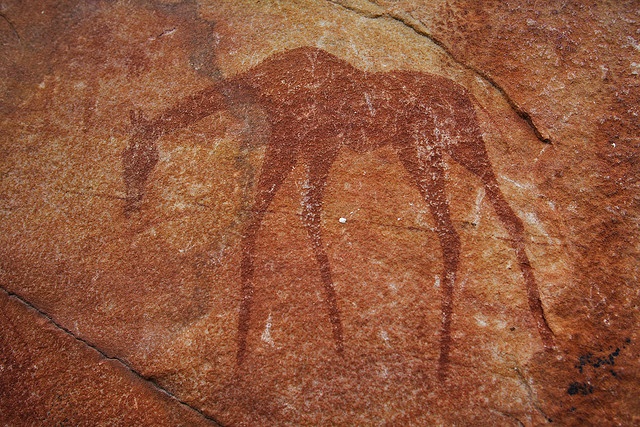
Come, let us build ourselves a city, and a tower with its top in the heavens, and let us make a name for ourselves; otherwise we shall be scattered abroad upon the face of the whole earth.
Genesis 11: 4
Therefore it was called Babel, because there the LORD confused the language of all the earth; and from there the LORD scattered them abroad over the face of all the earth.
Genesis 11: 9
***
1977 — Tassili n’Ajjer, Algeria
As the sharp spears of the Saharan sun pierced through the seams of his rickety, ramshackle yurt for the fifth consecutive morning, Alaric von Vergessen sank deeper into his sweat-stained pillow and let the illusory darkness carry him back to the shadow-casting pines of his beloved Baden-Baden childhood home. For a fleeting moment, he caught a whiff of browning butter mingling with the nutty smoke of rye as it crisped in the oven—each laced with the sharper tang of dew-damp moss drifting through the mullioned windowpanes. The aroma flickered in and out—one moment palpable, the next smothered by a gust of scorched sand and acrid dust.
Despite being the lead archaeologist on the expedition, Alaric was the last to awaken that day—clinging well past sunrise to the scraps of his dream he could still salvage from the night before, secretly yearning to be anywhere but this merciless maze of endless desert dunes. It wasn’t that he had given up—at least not yet—but rather that a realization, as slow and insidious as the heat-thick smog, had begun to settle in: he had, once again, gravely—and now perhaps irrevocably—underestimated the toils of his pursuit.
For as long as he could remember, Alaric had been possessed—perhaps even cursed—by an indomitable ambition, a hunger sharpened with each year of praise from the most eminent archaeologists at Europe’s prestigious institutions. So when, at the robust age of twenty-seven, his research into Neolithic North Africa uncovered tantalizing traces of a long-lost, rumored civilization known as Tzaphiron, and earned him the Gerda Henkel Stiftung grant, Alaric had accepted the 60,000 Deutsche Mark without hesitation, packed his gear in haste, and departed the oak-paneled halls of the German Archaeological Institute in Berlin for the searing heart of the Sahara Desert: Tassili n’Ajjer.
In fact, Alaric had been so exuberant, so pertinaciously convinced that some monumental revelation lay dormant within those oracular cavern walls—just waiting for his hand to brush away the veil of dust—that in his zeal, he had entirely overlooked one simple yet crucial fact: his inability to withstand the heat. A minor discomfort, he had assured himself again and again—a noble sacrifice in the name of knowledge. But by that fifth unrelenting, ruthless sunrise, his characteristically German predilection for overcast skies and pine-shaded fog had already begun to eclipse his resolve. And so, burrowing even deeper into his cushioned cocoon, Alaric surrendered once more to the mirage of memory and let the thick desert fumes evaporate back into the cool green mist of Baden-Baden.
Suddenly, the hum of his mother at the stove dissolved into the hiss of sand as a cry sliced through the fragile membrane of his reverie in rapid Darja Arabic:
“Lqina haja! Lqina haja!”
Alaric groaned, reaching for another ottoman cushion to muffle the intrusion back into illusion. But the shout pressed closer—now in English, a clear sign that the message was meant for him.
“We found something! Professor von Vergessen, we found something! You must come at once!”
Just beyond the hide of his hut, Alaric recognized the voice of Samir Barzakh—whose fierce curiosity had already set him apart from the others dispatched from the Universitaire de Tlemcen. Samir burned with such rare fire that even after the Boumédiène regime’s reforms suppressed indigenous languages, he had taught himself fluent Tamahaq out of sheer resolve. Alaric had been quite impressed—he’d even begun to develop a sort of affinity for Samir. Yet no affinity could temper the irritation that now swelled with each syllable of the young man’s holler.
Grumbling, joints stiff, mind sluggish from the leaden heat, Alaric finally heaved himself upright.
But the moment he stepped beyond the scant shade of his shelter, the sun struck like a molten scythe—singeing his blistered skin and forcing him to squint at a cluster of silhouettes huddled around a single object in the distance. Just beyond, three others trudged forward, hunched beneath the weight of what looked like massive sandstone slabs. As they neared, Samir broke away and approached, cradling something in his hands. When they met face to face, he revealed the source of the commotion: a small, worn leather-bound book—its spine splintered, its cover faded to pale umber.
“We discovered it just this morning,” Samir said, his tone barely containing its exhilaration.
“Near three heavily eroded sandstone slabs, each chiseled with a series of strange symbols none of us could identify. My first guess was some rare variant of archaic Tifinagh—I could’ve sworn I’d seen some before. But Dr. Azouaou was adamant—they don’t stem from any known Afroasiatic script. And with each layer of sediment we cleared, we began to realize just how peculiar—how anomalous—they truly were. Then, just meters away…”
Still powdered with dust and calloused from hours of excavation, Samir extended the book toward Alaric, who was immediately struck by the give of its spine.
“It appears to be someone’s personal journal. Written in the late 1920s. Mostly in French,” Samir continued. “At first glance, you’d assume it was insignificant. But after skimming just a few pages…”
He paused, searching for the right words.
“Well… it may be even stranger than the tablets. Obviously, none of us have had time to read it closely yet, but from just a quick glance…” His gaze lingered on Alaric’s grip, as if momentarily bewitched by its pull.
“All sorts of bizarre ramblings—impossible chronological inconsistencies, abrupt digressions into a multiplicity of languages—some of which seem entirely alien. And near the end…” A mixture of a sigh and an inhale slowed his breath.
“Only a few entries remain in French. After the first handful, the author begins to sketch the same symbols we found etched into the tablets. At first, the task clearly challenged them. You can see the strain in each early line—hesitant, uneven, almost trembling. But then, page by page, something shifts. The sketches improve—gradually at first, then swiftly, assuredly. By the final few, despite their complexity and the difficulty of transcription, each is replicated with perfect precision. They’re rendered with such deliberate care, such unmistakable rhythm, that they almost appear… legible. As if, despite belonging to a language extinct for millennia—if not longer—the author had somehow become fluent.”
Samir steadied his breath, preparing to deliver the final revelation.
“And yet, somehow even more astonishing—” he began, thumbing frantically through the yellowed pages the moment he snatched the journal back from Alaric’s hands. “Countless times, scattered across multiple entries—”
But before he could finish, Alaric had already seen it. How could he not? Half-submerged in a sea of flowing French cursive, coiled amidst a labyrinth of unintelligible scribbles and scrawls, a single word gleamed forth as resplendent as the sun above: Tzaphiron. In an instant, the exhaustion, the inertia, the slow disintegration of his will—all flared into a sudden incandescent blaze. The sunburnt sting on his flesh, the throbbing ache at his temples, the long erosion of days spent chasing chimeric phantoms across the dunes—none of it mattered anymore. A fire he’d thought extinguished now flared anew—brighter, hotter, blinding. With renewed urgency, he seized the journal from Samir and rifled through the pages in a frenzy until finally—he reached the first. His pulse staggered, stalled—then surged. There it was: Ariadne Solène Mornève.
“Do you know whose this is?” he asked, his stare unfixed—as though he were no longer seeing the desert.
A few exchanged puzzled glances. One or two shrugged. But the confusion on every face told him what he needed to know.
“Ariadne Mornève,” he repeated, his voice edged with slight agitation. “The infamous French linguist who vanished in the Sahara in the late 1920s. One of the great mysteries of the twentieth century. You really mean to tell me not a single one of you recognizes her name?”
They continued shaking their heads, confusion deepening into collective bewilderment.
“Actually,” Samir offered, breaking the silence, “now that you say it… the name does sound vaguely familiar—though vaguely is an understatement, and I haven’t the faintest idea why.”
Alaric blinked. “I suppose I’d be more familiar with her than most,” he said. “But to be the only one who knows her name? I don’t see how that’s possible.”
“Hmph—no matter,” he collected himself with a sigh. “Ariadne Mornève was no ordinary scholar. A genius of such staggering magnitude that had fate been slightly kinder, she would have gone down as one of Europe’s greatest minds.”
“She studied under Marcel Cohen—and even Meillet, in his final years at the École Pratique. Her dissertation traced a proto-Afroasiatic tongue in North Africa, dating to 3500 BCE or earlier—long before Egyptian or Sumerian. She christened it Atziluth, after the highest realm in the Kabbalistic Tree of Life—believing it to be the primordial progenitor of all languages.”
Among the furrowed brows and skeptical stares, only Samir’s eyes—aglitter with wonder—stood apart, like a lone cedar hung in the desert drift.
“Her revolutionary comparisons of Libyco-Berber, Proto-Sinaitic, and other ancient Afroasiatic scripts uncovered patterns that appeared to suggest a single, shared ancestral root—one with improbable affinities to language families as far-flung as Uralic, Turkic, even Sino-Tibetan. The claim was bold. Controversial. But it brought her immediate acclaim.”
“And yet,” Alaric continued, “her brilliance began to spiral. Lucidity gave way to obsession, and soon, her research bled into all manner of esoteric delusion.”
“With staunch conviction and no substantiating proof, she began to claim that Atziluth was the long-dismissed Ursprache—the ancestral mother of the human species, the primal father, the accursed tongue God sought to scatter at Babel. She read the Babelian tale not as scriptural allegory, not as divine parable, nor even as literary myth—but as a real, historical event. An irreparable tear in the very fabric of the human psyche. The cataclysmic loss of a syntax that once held the Infinite. A language from an age when the divine was not ineffable, but speakable.”
Alaric’s gaze drifted toward the tablets, still half-mired in sand.
“These speculations were, of course, outright dismissed. Too mystical for the linguists. Too linguistic for the mystics. Denounced as delusional by both. And yet…” He turned back to the group.
“Even now—though sparse and scattered—there are still those who believe Atziluth is no mere myth, but a secret yet solvable riddle—a language encrypted deep within the collective marrow of human consciousness.”
Murmurs rippled through the group, their expressions swinging like pendulums between incredulity and intrigue. Samir, however, remained firm and fixed—not in disbelief, but in quiet, speculative awe.
“But if she had proof,” he asked, “then why did no one take her seriously?”
Before Alaric could answer, another student interjected with a scoff:
“Isn’t it obvious? Monogenesis has been debunked for over a century. The Enlightenment made sure there’s no room left for religious fantasy masquerading as science.”
Samir refused to let the slight dim his fascination. “But if she did have proof,” he pressed, “if she traced Atziluth through real, rational evidence—then it wouldn’t be ‘religious fantasy,’ would it? Wouldn’t it then be science?”
He turned to Alaric. “Didn’t she have that evidence?”
“That depends,” Alaric replied, tilting his head with a faint smirk. “She presented a mountain of material—artifacts, petroglyphs, manuscripts—that she believed confirmed her theory.”
Samir, hearing it as affirmation, allowed himself a slight grin. But Alaric quickly interrupted his satisfaction:
“That’s the strange thing about evidence, isn’t it? Some say her findings were irrefutable. Others insist they weren’t evidence at all. And in the end—can anything ever truly be proven?”
He pressed on, almost without pause. “To her, the signs were so compelling that, nearly a decade after the war, she set off on a solitary expedition into this very desert—Tassili n’Ajjer—convinced the final pieces of her puzzle lay hidden in some undiscovered cavern. Scholars implored her to reconsider. They say her mother wept for days. But Ariadne was unstoppable—impervious and consumed. And sadly, as many predicted, she never returned.”
He let the silence settle for a moment.
“Over the decades, theories have multiplied like mirages,” Alaric said at last. “Some say she collapsed from heatstroke—dehydrated, starved, then swallowed whole by the dunes. Others suspect madness. And then there are those who believe it wasn’t disappearance at all, but a wilful choice—a deliberate surrender to whatever fate the desert had in store for her. A self-orchestrated annihilation, born of mounting melancholia and an ever-deepening solitude.”
“She must have been mad—a young woman alone in the Sahara! What sane person would do such a thing?” The remark came from one of the Germans. Alaric barely registered it.
“In any case, nothing was ever found. No remains. No trace. And whatever she discovered—if she discovered anything at all—has long since been swept away by the gale of time.” He exhaled. “That is, until now.”
Alaric’s thumbs tightened gently around the flaking leather spine.
“Gentlemen,” he said, “I think it would be best if I examined the journal alone—at least for now. I suspect it will require my full attention—and therefore complete silence.”
Without waiting for a reply, Alaric turned and began walking back toward his hut.
“In the meantime,” he called over his shoulder, “begin cataloguing the inscriptions. We’ll reconvene this evening.”
With every step, his thoughts drifted further and further—from the rust-hued auburn wasteland to the dim solitary hush of his yurt, all the way back to the quiet green cradle of Baden-Baden—until, finally, they reached their true destination: squiggles snaking, ink splitting, words coiling down the yellowed paper, sentences unveiling the momentous revelation he had crossed continents and suffered so valiantly to uncover—the titles of his future books, the generous grants and prizes, the accolades, the acclaim, the lecture halls echoing with his name—the brave archaeologist who solved the mystery of Ariadne Mornève, the brilliant scholar who decoded Atziluth, the man who revealed the truth of Tzaphiron: Dr. Alaric von Vergessen.
He drew a deep inhale and steadied his pulse once more.
***
July 16, 1927.
I never succeeded in keeping a journal—a source of deep regret, given my lifelong struggle with memory. Perhaps it is because the present unfurls within me with such tempestuous force that it leaves little room for retrospection. Or perhaps my memory is simply too porous, too permeable—allowing the past to surge in formless torrents rather than collect as distinct drops. Whatever the reason, I have recently come upon something so strange, so singular, so impossibly—yet undeniably—extraordinary that I must record it, faithfully, with care, before it too evaporates into the same fog where so many others have vanished into obscurity.
As improbable as it may seem, I have reason to believe this blossoming discovery traces back to a most peculiar incident from my early childhood—one I long dismissed as inconsequential, but which has now crawled out from its shadowed nook and shimmers with eerie clarity. After nearly consigning it to oblivion, it reemerges not as a lucid window into the past, but as scattered shards of something once whole—puzzle pieces whose original shape I can no longer reassemble.
I fear I am moving too quickly. I’ve begun my tale too far ahead. Allow me to backtrack—to retrace the path more slowly, lest I lose myself once more in the impenetrable labyrinth of my own memory.
July 17, 1927.
It was late May (though, for reasons aforementioned, the precise date eludes me), and I was working well past midnight at the Bibliothèque Mazarine—immersed in research for my forthcoming dissertation on the Berber languages of North Africa.
At the time, I was conducting a philological comparison between Libyco-Berber stelae and Proto-Sinaitic inscriptions excavated from Serabit el-Khadim—a formidable, turquoise-veined mountain that broods over the Sinai Peninsula. Scattered across my desk lay an assortment of reference texts, but the one that held me captive was a copy of Fabre d’Olivet’s La Langue Hébraïque Restituée—an obscure, esoteric volume I had stumbled upon only days prior, buried in the marginalia of a manuscript on the origins of the Phoenician alphabet. I had opened it out of idle curiosity, but within twenty pages found myself utterly transfixed by its central proposition: that each letter of the Hebrew alphabet is not merely a graphic or phonetic signifier, but an immaterial metaphysical force—a primordial essence that not only precedes, but exceeds, articulation itself.
What haunted me most—and continues to gnaw at me even now—was his interpretation of the Hebraic Aleph. The first letter of the Semitic alphabet—a silent consonant, an emblem of unity, the mathematical sign of the Infinite—was, to d’Olivet, not simply a cipher for “oneness,” but oneness itself. Not a placeholder for the divine, but a perforated vessel through which divine luminance seeps. Aleph, he claimed, inscribes the indescribable; it is silent because its very form contours the ineffable.
It was within the mystic hush of that scene—the scent of leather and candlewax hanging thick beneath blackened oak ceilings; the mezzanine of Latin titles and esoteric treatises tucked into shadowed mahogany shelves; the dim flicker of an oil lamp casting halos across the desk—that I first encountered the enigma that now harrows me so. An anomaly, a coincidence, a synchronicity—call it what you will—but it struck with such precise, uncanny clarity that I find myself writing here for the first time in my life, compelled not by habit or fervor, but by urgent necessity.
My body is pleading with my mind to rest—I must wait until morning to continue.
July 18, 1927.
Perhaps it is important you should know: I despise sleep. What a dreadful waste of time! My body—keenly attuned to this disdain—rarely slumbers more than four or five hours. So do forgive me if I write until I quite literally collapse onto the page—and for any errors that may follow.
Now, to continue: amidst the Libyco-Berber symbols strewn across my desk that fateful May night, my gaze fixed upon one in particular—a circle enclosing a single dot. I recognized it at once: the Tifinagh letter Yas, still used today in Tuareg variants of Amazigh. My interest was piqued. Nearly every other character along the evolutionary arc from Proto-Berber to modern Amazigh had undergone some degree of visual or phonetic modification. Yet this single circled-dot had remained unchanged—untouched, as if immune to the churn of linguistic drift, impervious to the fevers of time. How could that be?
Intrigued, I began to trace its lineage. Starting with its present form, I worked backward through 19th-century Tuareg ethnographies and early Amazigh epigraphic reports until I arrived at a surprising realization: in older Tuareg Tifinagh, the letter Yas did not appear as a circled-dot at all, but as a forked, zigzagging trident—decidedly angular, anything but circular. And yet, when I turned back to the Libyco-Berber facsimiles before me, there was no mistaking it. Again, and again, and again—almost everywhere I looked: scattered across sketches of prehistoric rock art, photographed in Neolithic inscriptions, scribbled through ethnographic surveys, stamped in archaeological catalogues—the same unmistakable shape: a circle enclosing a single dot.
I began to wonder: if the modern circled-dot—the Tifinagh Yas—bears no phonetic or semantic link to its ancestral Libyco-Berber counterpart, then how had such a symbol, with seemingly divergent meanings, come to occupy such prominence at both ends of the lineage? Stranger still: how could it appear so prolifically in Libyco-Berber inscriptions from 2500 BCE onward, so insistently in its twentieth-century Tifinagh form, and yet be entirely absent from the epigraphic record before the second millennium? It was as if the symbol had emerged inexplicably—sprung from nothing, passed through some arcane semantic alchemy, and resurfaced centuries later, unchanged in form, without a single variation.
Seeking diachronic analogues, I turned to Sir Alan Gardiner’s index of Egyptian hieroglyphs. To my astonishment, there it was: Gardiner N5—a circled-dot, signifying the solar radiance of Ra—the divine totality of the Sun, incarnate. I widened my search.
In ancient Chinese oracle bone script—again, solar: a circled-dot. In the Gothic alphabet, the letter ƕair: a circled-dot. My pulse thrummed. I pressed further.
In the Ashokan Brahmi script: tha. In Old Cyrillic: a monocular O. And then—clear, aglow, luminous and unmistakable—the ancient Pythagorean emblem for μονάς: the Monad, the Essence, the Absolute, the indivisible unity of Being: a circled-dot.
In Hinduism, the Bindu—the point where cosmic unity fractures into multiplicity; in Gnosticism, the primal emanation of the divine; in Kabbalah, the crown of Keter; in alchemy, the perfect radiance of gold; the sun of the astrologer; the star of the astronomer; the Seed; the Womb; the Egg; the Origin; the Center; the Source; the Ineffable One. The same symbol—across millennia, continents, and cosmologies—without a known origin, without a single source, without explanation: the circled-dot.
I began to wonder—could this omnipresent circled-dot (later revealed to me as the circumpunct, from the Latin circum, “around,” and punctum, “a point”) possess an invisible metaphysical charge akin to what d’Olivet believed resided in Aleph? Aleph descends from a pictogram of an ox-head; the circumpunct first appears carved into the flank of a sheep-goat. Both ancient. Both persistent. Both inexplicably ubiquitous. Might they not be equally primordial?
I recalled rumors I’d recently overheard about a small circle of American linguists who, like d’Olivet, believe in some deeper, hidden power of language. They’ve begun to speculate that language does not merely reflect reality—it actively shapes it. That grammar and utterance are not just mirrors of perception—but the very loom upon which perception is spun. And if that were true, then might not the centered dot, like Aleph, encode something far more elusive? Perhaps not d’Olivet’s “divine totality” in the strictest sense, but what about a cognitive architecture? A mode of thought? An ancestral way of seeing the world? A prehistorical, prelinguistic grammar of reality? A gaze unbound by the spatiotemporal confines of the human eye? For if language indeed sculpts the cosmos, then would not a grammar capable of articulating the Infinite grant one the power to speak eternity? Might not such a tongue—divine, primordial—breach the very breath of God? And if so, would God wish to scatter it?
I became obsessed. I chased its specter across marble floors and forgotten archives, through crumbling codices and abandoned lithographs, within the marginalia of esoteric manuscripts, and along the tangled lexicons of ancient tongues—until, at last, I came upon a sequence of petroglyphs in the Corpus Inscriptionum Semiticarum, sourced from Oued Mertoutek—a desiccated riverbed in the Tamanrasset region of southern Algeria—allegedly dated to 3000 BCE: the oldest known Libyco-Berber inscriptions ever recorded.
I was certain—absolutely certain—that somewhere within those scribbles and scrawls I would find some precursor, some trace—a seed, an ancestor—something, anything, that might anchor the circumpunct within the genealogy of language and release me from this vertiginous dungeon of unknowing.
But there was nothing. No circled-dot. No related shape. No embryonic form. Nothing in 4000 BCE. Nothing in 3500. And then—suddenly, inexplicably—from 3000 BCE onward, it was everywhere. Fully formed. Recurring across sites. Scattered through disparate scripts. No lineage. No mutation. No visible evolution. As if it had written itself into being ex nihilo—a diachronic aberration that should not exist, and yet, somehow, nevertheless, appears omnipresent.
Still disoriented, my gaze fell upon something else: a hybrid sheep-goat etched into one of the rocks, its flank chiseled with a cluster of undeciphered symbols. Among them, one in particular seized me with a strange, almost magnetic force. It was circular—eerily similar to the circumpunct, yet grotesquely deformed. Its lines were mangled; its center anything but a dot. So close—yet so divergent. I froze, transfixed. It bore no resemblance to any Libyco-Berber script I had ever studied. And yet—I was certain I had seen it before.
I strained to recall where. Hours passed. Nothing surfaced. No trace in Cushitic, Egyptian, or Semitic. No affinity with any proto-language family—not Afroasiatic, nor Nilo-Saharan, nor even Niger-Congo. Only one conclusion remained: what I had unearthed in those nocturnal hours was not some remnant of the past, but something else entirely—a language wholly unknown to the chronicles of human history.
Overwhelmed, overexhausted, my body finally gave in. I collapsed onto the brittle golden pages of the Corpus Inscriptionum, slipping into a dreamless, involuntary sleep. Hours later, when the first rustlings of Sorbonne students stirred the silence, I awoke with a sharp inhale and a racing pulse. The realization crashed over me like a flood. I suddenly knew where I had seen that symbol before.
Not in an inscription. Not in any lexicon. Not carved in stone, nor printed on parchment.
I had first encountered the language I now call Atziluth in a dream.
July 20, 1927
I grew up in a quiet, lonesome commune called Germigny-des-Prés. Nestled in the rustic heart of the Loire Valley, the village was almost entirely unremarkable—save for a single relic: the oldest surviving Carolingian church in France. I cared little for its sermons or sacraments, but was enchanted by a singular marvel: an ornate mosaic ceiling depicting the Ark of the Covenant.
After nightfall, I would often slip into the Oratory alone, drawn like a moth to its tesserae of lapis and gold, hypnotized by the immaculate geometry, bewitched by the iridescent emerald and cobalt wings of two cherubim coiling inward in perfectly perplexing symmetry toward the radiant center. But after the letter arrived—informing us that my father had mort pour la France, his heart torn open by a German shell in the trenches near Verdun—my mother’s grief hardened into bitter disdain. And the only thing she seemed to resent more than the French Army was my unwavering devotion to the Oratory. One night, having shrewdly discerned my paralytic fear of Father’s old study, she devised a punishment she knew would put an end to my nightly escapades once and for all.
It was a storm-heavy night in December. I had just returned from one of my clandestine visits to find her waiting—arms crossed, stone-cold—by the door. Without a word, she seized my sleeve, dragged me down the corridor, and thrust me into the study, slamming the door shut behind me.
I screamed. I thrashed. I pleaded. I pounded the maroon walls with my fists—but every cry dissolved into the indifferent silence. After hours of weeping, my body finally surrendered, collapsing onto the mahogany-splintered floor. What followed was neither dream nor nightmare, but a slow slither into a more corporeal abyss.
I awoke in the same cobwebbed study, though something implacable had changed. The air was thicker, heavier—with a sharper tang of mildew and the metallic sting of mold. The silence had deepened: hollower, bleaker, more absolute. The dust that once stifled my cries now clotted in my throat. And this time—I was not alone.
In the farthest corner, half-shrouded in a murk of shadow and debris, crouched a small figure—its head buried in its knees, its shoulders quivering with mute, primal sobs. Though every nerve in my body recoiled, some dreadful, inexorable force compelled me forward. As I neared, the creature stirred, slowly raising its head until—our eyes locked. My breath caught. Staring back at me was a mirror image of my own face.
Her features were mine—but distorted. Her limbs were warped, her posture contorted—like a disfigured, cracked porcelain doll. Viscous strands of hair clung to her temples. A feral gleam burned in her agape, dewy eyes. And worst of all—when she beckoned me forward, I obeyed without hesitation.
I knelt beside her. Our shadows mirrored one another in grotesque symmetry. She leaned in. Her bruised-blue lips parted, but no words escaped—only a low tremor, barely audible, yet so discordant it crawled up my spine. Then, with a sudden, sharp flick of her finger, she pointed into the pitch-black thick, where something slow and sinister had begun to writhe. At first it was indiscernible—but gradually, a proliferation of scribbles and scrawls began to cohere into strange symbols and vague, serpentine shapes.
With each symbol, a terror beyond articulation pierced through my flesh, as though I were being slit from within. I could not move. I could not cry. I was frozen—fused to the floor, to the fog, to my monstrous twin. And the very instant I awoke, the memory had already begun to fade.
Years passed with my mind unperturbed. But somewhere, buried deep in the sediment of my psyche, the symbols endured—waiting, with pernicious persistence, until the night, decades later, when I saw them again: scratched into the belly of a sheep-goat in a sandstone petroglyph—the same monstrous contours, unmistakable, and stranger than ever. The marks of Atziluth.
July 23, 1927
I have spent the past several hours ruminating in the solitude of my study, mired in the deep despondency today’s events have left me in. I had hoped—perhaps naïvely—that my exposition on Atziluth might rouse wonder; or at the very least, spark a twinkle of curiosity. Instead, it was met by all fourteen professors and linguists at the École Pratique with a shallow pantomime of polite nods and tepid disinterest. Even the theological philologist Dr. Éleuthère Béraud dismissed it as a mere “interesting idea” before veering into an irrelevant tangent on Valentinian Gnosticism.
Valentinian Gnosticism—how ludicrous! As if I had conjured Atziluth from mystical hallucination rather than unearthed it through rigorous study and thorough analysis of the sandstone inscriptions at Oued Mertoutek. Even without revealing the more intimate dimensions of my research, there is no other plausible explanation for the recurrence of the circled-dot.
Despite their dismissal, I remain steadfast. I cannot—will not—forsake the one thing that has come to animate my soul.
September 2, 1927
Though my pen has lain dormant for some time, I hope my silence will not be mistaken for any apathy or wavering conviction.
On the contrary—I have spent the past few weeks wholly absorbed in the long and laborious process of refining and submitting my findings. Two weeks ago, my article, “The ‘Atziluth’ Hypothesis: Proto-Afroasiatic Glyphs in the Neolithic Rock Art of the Central Sahara,” was published in Acta Orientalia Academiae Scientiarum.
Today, I stepped briefly away from the usual rigors of my research to record what may prove to be a most momentous development. Yesterday afternoon, I found a letter postmarked from Algeria waiting in my École mailbox. I believe its contents warrant direct transcription:
Dr. Ariadne Solène Mornève,
I have followed your work with interest since encountering your recent article in Acta Orientalia. My name is Dr. Yamina Suhaila Nazeera, and I am a philologist at the Université d’Alger specializing in trans-Saharan orthographies.
For the past three years, I have conducted fieldwork in the remote town of Illizi, at the cusp of the Tassili n’Ajjer. During this time, I’ve encountered numerous sandstone carvings and cavern paintings that bear striking resemblance to what you call ‘Atziluth,’ and what I have provisionally termed ‘Tazarfus.’
Perhaps of particular interest to you: among the Tuareg Imuhagh elders I’ve interviewed, several recount legends of a powerful figure known as Tin Hinan—a woman said to have crossed the dunes on camelback bearing with her a divine tongue. Many of these accounts claim she descended from Amunet, and often invoke Amon—intimately linked to the circled-dot of Ra and, notably, to his sacred animal: the sheep-goat. While some elders warn against seeking the tongue of Tin Hinan, the parallels in our research has rekindled my interest.
If you are willing to travel to Illizi, I would be honored to welcome you on a joint expedition into the Tassili n’Ajjer.
— Dr. Yamina Suhaila Nazeera
November 2, 1927
I have arrived in Illizi.
It is far smaller than I imagined. No paved roads, no electric lamps—only dusted footpaths stitched between huts and mudbrick dwellings, their canvas awnings crackling beneath the late-afternoon heat. To the north, a tangled palm grove fans outward; smooth pebbles gleam among gnarled acacia roots, nourished by hidden springs. To the south, the horizon bleeds into the sand-scoured vastness of the Tassili plateau, where jagged stone silhouettes rise like titans from the desert basin.
Amid this earthen palette of clay, stone, and blood-orange sand, a pale anomaly pierces the periphery: a cluster of lime-washed outposts, concrete stations, and iron gates. One reads Poste des Douanes, another Gendarmerie. Further uphill, a garish fortress of steel grates, olive shutters, and blistered stucco stands above a faded tricolor flag, limp in the heat, casting its striped shadow across a rusted plaque: République Française.
Of course, I knew what I would find. And yet—does foreknowledge ever truly soften the impact? When you’re standing in the thick of it—squinting through the garish glare of iron scaffolds, longing to inhale the desert wind but tasting only asphalt, diesel, smoke—the disquiet clings to the heat, seeps into your lungs, becomes pervasive—infects everything in its path.
That afternoon, I wandered into the northern grove, where I saw a boy—no more than ten or eleven—crouched at the edge of a dry wadi, his bare palms streaked with mud, his feet chalked with dust. He was so absorbed I hesitated to disturb him—but my curiosity always triumphs over restraint.
As I neared, I saw that he was carving into the clay: spirals within spirals, overlapping loops, concentric circles—again and again, without pause or falter. Each stroke was etched with such slow, deliberate focus he seemed spellbound. And even more remarkable—his only tool and paintbrush: a small goat-rib bone.
He never looked up. Not when I greeted him softly with a Tamahaq “Azul.” Not when I knelt beside him in the coarse red-ochre grit. He remained fixed on his project for what may have been hours, though I scarcely noticed the time pass. I had meant to meet Dr. Nazeera before sundown, but I couldn’t bring myself to leave. Even now, I cannot say whether it was his stillness, his focus, or the spell of the shapes that held me there—but something did. I hope to see him again when we return from the plateau.
November 7, 1927
We set out two days ago: Dr. Nazeera, Dr. Harithi, our Tuareg guides Asur and Isamar, and myself.
The heat here does far more than scorch—it seeps inward, presses into the flesh, dragging you into its heavy rhythm, forcing your body to yield to its torrid force, altering your cadence. I don’t mind it. I surrender. I even prefer its rhythm.
At dawn tomorrow, we begin our first excavation.
November 9, 1927
No discoveries yet—but Isamar shared something just as extraordinary.
Last year, after centuries of dismissal as mere folklore, a joint team of French archaeologists uncovered a burial site believed to be the tomb of Tin Hinan—the matriarchal queen Dr. Nazeera mentioned in her letter.
A real tomb. For a real fourth-century Tuareg queen.
November 10, 1927
Still nothing definitive. But during our long treks, Asur and Isamar continue to share some of the most magnificent Amazigh legends. Today: the tale of Tislit, the moon and water, and Aneẓar, the sky.
Cursed to live apart by divine decree, the lovers yearned for one another with such vehemence that their tears spilled outward in torrents, dripping through the stratosphere as rain. Her longing became the rivers; his grief, the storms. Their sorrow seeped into the Sahara, carving subterranean rivers and hidden aquifers beneath the crust of sand.
I should feel worn down—but despite fatigue, I feel quickened, held by a radiant hope. I feel closer to Atziluth with each day.
November 12, 1927
On the southern face of a weatherworn bluff, we uncovered a panel of Proto-Berber inscriptions. Most incisions had eroded into faint scars, but a few remained: archaic forms of Yabh, Yah, Yey, and a skeletal Yaz.
One glyph stood apart: a crescent arch intersected by three vertical bars and a diagonal slash. Dr. Nazeera later identified it as a funerary sigil from the central Ahaggar, used to mark the place where the dead await the return of Ra.
November 13, 1927
Shortly before sundown, we made our most astonishing discovery yet.
As we prepared to reverse course, Asur halted before what first appeared to be an impregnable escarpment. With a swift sweep, he cleared the sedimentary drift, revealing a narrow fissure—nearly imperceptible at first—that opened into a sepulchral concave chamber. There, cloaked in a fine layer of coppery dust, we unearthed three sandstone slabs—their edges worn, yet their smoothed surfaces astonishingly preserved. Each was inscribed with intricate webs of interlocking loops, serrated spirals, and interlaced tangles. Petroglyphs—unlike any I had ever encountered.
Some bore a faint resemblance to Libyco-Berber, though most were alien beyond classification. And then—impossible to mistake: the circled-dot. Not once, but twice. Incised with unmistakable precision into the surfaces of two of the three tablets.
Strangest of all, each composition seemed to spiral inward toward a shared focal point—a central glyph, carved into all three, uncannily similar to the sigil I first saw in the Oued Mertoutek inscriptions.
This central glyph is so anomalous it resists description entirely. It’s as if some not-quite-human hand had attempted to mimic the circumpunct—yet failed catastrophically—birthing instead a mangled, disfigured muddle of warped geometries and inscrutable asymmetries. Stranger still, despite its aberrance, I feel drawn to it with an almost gravitational pull of familiarity—not quite recognition, but something close to recollection.
We made camp just beyond the rock’s bend. Exhausted by the day’s labors, the others fell asleep almost instantly. I did not. I could not. Even now, hours later, my gaze remains fixed upon that central glyph.
November 14, 1927
Nearly twenty-four hours of relentless scrutiny, and not one of us has made any headway. I’ve resisted sleep, but the exhaustion is becoming untenable.
November 15, 1927
Strange—I almost never dream. But last night, something feverish must have overtaken me. I awoke drenched in sweat, with Isamar informing me that I’d been chanting strange syllables throughout the night. Yet my memory eludes me once again. I cannot recall a single sound or image.
Our supplies are thinning. I must begin preparing to return to Paris. The tablets will remain with Dr. Nazeera, who will escort them back to Algiers. I have photographed and sketched everything I could.
November 16, 1927
Sleep evades me. My limbs are heavy with fatigue, but my mind thrums with sharp, hungry anticipation. I’m too alert, too eager—too ravenous. How could I possibly rest now?
One of the glyphs from the second tablet has seized my attention for days. At first, I dismissed it as illegible. But now—the more I look, the more certain I become: I’ve seen this symbol before. The memory hovers just out of reach. This time, the feeling is even more potent than with the central glyph—more arresting than the circled-dot. And yet, no recollection surfaces. The déjà vu is maddening.
My memory is quite the hindrance.
November 17, 1927
This morning, while rummaging through a satchel of old notebooks I’d nearly forgotten I’d packed from Paris, I stumbled upon a marginal gloss I once wrote beside the Nahuatl compound xochicuicatl—“flower” (xochitl) and “song” (cuicatl)—not metaphorically conjoined, but coalesced in a metonymic act: a flower-song. The utterance is not representational or symbolic. It does not describe the cosmos—it enacts it. Nourishes and renews its motion. Performs and sustains its cyclical regeneration. Bear with me.
In Nahua metaphysics, the cosmos is not a fixed entity, but a generative energy in constant motion—teotl—omnipresent and omnipotent, at once divine and immanent, both force and fabric. It pulses through all matter and phenomena in a peculiar rhythmic motion—something between weaving and oscillation: a ceaseless interlacing and intertwining of the antagonistic forces that thumb through the universe—life and death, day and night, fire and water—merging all into a single continuity.
I thought of the circled-dot. I recalled Aleph. And then it struck me.
On the second tablet—there it was: the same crescent-like symbol found in pre-Columbian Nahua codices to signify teotl. Two civilizations, oceans and millennia apart—no contact, no transmission—and yet the glyph is nearly identical.
What am I to make of this, if not a common ancestor? A shared origin? It becomes clearer with each day.
November 19, 1927
Another fever dream last night. This time, I managed to retain fragments—scattered and strange—yet nonetheless intact. I will relay what I am capable of.
Though I once studied Nahuatl morphology with deep and devoted passion, I never quite managed to master the language. Yet somehow, in the dream, I spoke it not just fluently—but effortlessly, with a startling precision, as if it were my native tongue. And more astonishing still—each word spoken in Nahuatl was accompanied by a visceral bodily and psychic sensation: each syllable seemed to shift my body back and forth, swinging in synchrony, both through and within me, like the sweep of a pendulum. Allow me to exert more effort to describe it:
As my limbs swayed like a seesaw caught in invisible tides, my mind flummoxed—seamlessly and simultaneously—between impossible dualities: past and present, flesh and soul, matter and spirit, death and breath—the list could be infinite. I was not just the weaver, nor merely the woven—but the very act of weaving itself. I was string, spindle, and loom; thread, pattern, and quilt; the logic of entanglement and its undoing—the act of interlacing and unraveling—all while continuously winding and unwinding.
Forgive me if this sounds confusing. I know of no word or phrase in any Indo-European tongue capable of conveying the texture of this motion. The sensation itself transcends metaphor.
I write this now while rattling across the Tassili plateau, en route to Djanet, where I am to board the train for Algiers, then Paris. Dust coils behind us as we retrace the path of my arrival. And then—something strange.
As we passed the outskirts of Illizi, I looked up to find the strange edifices—the fortress, the shutters, the barracks, the flag, the plaque marked République Française—had all vanished without a trace. As I stared into the emptied horizon, I noticed a kind of magic, an earthy beauty I felt in my bones, one I had not seen upon arrival.
November 26, 1927
I have been back in Paris for several days now.
Each night, the same dream recurs: I stand before the cavern cleft in Tassili. But this time, when I peer inside, I see not tablets—but the Ark of the Covenant mosaic from Germigny-des-Prés. Yet its medley of blues, greens, and golds is now ash-caked, copper-smeared, and blood-washed. And where the cherubim once coiled in luminous symmetry, two figures—one demonic, the other angelic—have fused into a singular, deformed wraith. Stranger still, despite such perversion, the mandorla still suffuses my soul with the same serene, solemn harmony it did when I was a child. I do not fear these dreams. In truth, I long for them.
My attempts to share my findings here have been met not only with rejection, but with ridicule. I plan to write to Dr. Nazeera. Perhaps her expertise might carry more weight than mine.
December 3, 1927
In the past few days, I have made what I believe are substantial breakthroughs in decoding the first two tablets. While I still cannot determine how the pieces fit together, I’ve begun to isolate and tentatively translate several glyphs.
On Tablet I, the sequence appears to read, in order: human, difference or separation, language, seeking (or perhaps longing), then a symbol uncannily akin to the Semitic Aleph. After that: ancestor, labyrinth, the Tifinagh Yey, then language again, followed by the circled-dot (whose meaning remains elusive in this context). Thereafter: space-time (conjoined in a single glyph), fabric (or to weave), and finally: the arcane, esoteric, unearthly central glyph.
Tablet II begins similarly: human, difference or separation—then diverges into three unknown symbols, which I have provisionally labeled X₁, X₂, and X₃. X₂ appears to carry mathematical valence—some structure of measure or value. Then: the teotl glyph, denoting generative oscillation; a quincunx (whose semantics remain uncertain); the circled-dot again; space-time; fabric (or weaving); and, at last, the elusive central figure.
Tablet III is by far the most enigmatic. The symbols are more abstract, the syntax more opaque—but the core motifs persist: space-time, weaving or fabric, and, of course, the center glyph.
Now, I speculate that one of the figures may signify flow, emergence, or some other form of continuous movement. But in truth, it has become nearly impossible to focus on anything but the central symbol. It recurs with such unnerving insistence, it feels as though the entire syntax coils toward it. At night, it slithers into my dreams; by day, it curls around the edges of my thoughts. I am bewitched—haunted and transfixed.
December 6, 1927.
Today, Dr. Delprat warned me: should I continue with what he so crudely dismissed as “this mystic esoteric nonsense,” I will forfeit my position at the École.
It has now been nearly two weeks without a single word from Dr. Nazeera. I will write to her again this evening. I only wish there were someone—friend or colleague—willing to offer support, to corroborate my claim, or simply to listen. But alas, there never has been, and there most likely never will be.
November 14, 1927.
Last night, I returned to Tassili—though not as myself.
I was Tislit, the moon and water. And Aneẓar, who bore the face of my father, hung suspended in the overcast heavens above, his gaze a melancholic constellation lit with distant sorrow. I cried out for him. My longing tore through the sky. Yet no rivers welled, no springs surged from the sand. Instead, my grief transmuted—bleeding tremendous torrents of gold into the dunes, rising in plumes of dust and sand. Each tear descended into the valley and gave birth to a miraculous serpentine dune. With every collapse, another would form; with every formation, another would fall. Again—and again. And again. The dunes did not rest. They spun, spiraled, dissolved, reassembled. And within this ceaseless cycle, the motions began to blur—growing too fluid, too continuous to perceive—until, at last, they became imperceptible. All I could glimpse across the desert terrain was a proliferating procession of innumerable, miraculously symmetric, impossibly geometric, circular, recursive spirals. The sand. The loops. The procession. The exquisite completeness of their circular form. The spellbinding alchemy of the spectacle. Birth through decay. Wholeness through collapse. Continuity through ruin. It clicked. When I awoke—breathless, brined in sweat—I knew exactly what I had seen.
I have deciphered two more glyphs: X₁: love; X₃: death.
December 7, 1927
Ever since I named Dr. Nazeera as the leader of our expedition into Tassili, disturbing rumors have begun to circulate around the École.
More than one colleague insists there is no record of any Dr. Yamina Suhaila Nazeera—not at the Université d’Alger, nor in any faculty directory, archive, or bibliographic index. I’ve searched myself. Nothing. And now the letter she sent me is gone. Misplaced? Lost? Vanished?
They’ll say I’ve lost my mind. I must write to her again.
December 11, 1927
The center glyph—why does it remain so impenetrable? Why must it devour me?
Human. Language. Love. Death. Thread. Thread—what thread? What binds them into a single weave?
I keep pleading for someone—anyone—to help carry the weight of this unraveling—this entangled disentanglement. I once cherished solitude, but a deeper loneliness has begun to gnaw at my ribs like a hunger without end.
December 12, 1927
I wonder if my tears will become rivers or dunes.
December 14, 1927
Lately, I’ve been thinking—obsessively, excruciatingly—about what makes a word mean anything at all.
If meaning arises only through difference, then isn’t the very architecture of this world a catacomb of separation? How cruel—to dwell in a kingdom whose very grammar is severance. How lonely—this lonely, lonely world.
December, 2197 BCE.
Therefore it was called Babel, because there the Lord confused the language of all the earth!
December 16, 1927
Terminated from the university.
No matter. So be it. Let them scoff. When Atziluth emerges—when it proves itself as primordial as it is real—they will hang their heads like fools.
December 17, 1927
Another dream. Another glyph.
Infinity—that must be it! Surely the abstruse mathematical X₂ denotes the boundless.
Marvelous, isn’t it? That as early as 3500 BCE, the human mind had already begun to trace the shape of the Infinite.
December 18, 1927
No—not the Infinite. Zero.
I now suspect the mathematical X₂ marks absence: the void, the silence, the vacancy, nothingness, and so forth.
You might call me inconsistent. Allow me to explain.
This afternoon, beneath an unnaturally blazing winter sun, I wandered through the Jardin des Plantes and saw a young boy—perhaps ten or eleven—tracing the glyph into a patch of wet soil with nothing but a goat’s rib bone. I meant to thank him. But by the time I reached the spot, he was already gone. How exquisitely strange.
December 21, 1927
I have been having the most marvelously peculiar dreams. They grow stranger with each passing day. But forgive me—I can no longer describe them. The language in which I began this journal is no longer the realm I inhabit.
December 22, 1927
A letter arrived from Mother—her first and only since I left the Loire. I know she did not write from love, but from shame. Word must have reached Germigny-des-Prés: the fall of Ariadne Mornève. The expelled prodigy. The girl who squandered her brilliance on desert delusions.
Madness, they say. Ha—how absurd. Little do they know, I am more lucid than ever. I am so close to Atziluth, I can nearly touch it.
Still, I believe I will return. I wish to behold the Ark once more.
December 23, 1927
I have returned to Germigny-des-Prés.
Hardly a moment passed before Mother asked about my expulsion from the École. Of course, what had finally moved her was not the many months of silence—nor the unspoken estrangement that has come to define our relationship—but the faint whisper of scandal. Not the years of distance. Not the absence of love. Only the rumors.
My loneliness once thickened around me when I first glimpsed the marks of Atziluth. But lately, as I’ve begun to trace its syntax, I feel something different—no longer estrangement, but a pull. Something drawing me outward—toward the world, perhaps even through it. As if I am being unspooled—not snapped, not severed—but carefully unwound. Once again, the words escape me. I can scarcely begin to describe it.
Tomorrow, I will rise before dawn to visit the Oratory while Mother still sleeps. I must be gone before her morning grievances begin to take shape.
Undated.
I open my eyes to a muddled murk the color of desiccated blood—maroon, dense, darkening by the second. As if the smog itself were imploding, sinking into a far more inscrutable dark. Not the vacant dark of a starless night, nor the coffin-sealed black of a funeral home. No—this is something else entirely. Older. Hungrier. A darkness not made for the human eye. No edge, no air, no sound. A black without boundary—though not without depth. Perhaps nearer to the mute void of dreamless sleep, or the silent chasm at the bottom of the sea. Something in me loosens. Untethers. A dread begins to crawl beneath my flesh. Then deeper—into bone; terror into marrow. My stomach convulses. My limbs unfasten. I sink—mind and body—helplessly into some unfathomable abyss. The nausea is excruciating. My breath slows. Weakens. I feel myself dimming. Then—something stirs. There is another nearby. I am not alone. I begin to sob—violent, guttural, feral tears. With each one, a pressure mounts inside me. As if every grief I’ve ever carried—every death, exile, shame—collapses inward, all at once. The sorrow floods my limbs, presses against my skull, lacerates my tears, poisons them into something venomous. They burn like acid as they streak down my cheeks. And yet—how strange. The venom begins to change. Each drop no longer wounds, but quickens. As if something long-dead inside me now twitches back to life. And oh… dear God. I cannot see it—but I feel it. It is near. Closer now… watching… hesitating. Then— A flicker. A silhouette. I lift my head. My breath catches. We lock eyes. I freeze. I can hardly believe—oh God… oh dear God… how can it be? It is me. My own face. My own eyes—yet younger, gentler, untouched. And her gaze… oh, dear God—her gaze locks me in place. Not with fear, but with pity. The quiet, terrible pity the innocent offer the damned. What have I become? Have I truly gone mad? Can she see it? Can she tell? I long to reach her with terrible desperation. The urge is unbearable. I move toward her—she recoils. I whisper—she retreats. Her eyes widen. Not in fear, but in revulsion. Is this what I’ve become? So desecrated that even my own reflection recoils? Then—another shift. The weight begins to lift. Not upward, but inward. Into the space between us. The silence thickens. The darkness folds like a veil. A gossamer cocoon. A warmth enters. Slow. Subtle. It touches her. It touches me. It moves through us—into us. Breath by breath. Pore by pore. We are made porous. Her light seeps into me. My shadow spills into her. I look into the dark light, and the luminous dark gazes back. It glows from within. I blink—nearly blinded. Golden tesserae shimmer across the sand. The dunes ripple. Collapse. Ripple again. From the shade of an overgrown oasis, the Ark of the Covenant gleams—emerald and bronze—its surface scattering mirrored chimeras into impossible geometries. It has never appeared so beautiful. So real. The cherubim lean inward. Symbols slither through the air—serpentine, silver. Glyphs spiral in mirrored winds. Coiling inward. Uncoiling outward. Once more. Again, and again, and again. Diffusing. Dissolving. Unity into multiplicity. Multiplicity into void. The sun collapses. The moon swells. He offers his light— She returns it in rebirth. The sky churns. A tower crumbles—brick by luminous brick. I long to save it. I plead. No—wait— I pray. But the prayer unravels me. Thread by thread. My limbs dissolve. I burn. The longing thickens. The marvel ripens. The dark deepens. The light becomes unbearable. And then— My loneliness softens. Not vanquished, but transfigured. The emerald kingdom knots into one. The twilight realm rejoins it. I wait—silent and porous. Devoured, but no longer afraid. Tick by tick. Alone—but no longer lonely. Why was I ever afraid? The separation has gone away. And now… It is coming. Yes—tick, tick, tick… Brighter. Darker. The sun. The moon. Yes—I knew this day would come! Finally, it is here. I am not afraid. Yes… Irrefutable. Ineffable. Unfathomable. I knew it all along. Yes—the marks of Atziluth…
At last—it has emerged!
***
The sun had already begun its descent, casting long, skeletal shadows across the dunes. But dusk brought him no clarity. He did, in some part of himself, long to make sense of it all—but hadn’t the faintest idea where to begin. After nearly an hour circling the same opaque passages, parsing symbols like a weary pilgrim lost in a maze of unsolvable riddles, Alaric finally let out a sharp exhale and closed the fragile spine with a sigh and a measured, deliberate shut.
“Samir,” he called, standing upright, brushing grit from his hands.
When Samir approached, Alaric continued. “I’ve given it my most concentrated effort. Yes, a few fragments appear translatable. But the rest?”
He gestured toward the open page as if the disarray might speak for itself.
“Obfuscation. Nonsense. A chaos of symbols. The ravings of a brilliant but tormented mind. A chronicle of her descent into madness.”
He paused, wiping his brow.
“It makes me quite ill, if I’m being honest. Tell the others to bring one of the tablets—I’d like to begin a clean transcription. As for the journal, you’re welcome to it. Though I suspect it to be a complete waste of time.”
The students from Tlemcen—well-acquainted by now with Alaric’s shifting moods—carried the sandstone into his yurt. Samir, meanwhile, had already drifted several paces away, the journal clutched tightly in his hands—his eyes, once again, aglow with that quiet, hungry wonder.
Shortly before the expedition’s end, just days before their departure, Samir Barzakh vanished without a trace. No one could say when. Some claimed it happened at night; others, during a solitary afternoon walk. But most agreed on one thing: in those final weeks, something in him had begun to shift. He grew more withdrawn. He would disappear into the canyons alone, whispering phrases no one recognized, filling his notebooks with strange symbols he refused to explain. He left no note. No footprints. The only thing he took with him was the single complete copy of Ariadne’s journal. All that remained were the meager, partial fragments Alaric had lazily transcribed.
In the years that followed, Dr. von Vergessen returned again and again to the theory of Tzaphiron—reshaping, revising, elaborating one speculative hypothesis after another. Although he initially drew a small circle of scholars intrigued by the promise of decipherment, the spark was short-lived. Interest waned. Funding dissolved. And so, at fifty-five, Alaric took early retirement and returned with his wife, Marlene, to Baden-Baden—back to the pines, the bread ovens, the shadowy fog. He spent his remaining years reading Hölderlin, composing the occasional essay, and consuming generous amounts of homemade dark rye.
Within decades, the journals had fallen out of circulation. Tzaphiron remained undiscovered; Atziluth, untranslated. Both trapped in that same liminal oblivion where myth and memory blur.
***
The pages in this manuscript were recovered from the private library of Dr. León Nahum Teozintli Mendoza, a Mexican historian whose lifelong obsession with Ariadne Solène Mornève and Alaric von Vergessen led him to acquire a near-complete corpus of Mornève’s unpublished writings—including the partial Vergessen transcriptions—at an esoteric antiquarian auction sometime in the early twenty-first century. His intent had been to compile a definitive chronicle of their interwoven trajectories, a manuscript he intended to title: Atziluth, Tzaphiron, Tassili n’Ajjer.
Dr. Teozintli Mendoza died under sudden and uncertain circumstances before the manuscript could be completed. The surviving folios were later deposited in the Bibliotheca Alexandrina in Alexandria, Egypt, where they now lie sealed in a cabinet on the eleventh floor—marked only with the catalog number: heurēma 131-A. According to the archivist’s log, it has been nearly two centuries since the cabinet was last opened.
And yet, astonishingly, to this day, there are still the occasional few—linguists, occultists, archaeologists, wanderers, mystics—who swear they’ve seen those symbols before, somewhere implacable: in petroglyphs, in trance-states, in hypnosis, in religious ceremonies, in ritual acts, in dreams. A small handful have even ventured into the bleeding, sanguine labyrinth of the Tassili n’Ajjer plateau. Most return empty-handed. Others are swallowed whole by the drudges and dangers of the dunes. The tale is almost always dismissed as mere legend or myth.
And yet—one final enigma continues to leave many wondering.
During a recent restoration of the ninth-century oratory at Germigny-des-Prés, a group of conservators uncovered a series of inscriptions hidden behind the Ark of the Covenant mosaic. Etched into the substrate beneath the gold and lapis tesserae, the lead epigrapher claimed the hand was unmistakable: Ariadne Solène Mornève. December 1927. Nearly six months after her supposed disappearance.
Consensus remains divided. Some dismiss the carvings as an elaborate hoax; others insist they constitute the long-sought final entry of Mornève’s journal. Yet those who have seen them firsthand speak with unwavering certitude: the same intertwining spirals, the same serpentine geometries, the same impossible symmetries. The specters of a language that once bore the divine and mounted the Infinite, yet now lingers like a wraith in the flesh of mortals—haunting its dearest prey, the lonely soul—and taunting countless others with impossible dreams of ineffable unity. Waiting, hidden, in almost every moment, for the chance to sprawl through pages and crawl forth once more: the marks of Atziluth.
 Ava Linda Feliz-Sutter
Leave a comment